How to grow a sago palm? Care methods and precautions
The sago palm is a fairly common houseplant. Its leaves stay green all year round and are sturdy and upright, and if you keep it indoors it can also purify the air. So it counts as a very good plant. We often see it outside courtyards, on balconies and by windowsills, but growing it is not simple at all. Let's take a look together below.
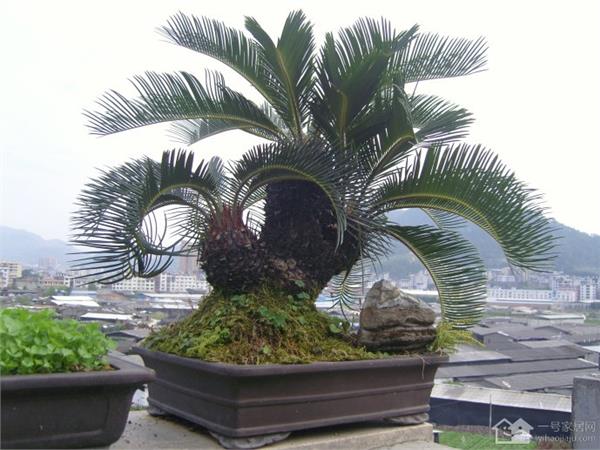
I. How to grow a sago palm so it thrives
1. Soil: Potted sago palms do well in well-drained, loose, fertile, slightly acidic sandy soil.
2. Temperature: The sago palm likes warmth. In summer, when temperatures are high, it should be sprayed with water appropriately to cool it down, and in winter the indoor temperature should be kept at around 10°C. Because the sago palm grows rather slowly, in summer it should be kept out of harsh direct sun, otherwise the leaves can easily scorch and turn yellow. The sago palm is fairly cold-resistant, but when the winter temperature reaches 0°C it should be moved indoors or to a warm place to overwinter.
3. Light: The sago palm should not be kept indoors for too long, because it likes light. Although a lack of light will not kill it, it will make its new leaves sparse, thin and weak, and lose their green color. So when growing a sago palm, it should be placed in a spot with plenty of sunlight in all four seasons, especially in spring and autumn when it grows new leaves, when it should be kept in direct sunlight for care. Once the new leaves have matured, it can be moved indoors for display.
4. Watering: Watering should follow the principle of watering when dry and letting it dry out between waterings. In winter, if the room temperature is low, growth stops and the plant enters a semi-dormant state, so water should be given sparingly. In spring and summer, during the vigorous growth period, it can be watered more to keep the soil moist; after autumn begins, growth gradually slows, so water should be controlled and a certain dryness maintained to help it overwinter.
5. Soil: It is suited to growing in loose, fertile, well-drained sandy loam. For potting a Brazilian wood plant, you can use garden soil, leaf mold, peat soil and river sand in a 3:2:2:3 ratio, or mix 2/3 of fertile pond mud that has been sun-dried and finely crushed with 3 parts coarse river sand to make the growing medium.
II. What to pay attention to when caring for a sago palm
1. Pruning
The sago palm grows rather slowly, producing only 1 ring of leaf clusters each year. Only after the new leaves have unfurled and matured should the older leaves below be cut off, keeping 2 to 3 rings of leaves; frequent pruning is not needed. Even when transplanting into pots or repotting, not much pruning is required. When leaves are affected by pests or diseases, or turn yellow and dry out due to harsh natural conditions, they should be cut off promptly.
2. Pests and diseases and their control
(1) Leaf spot disease, a fungal disease. After the leaves are infected, small light brown spots appear at first, then spread into nearly round or irregular shapes with a diameter of 1 mm to 5 mm. The center of the spots is dark brown to grayish white, with a reddish-brown edge, and small black dots form on the spots. Because the spots join together, they form a continuous patch, causing the leaves to die and break apart. In hot, rainy weather, this disease spreads easily. For prevention and control, the growing medium should be slightly acidic sandy soil, it should be watered generously with clean water in summer, and diseased old leaves should be removed promptly. In the early stage of the disease, spray Bordeaux mixture, or 75% chlorothalonil wettable powder at 600 times dilution, or 50% thiophanate wettable powder at 800 to 1000 times dilution, or potassium permanganate at 1000 times dilution, about once every 10 days, for a good effect.
(2) Scale insects. When grown and cared for on a balcony, if ventilation and light penetration are not good enough, the leaves are often easily damaged by scale insects. In the early stage of the infestation, there are the following treatments: ① Repeatedly wipe the affected leaves gently with alcohol, which can kill adults and larvae. ② Soak a cotton ball in rice vinegar and gently wipe the affected leaves, which can wipe away and kill the scale insects and also help the leaves turn green and glossy again.
The above is the relevant introduction in this article. I believe that after reading it you now have a simple understanding of this. If you need more, you can continue to follow No. 1 Home Network to learn more information.