Reasons for Milan Flower Leaf Drop and Care Knowledge
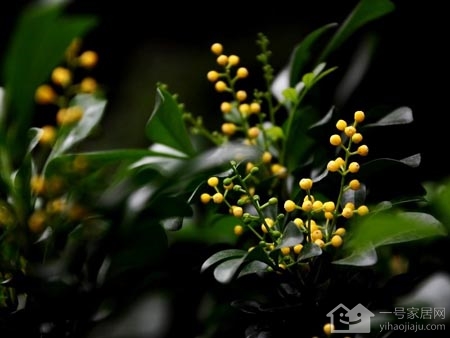
The Milan flower (Aglaia odorata) is a very popular flowering plant; when it blooms, it fills the whole room with fragrance, and it is deeply loved by people. However, we may find that a Milan flower bought not long ago starts dropping leaves. This not only affects its appearance but can also cause the Milan flower to die. So what should we do when a Milan flower drops its leaves? Below we will take a look at the care knowledge for the Milan flower.
I. What Causes Milan Flower Leaf Drop?
1. Watering: Overwatering prevents the roots from breathing, causing suffocation and root rot. Water cannot be transported to the leaves. What shows up is that at first the lower leaves curl, dry out, turn brown and fall off, which then causes the upper green leaves to also fall off within a short time. Long-term water shortage causes the roots to die; if you then water thoroughly, a large number of leaves will drop in a short time and the plant will die. Watering should strictly follow "water when dry, not when wet"; do not water when it is not dry, and water thoroughly when you do. Basically, water thoroughly once every 2 days.
2. Fertilizing: The Milan flower has certain fertilizer requirements, especially during the growing period when sufficient fertilizer is needed. If fertilizer is insufficient, the leaves will also turn yellow and drop. Fertilizing should follow the principle of light fertilizer applied frequently, especially when topdressing begins in spring, when concentrated fertilizer should be avoided. Topdressing should preferably be applied once every 7-10 days, and an appropriate amount of superphosphate should also be added to the fertilizer water, which benefits the growth of the Milan flower.
3. Light: The Milan flower likes light and is generally grown under bright scattered light. If the indoor location is relatively dark, it will affect the growth of the Milan flower, causing yellowing and leaf drop. The Milan flower should be placed indoors in a ventilated spot with scattered light. It can see the morning light every day, and be moved indoors when the sun is high at noon. When the sun is about to set, let it see the evening sunlight. This process can last about half a month, giving the Milan flower a period to adapt.
4. Pests and diseases: Leaf spot disease caused by infection with fungi and other pathogens easily causes localized necrosis of the leaves, with yellow spots or patches appearing; in severe cases, the entire leaf withers, turns yellow and falls off. After infection by mosaic virus, yellow-green mottled patches appear on the leaves; it may also suffer damage from scale insects, red spiders and others. Every 15-20 days, spray the leaf surface once with a clarified liquid extracted from a mixture of 25-30 times dry, pure plant ash and superphosphate, or with a 0.1% clarified limewater, for pollution-free control, so as to protect the branches and leaves and prevent damage from various pests and diseases.
II. What to Do When the Milan Flower Drops Leaves
1. Fertilizing: Generally, fertilizer should be applied once a month, mainly organic fertilizer and high-efficiency phosphorus-potassium fertilizer, and partial application of nitrogen fertilizer should be strictly avoided. Each time, apply 25-30 grams of fermented, decomposed and deodorized peanut cake fertilizer, rapeseed cake fertilizer or tea seed cake fertilizer per pot, plus 15-20 grams of potassium dihydrogen phosphate or high-efficiency biological phosphorus-potassium fertilizer, mixed with 2-3 kg of clear water or fermented, decomposed and deodorized human and animal manure water, then pour it on. 2. Watering: Throughout the year, keep the potting soil in a moist state; do not let it become dry and crack, but do not let it stay too wet for a long time either, otherwise it will cause root suffocation, root rot and yellow leaves. Generally, water once a day with clear water in summer and autumn, and once every 2-3 days with clear water in winter and spring, so that the water can quickly penetrate into the potting soil and does not accumulate on top of it. At the same time, frequently spray clear water on the branches and leaves, especially during periods of high summer heat and winter drought, evenly moistening all branches and leaves until water droplets begin to drip down, so as to keep the branches and leaves moist. III. How to Prune the Milan Flower
The Milan flower should be pruned and shaped starting from the seedling stage, keeping a section of main trunk 15 cm to 20 cm high. Do not let the main branches grow in clusters from the soil surface; instead, prune at the branching point above the 15 cm-high main trunk, so that the plant shape is full. The lower branches of perennial old plants often age and die. Therefore, in the north it is suitable to short-prune once every other year during the hot season, to encourage adventitious buds on the lower part of the main branches to sprout and grow new side branches, thereby maintaining a well-proportioned tree shape, strong vigor, lush leaves and abundant flowers.
Finally, when we find that a newly bought Milan flower is dropping leaves, do not panic first; think about what was improper in the care process. Then rescue your Milan flower according to the above cultivation methods, and let the Milan flower become fresh and lively again.
The above is the related introduction in this article. I believe that after reading it you also have a simple understanding of this. If needed, you can continue to follow No. 1 Home Network to learn more information.