Detailed Guide to the Propagation Methods and Key Growing Points of Tradescantia zebrina
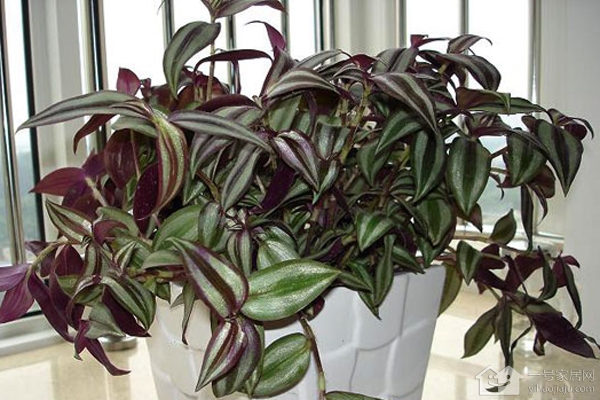
The leaves of Tradescantia zebrina are purple, green and silver in an interleaved pattern, and its stems and leaves are trailing in nature, making it very suitable for growing in hanging baskets. Below are the key growing points for Tradescantia zebrina.
I. Propagation Methods of Tradescantia zebrina
Tradescantia zebrina is always propagated by cuttings, which can be done in all four seasons. Cut the main vine or branches as cuttings, each segment should keep at least 3 nodes, bury the basal node into plain sandy soil or unfertilized potting soil, and roots will form in about a week. To achieve a full shape quickly, 3~4 stems can be inserted into one pot, and after rooting they will grow into a full potted plant. After cutting, keep it in the shade for care, and do not let the potting soil be too wet, to prevent the cut ends from rotting.
II. Key Growing Points of Tradescantia zebrina
1. Potting soil
Tradescantia zebrina has strong adaptability and low requirements for soil, but it grows better in fertile, loose soil. The best potting soil is a culture soil mixed with 1/3 leaf mold, 1/3 garden soil and 1/3 river sand.
2. Fertilization
Apply a dilute liquid fertilizer about once every half month, but be careful not to apply too much fertilizer; if too much nitrogen fertilizer is applied, the leaf color will fade. But what it fears most is random fertilization, concentrated fertilizer and one-sided application of nitrogen, phosphorus and potassium fertilizers. The fertilization (watering) principle of "light fertilizer applied frequently, small amounts with more applications, complete nutrition" should be followed.
3. Environmental requirements
Tradescantia zebrina prefers a semi-shaded environment. In spring and autumn, it is best placed in a spot with bright scattered light indoors; in summer, keep it in a well-ventilated indoor place for care, avoiding exposure to scorching sun.
4. Winter protection
The optimum growing temperature is 18°C~30°C. It is averse to cold and frost, and the overwintering temperature needs to be kept above 10°C. When the winter temperature drops below 4°C, it enters a dormant state. Sunshine Seedling Network reminds that if the ambient temperature approaches 0°C, it will die from frost injury.
5. Shaping and pruning
To make the plant shape full, when the stems of newly planted seedlings grow to about 20 cm, pinch out the growing tips to encourage branching; otherwise the branches will grow thin and long, affecting the ornamental effect. For plants cultivated for too long, the basal leaves turn yellow or fall off, affecting the ornamental effect. At this time, the overly long branches and leaves should be cut off to encourage new buds at the base to sprout and grow new branches. The cut parts can be used for cutting propagation.
III. Notes on Growing Tradescantia zebrina
1. Tradescantia zebrina can be propagated by cuttings and division, and this can be done all year round. For cuttings of Tradescantia zebrina, you can combine it with pinching, cut healthy branch tips as cuttings, insert them into river sand, place them in a semi-shaded place, keep them moist, and they root very easily. The stems of Tradescantia zebrina creep along the ground, and after roots form at the nodes, they can be separated and planted to become new plants.
2. During the growing season, Tradescantia zebrina should keep the potting soil moist, and water should often be sprayed on the stems and leaves to maintain relatively high air humidity, so as to prevent the leaf tips from drying out and scorching.
3. Apply a dilute liquid fertilizer to Tradescantia zebrina about once every 15 days, but be careful not to apply too much fertilizer; if too much nitrogen fertilizer is applied, the leaf color will fade.
4. Tradescantia zebrina likes a semi-shaded environment. In spring and autumn, it is best placed in a spot with bright scattered light indoors; in summer, keep it in a well-ventilated indoor place for care, avoiding exposure to scorching sun.
5. In winter, the room temperature for growing Tradescantia zebrina should be kept above 10°C, and the amount of watering should be appropriately reduced. If too much water is given at this time and the potting soil remains wet for a long time, it is easy to cause root rot and yellow leaves. In winter, it should be placed on a south-facing windowsill so that Tradescantia zebrina can get more sunlight.
The above is the relevant introduction in this article. I believe that after reading it you also have a simple understanding of this. If needed, you can continue to follow No.1 Home Network to learn more information.