A Detailed Guide to the Suitable Growing Environment and Planting Techniques for Pear Trees
We all know that pears are rich in vitamins, and eating them regularly is very good for your health. Pears taste sweet, crisp and juicy. A great many people love eating pears. And when we have a cough and sore throat, Mom always brews us a bowl of pear tea, adds sweet honey, and it tastes wonderfully sweet, and it also has the effect of moistening the lungs and stopping coughs. Although most of us like eating pears, many people are complete novices when it comes to growing pear trees. Today, the editor will give you a detailed introduction to the techniques for growing pear trees!
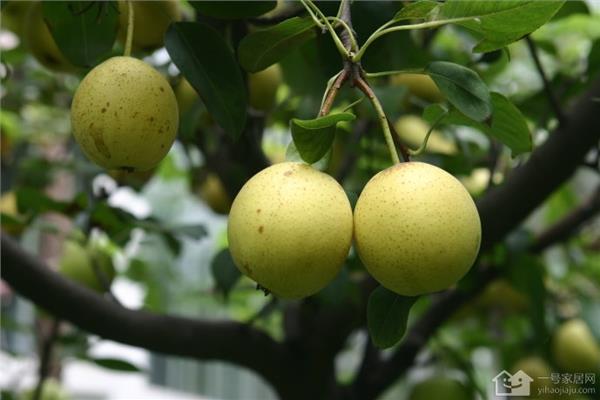
Suitable environment for pear trees: The pear tree is a very tough plant. It is not only cold-resistant and drought-resistant, but also tolerant of waterlogging and salt and alkali, and most pear trees can make it through the severe winter at minus 25 degrees Celsius. Despite being so tough, it still likes warm temperatures. During its growth and development it needs relatively high temperatures, and the pear tree is also a light-loving plant, so when planting pear trees you should plant them on the sunny side. Pear trees also need a lot of water during growth and development, so we should water the pear trees often. That way the pears we eat will be sweet and juicy. As for the soil for planting pear trees, generally speaking it needs to be deep, loose in texture, and have both good permeability and good water retention, so that the pear tree can grow vigorously.
Planting techniques for pear trees: The best seasons for planting pear trees are autumn and spring. After we choose suitable soil and a suitable season, we then need to plant the pear trees. Before planting pear trees, first deep-plow the land and then level it. Generally speaking, the distance between each pear tree is 2-4 m, and the best distance between each row of pear trees is 4-5 m, so that they will not affect each other's growth.
Fertilization techniques for pear trees: We all know that growing fruit trees requires fertilization, so that the fruit trees will bear more and larger fruit. As for pear trees, generally speaking, base fertilizer is applied during September-October. Organic fertilizer is used as the main fertilizer, mixed with phosphate fertilizer in a certain ratio, and all of it is spread on the soil at once. When fertilizing, experienced fruit growers use a method that combines deep plowing with soil improvement, applying organic fertilizer deeper and phosphate fertilizer a little shallower. After fertilizing, you must water, otherwise the fertilizer's effectiveness cannot be properly brought into play. Then wait until March of the following year to apply a topdressing of fertilizer. This time, nitrogen fertilizer is mainly used, and we all know that nitrogen fertilizer promotes plant flowering and sprouting. After that, after the pear blossoms fall, apply a fertilizer called "bright leaf fertilizer" to the pear tree's leaves. Reasonable fertilization is the top priority for making pear trees produce a large amount of fruit.
Also, because there are many varieties of pear trees, and most pear trees cannot self-pollinate, you should plant some pollinator variety trees in the pear orchard. These pollinator trees and the pear trees are best planted in a 1:1 ratio.
The above is the relevant introduction in this article. I believe that after reading it you now have a simple understanding of this. If you need more, you can continue to follow No. 1 Home Network to learn more information.