Operators of illegal factories lament that industrial zones are too expensive and hard to find, leaving them nowhere to go
"Twenty or thirty years ago, farmland factories were Taiwan's heroes, creating an economic miracle; twenty or thirty years later, we are still doing the same thing, but we have become public enemies, attacked everywhere by environmental groups." This confession from an illegal factory operator is full of helplessness. Illegal factories across Taiwan come in many forms, including factory-type operations in homes and farmland left by ancestors, with part of the land used for farming and part for building factories. Of course, there are also highly polluting factories, with electroplating and leather operations continuously discharging polluted wastewater. The operators of 130,000 illegal factories across Taiwan have blurry faces, all bearing the charge of polluting farmland.
It is a fact that illegal factories on farmland are unlawful, but it must also be acknowledged that the government, in the past, tacitly allowed illegal construction in order to develop the economy, creating a shared historical burden. The temporary factory registration certificate will expire in June next year, and amendment of the Factory Management Act is urgent. Without facing the dilemma of legalization that illegal factories have faced over the past nine years, it will be impossible to propose more effective solutions. Without facing the differences between high- and low-pollution operators and instead regulating them all under one-size-fits-all legal provisions, the result will only be an even greater disaster for farmland.
A spot in an industrial zone is hard to find, and prices have soared to more than NT$200,000 per ping
Ye Zhenfu, chairman of the Taichung City Association for Temporary Factory Registration Certificates and Unregistered Factories, works in lathe and milling machine processing. Fifteen years ago, he moved his factory from Fengyuan to Tanzi. He originally wanted to move into an industrial zone, but simply could not find industrial land. The old industrial zones had long been full, leaving only scattered industrial plots traded privately. "If you want sustainable operation, you would never want to build on farmland, but the problem is that there is no industrial zone you can get into! Science parks also restrict the types of industries, so we cannot get in, and in the end we can only build on farmland."
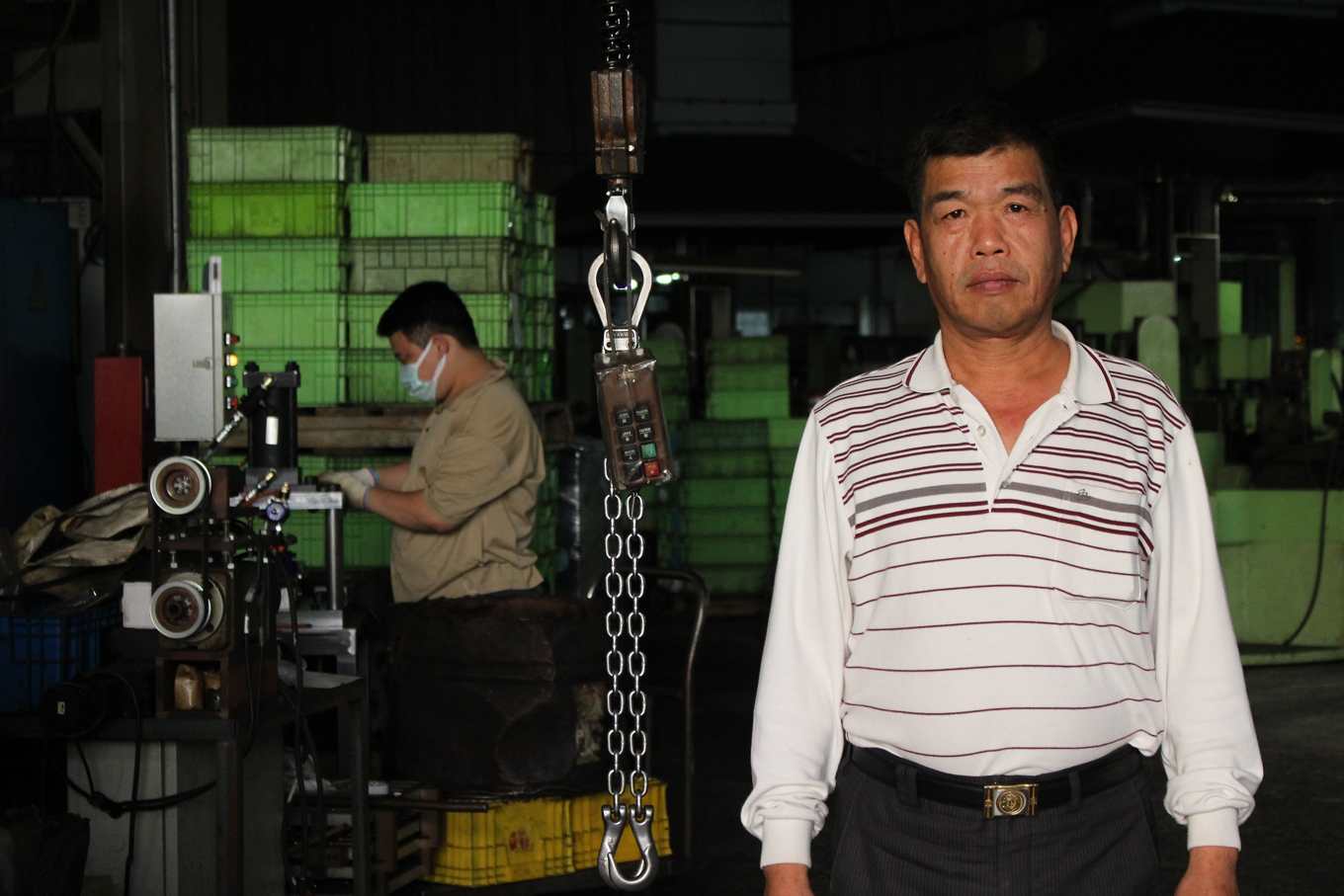
Operators hope for legalization in place: "If the factory is dug up, the soil will not be suitable for farming either"
Land prices in industrial zones are too high for operators to afford, but if industrial parks are designated with clustering effects, nearby illegal factories can be managed in a centralized way. Lai Minghong believes, "This is more workable." However, an operator surnamed Xiao said that machinery and equipment are very difficult to move. Because the machines were imported from Japan, it is not only necessary to dig foundations and bury them underground, but some even have satellite positioning. "As soon as we move the machines, they shut down and cannot be used. The Japanese side must send a representative to unlock them. It is not that easy." Furthermore, are they supposed to move to the Changbin Industrial Zone? Metal-processing factories cannot move to a coastal industrial zone because they rust easily. "If we have to relocate, we might as well just close down and stop doing business." He stressed that moving just the machines could cost NT$1.5 million, and even applying to Japan could take more than half a year.
"Of course we hope for in-place guidance and legalization." Xiao said that if the factory were dug up now, the original irrigation ditches would also be gone, and the soil would no longer be suitable for farming. "Do you want to keep the fields for your descendants to farm? Farming simply does not make money, and no one wants to do it!"
Can legalization in place ensure that illegal factories will no longer swallow up farmland?
Does Taiwan not want to develop agriculture and instead import all its food? "That is not what I mean either. Some people will still want to farm, but for those of us doing manual technical work, since we have already built, let us keep operating." Xiao stressed that the field next to his is still growing crops, and that he is willing to pay a price by paying feedback fees and moving toward in-place guidance and legalization. As for whether it causes pollution to neighboring fields, he responded that medium- and high-pollution illegal factories should be relocated to industrial zones; otherwise, if wastewater is discharged into farmland, people will be poisoned when they eat the crops. "But we really do not have a pollution discharge problem. There are even fish in the nearby ditch, and at night you can still see fireflies."
Some operators use hidden ditches to discharge secretly, "but we do not! We are not like electroplating factories, which produce wastewater and waste oil." The only waste is iron filings, which are taken away by resource recycling trucks. "That is not waste material either, it can be sold for money!"
Operators of illegal factories have pointed out one after another that industrial zone land prices are too high and relocation costs are high. Although they are willing to relocate, many operators prefer in-place guidance and legalization. If scattered low-pollution factories are allowed in-place guidance and legalization, 14,000 hectares of farmland across Taiwan can never be restored. Can such a sacrifice really ensure that illegal factories will no longer swallow up farmland? Does the government have enough resolve and capacity to block all pollution risks while opening the door? (The article is not finished. To continue reading, please click here.)