Su declares "focus on the economy with peace of mind, temporary-registered illegal factories to be legalized on-site under conditions," environmental groups criticize it as a massive giveaway and vow to oppose it to the end
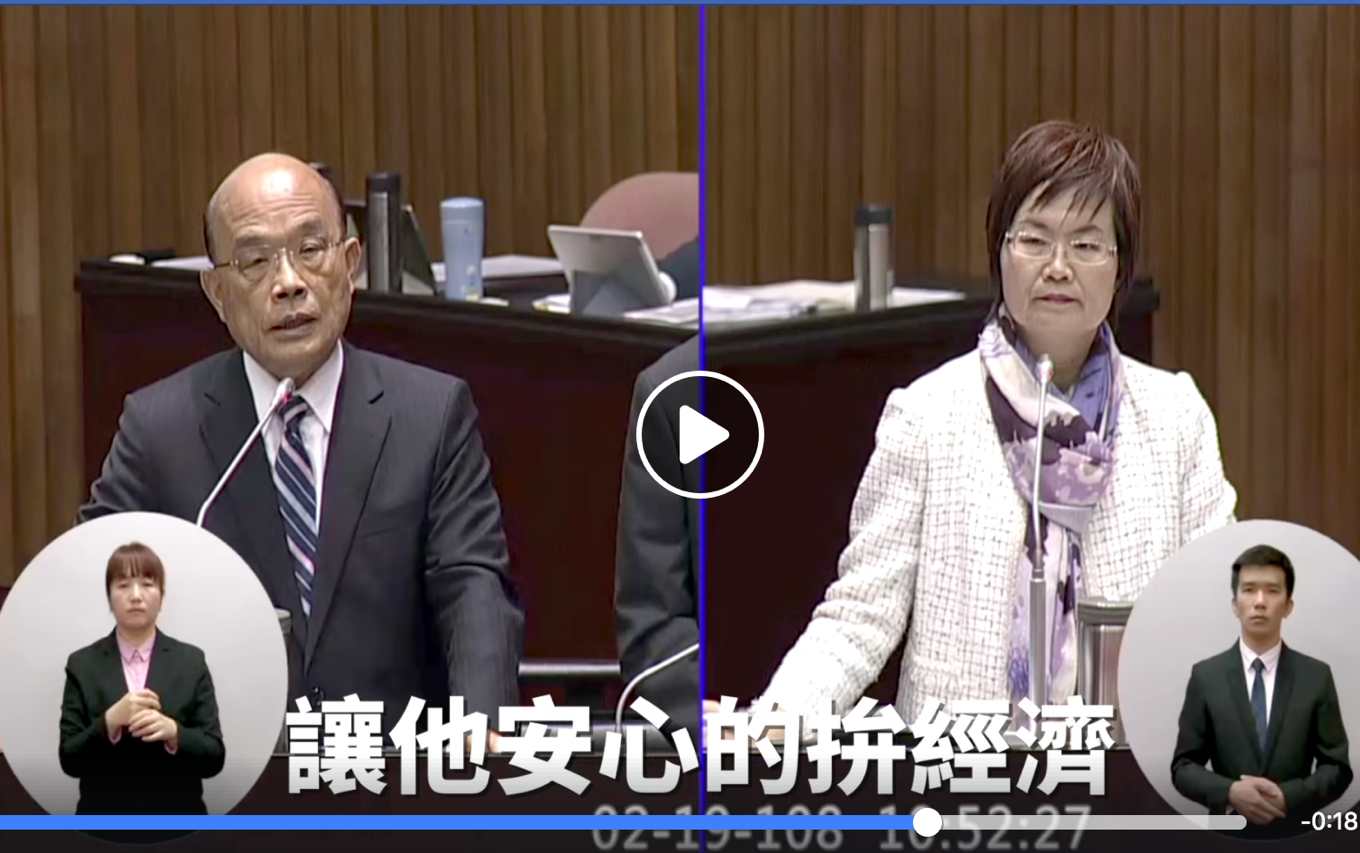
Across Taiwan, 130,000 illegal factories on farmland affect Taiwan's economic lifeline, but temporary factory registration certificates are about to expire in June next year. Facing this round of amendments to the Factory Management Act, Premier Su Tseng-chang recently announced three major directions. First, no new factories may be established on farmland. Existing factories must not pollute and must not endanger public safety; any violations will be strictly cracked down on. Second, the more than 7,000 temporarily registered factories may continue operating after their expiration next year and will be given priority counseling. Third, long-term clustered non-polluting factories will be counseled on-site, with no need to find other land to relocate. He also promised that the Executive Yuan's draft amendment to the Factory Management Act will be sent to the Legislative Yuan for review in March this year.
The Ministry of Economic Affairs holds that illegal factories currently occupy nearly 1.4 ten-thousand hectares of farmland and that the farmland cannot be restored to agricultural use anyway, so it is better to move high-pollution operations and conditionally legalize low-pollution ones to ensure farmland is not polluted. The Council of Agriculture, however, stresses that protecting farmland is the priority goal, and that the precondition for legalizing low-pollution illegal factories is that no new illegal factories may be added and high-pollution ones must relocate.
Environmental groups, however, argue that the standard for low-pollution factories is vague and unclear, and that even asphalt and foundry industries count as low-pollution factories under the standard, so how can it be ensured that they will not pollute farmland? Moreover, the government already finds it difficult to inspect the more than 7,000 temporary-registered factories one by one; if Class E building land is opened up for on-site legalization in the future, will the government have the capacity to inspect them? "Environmental groups absolutely cannot accept this and will oppose it to the end."
Industrial land prices more than doubled in ten years, letting manufacturers speculate on land
As illegal factory operators say industrial land is priced sky-high and simply unaffordable, Wu Chi-jung agrees that manufacturers' current situation is difficult, "but who exactly is the problem here? Industrial land has more than doubled in ten years. Is the government going to deal with it? Letting manufacturers speculate on land, even farmland is being speculated on." He stresses that illegal factories represent failures at many links, and the government must draw a path to relocate, invest funds to demolish factory buildings and restore farmland, and gradually counsel operators toward legalization.
Wu said, "A real solution should be proposed, rather than saying this farmland is all ruined, so there is no need to do anything. Taiwan should not be that kind of society." If it really lets things slide and legalizes on-site, every industry will run wild on farmland, agricultural and industrial zones will be mixed, causing environmental protection and food safety concerns, while also making it harder for the government to manage.
Wu reiterated that if it really moves toward legalization as Class E building land, "we will oppose it to the end." Government manpower is completely insufficient to carry out inspections; even the more than 7,000 temporary-registered factories cannot all be inspected. He said the government should properly set out a framework, properly counsel illegal factory operators, and only then discuss future legalization. "Taiwan's farmland and environment cannot be trampled underfoot."