A Detailed Guide to Snake Plant Care Methods and Living Environment
The snake plant is also called tiger tail sansevieria. Tiger tail sansevieria is a fairly drought-tolerant plant with strong adaptability, because there are not many care methods and precautions for tiger tail sansevieria, and following general requirements is enough. Now let us look at how to grow a snake plant well.
I. Basic Information About the Snake Plant
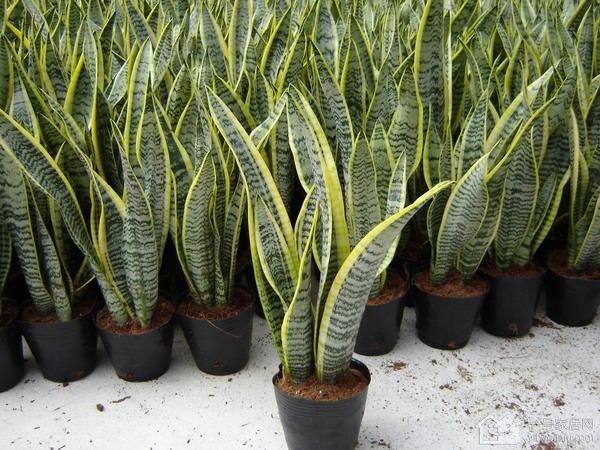
The snake plant is a perennial succulent herb. Its rhizome has a creeping feel, and funnel-shaped leaf clusters grow from the rhizome. The leaves are upright, leathery and thick, light green, with irregular dark green horizontal banded markings. These markings look very much like the stripes on a tiger, and perhaps for this reason it came to be called the snake plant. Generally, the snake plant is 50 cm to 70 cm tall, and the leaves are about 3 cm to 5 cm wide. Spring and summer are the flowering season for the snake plant. It sends up flowers singly from the rhizome, forming a raceme, with 3 to 5 flowers per cluster, giving off a sweet and elegant fragrance.
II. Living Environment
The snake plant is drought-tolerant, moisture-tolerant and shade-tolerant, and can adapt to all kinds of harsh environments. It has no great demands for fertilizer, and growing it in sandy soil with good drainage is best. In addition, the snake plant should not grow in dark places for a long time; it should receive diffused light, but be sure not to suddenly put the snake plant in direct sunlight. It grows best in an environment of 20 to 30°C, and in winter be careful to keep the indoor temperature at 10°C.
III. Snake Plant Care Methods
Soil: Tiger tail sansevieria has strong adaptability and can be managed fairly extensively. For potting, use 3 parts fertile garden soil, 1 part coal cinders, and add a small amount of soybean cake crumbs or poultry manure as base fertilizer.
Fertilizing: The snake plant has no great demands for fertilizer, but during the growing season, if you water it once every 10 to 15 days with dilute fertilizer water, it can grow better.
Light: Potted snake plants should not be kept in dark places for a long time; they should often be given diffused light, otherwise the leaves will darken and lack vitality. But they also must not suddenly be moved into sunlight; they should first adapt in a dark place.
Temperature: Tiger tail sansevieria likes a warm climate, and the most suitable temperature for growth is 20 to 30°C. It is not cold-tolerant; below 13°C growth stops, and the overwintering temperature should not be lower than 8°C. When the temperature is low, rot starts from the base of the leaves, causing the plant to die, so good cold protection and warmth measures should be taken during overwintering. In summer, ventilation should be strengthened and the temperature lowered.
Watering: Because tiger tail sansevieria originates from the arid regions of West Africa, it can adapt to a dry, water-scarce environment. It dislikes waterlogging, and watering should not be excessive; just keep the potting soil slightly moist. When there is too much water, the leaf color fades, and the roots may even rot and the plant die. Watering should follow the principle of "alternating dry and wet, leaning toward dry."
Repotting: Tiger tail sansevieria is generally repotted once every 2 to 3 years, and usually only needs repotting after the leaf clusters have filled the pot. Because the plant grows upward, its ornamental value is high when the pot is small and the plant is dense, so the pot should not be large; a deeper cylindrical flower pot is suitable for planting. This way the upper and lower proportions are coordinated and fairly stable, and the underground creeping stems will extend in a circle along the pot edge without affecting the plant's growth.
IV. Key Points of Daily Care
1. Planting it is very simple, and it does not need many conditions. Tiger tail sansevieria has strong adaptability and can be managed fairly extensively. For potting, use 3 parts fertile garden soil, 1 part coal cinders, and add a small amount of soybean cake crumbs or poultry manure as base fertilizer.
2. It needs more fertilizer during the growing season, and has no particular requirements at other times. Tiger tail sansevieria has no great demands for fertilizer, but during the growing season, if you water it once every 10 to 15 days with dilute cake fertilizer water, it can grow better.
3. It needs an appropriate amount of light. Potted tiger tail sansevieria should not be kept in dark places for a long time; it should often be given diffused light, otherwise the leaves will darken and lack vitality. But it also must not suddenly be moved into sunlight; it should first adapt in a dark place.
4. Give special attention to a special tiger tail sansevieria. For potting a snake plant, you can use equal parts leaf mold and garden soil mixed with a small amount of decomposed base fertilizer as the growing medium. It grows well under conditions of sufficient light. Apart from avoiding direct scorching sun in midsummer, it should receive plenty of sunlight in the other seasons; if it is placed in an indoor spot with too little light for too long, the leaves will darken and lack vitality. In addition, if it has been kept indoors for a long time, it should not suddenly be moved directly into sunlight; it should first be moved to a brighter place, allowed to adapt, and then exposed to sunlight, so that the leaves are not scorched.
Watering should be moderate, following the principle of preferring dry over wet. Normally, wipe dust from the leaf surface with clean water to keep the leaves clean and glossy. In spring, when new plants sprout at the root crown, water a little more to keep the potting soil moist; in the high-temperature summer season, also keep the potting soil moist regularly; after late autumn, control the amount of watering and keep the potting soil relatively dry to enhance cold resistance. It has low fertilizer requirements; during the growing season, apply dilute liquid fertilizer 1 to 2 times a month to ensure the leaves are verdant and thick.
The above is the relevant introduction in this article. I believe that after reading it you have a simple understanding of this as well. If you need more, you can continue to follow No. 1 Home Network to learn more information.