When Does the Epiphyllum Bloom? A Detailed Guide to Its Flowering Period
Many people know the idiom "a flash in the pan" (like the epiphyllum appearing briefly), but do you know when the epiphyllum actually blooms? Today we will give you the answer, along with what to do if your epiphyllum does not bloom.
When Does the Epiphyllum Bloom
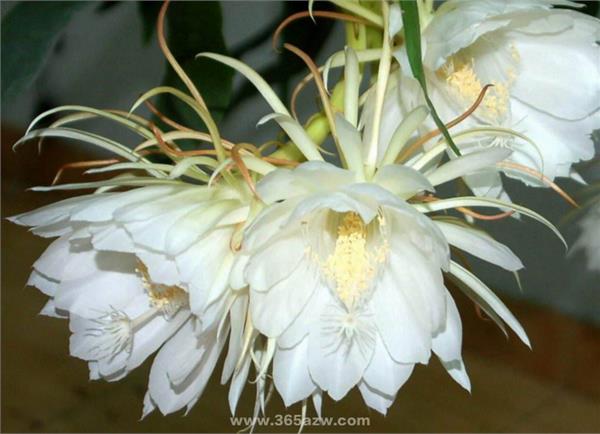
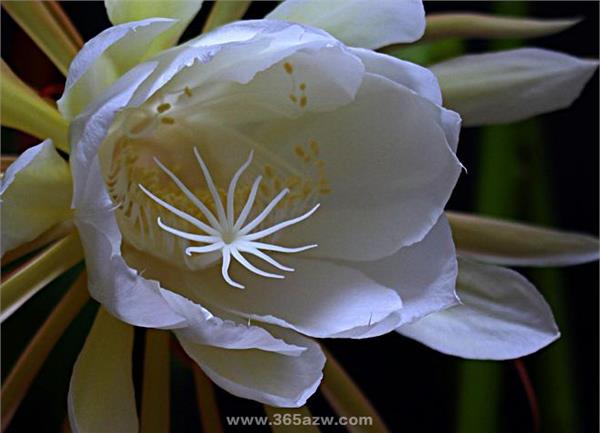
The epiphyllum usually blooms in summer and autumn, in the still of the night - that is when the epiphyllum opens and reveals its beauty. Around 9 p.m. is when it most often unveils its charming figure: a purple flower stalk holds up a very large epiphyllum bloom, with pure white petals neatly layered one over another, and the heavy flower, almost breaking the branch, trembles gently. As it trembles, the petals slowly open and spread out, revealing a beautiful face. Dense, fine white filaments spiral out from the center of the flower, and at the tips of the filaments are slightly swollen yellow anthers - these are the stamens. The pistil of the epiphyllum is quite special, surrounded by the stamens, slightly thicker than the filaments and also white, especially the stigma at the tip, which opens into a small white flower resembling a chrysanthemum. Elegant, pure white, delicate and charming, it holds its head high and blooms. The whole flower is graceful and understated, giving off fragrance everywhere and dazzling to the eye. Thus it enjoys the reputation of "Beauty Under the Moon." Interestingly, after the flower gradually unfolds, it slowly withers again after 1-2 hours, and the whole process lasts only about 4 hours. Hence the saying "a flash in the pan."
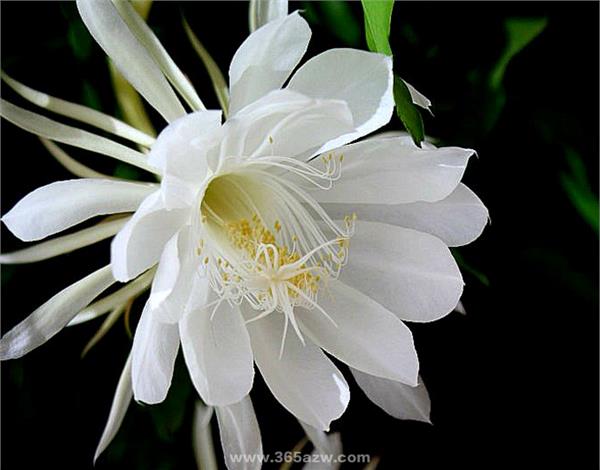
The reason for the saying "a flash in the pan" is that the flowering period of the epiphyllum is indeed a little shorter than that of other flowers. After the epiphyllum is in full bloom, it usually withers in 3 to 4 hours, because when the epiphyllum is in full bloom its petals are all spread open, making it very easy to lose water; when water is insufficient, the petals close and the flower quickly withers.
What to Do If the Epiphyllum Does Not Bloom
1. Insufficient light:
The epiphyllum likes light, but is also afraid of direct harsh sunlight. Therefore, in spring and autumn it should be kept indoors in a spot with ample sunlight. After being brought indoors in winter, it should also be placed in a spot indoors that receives sunlight. This can make its modified stems (leaves) grow robustly and is more conducive to the differentiation and formation of flower buds. If light is insufficient, the plant will grow leggy and produce few or no flowers.
2. Tall plant with too many leaves:
The epiphyllum plant should not be too tall; keep it below 1 m, and do not keep too many leaves, so that the plant shape is attractive and nutrients are concentrated. For a 4-5 year old epiphyllum, a support frame is also needed, fixing its modified stems evenly on it, which facilitates ventilation and light penetration and can enhance photosynthesis to accumulate nutrients, creating the necessary conditions for the plant to bloom.
3. Insufficient nutrients:
The epiphyllum likes fertilizer and should be cultivated in soil rich in humus. When potting or repotting, in addition to applying an appropriate amount of horse hoof or farmyard manure as a base fertilizer, during the growing period apply a diluted thin liquid fertilizer made from cakes that is complete in nitrogen, phosphorus and potassium about once every half a month. However, nitrogen fertilizer must not be applied too much, otherwise it will cause the plant to grow leggy and fail to bloom.
4. Improper watering:
Summer is its vigorous growth period, when the demand for water and fertilizer is relatively large. Keep the potting soil moist, apply a thin fertilizer once every 10 days, and avoid applying too much nitrogen fertilizer; pay attention to pruning, thinning out the weak buds at the top and upper part of the modified stems, and keeping the strong buds in the middle and lower parts.
In autumn, do not water too much; water again after the potting soil is slightly dry, and appropriately reduce fertilizer application. Winter is the dormant period, so watering should be controlled and fertilizer application stopped, keeping the potting soil slightly dry. Sufficient light is the primary condition for promoting more blooms in the false Christmas cactus (Schlumbergera), so the greenhouse should ensure ample light year-round, and it is enough to avoid strong direct light around midday in summer.