What is Aloe polyphylla? A detailed guide to growing it
Many people know about aloe, which is ornamental and can also be used for beauty and skincare, but does anyone know about Aloe polyphylla? Today, we will tell you what Aloe polyphylla is and how to grow it.
What is Aloe polyphylla
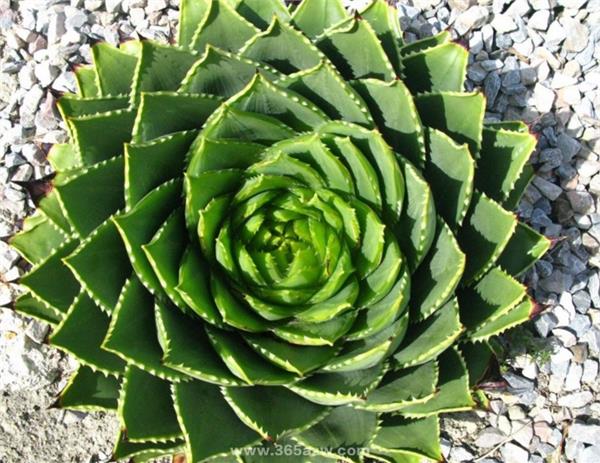
Aloe polyphylla (scientific name: Aloe polyphylla), also known as spiral aloe and commonly called Solomon's King Jade Crown, is an aloe species endemic to the Drakensberg Mountains of Lesotho.
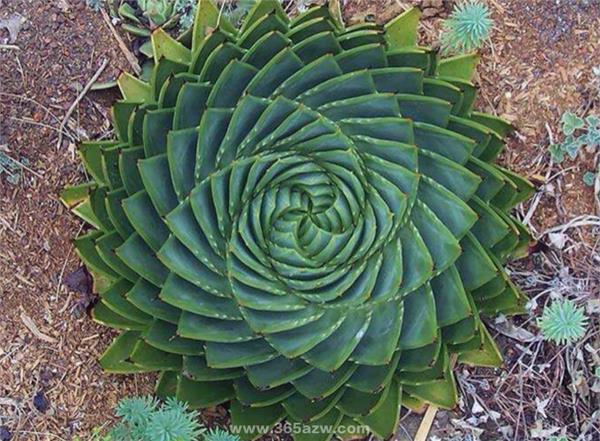
Aloe polyphylla is mostly solitary, with many leaves tightly spiraling clockwise or counterclockwise and arranged into an even circle; the leaves are short and broad, gray-green, and the bracts remain on the inflorescence stalk. Aloe polyphylla usually has five spirals, and each spiral is made up of 15-30 leaves.
Aloe polyphylla usually blooms in spring and early summer. The flowers also come in darker red and slightly lighter red, and even orange-yellow, but those are only individual variations and do not belong to a subspecies or variety.
Aloe polyphylla is distributed on high-altitude mountain slopes, growing in loose rocks in basalt rock crevices on steep slopes, and often grows in the cloud belt of Lesotho. The soil in its growing area is well drained, and summer rainfall is abundant.
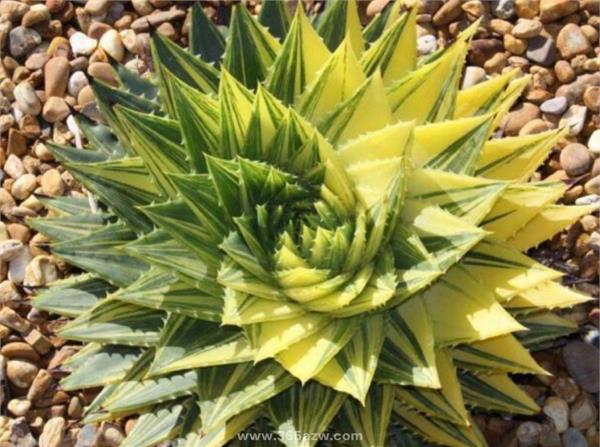
Aloe polyphylla likes environments with extremely large day-night temperature differences. During the winter dormancy period, the plant can withstand freezing without being damaged, and in summer during the day it can also endure high temperatures above 40°C.
Aloe polyphylla does not grow slowly once it is a mature plant, but because it has a very strong apical dominance, it almost never produces offsets under natural conditions. Its flowers are very spectacular and beautiful, but in its native habitat Aloe polyphylla also blooms only under special climate conditions, and sometimes when the climate is unsuitable, it may even fail to bloom for many years.
Depending on the environment and soil fertility, adult plants range from 15 to 40 cm in diameter, a huge difference. The aloe queen grows very slowly when young, but after reaching adulthood its growth rate is relatively fast, and its lifespan is very long; it is said that the plant can live for more than 50 years.
Aloe polyphylla has extremely high ornamental value, and seedlings can usually only be obtained through sowing and manual intervention to destroy the growing point. Therefore, the price of Aloe polyphylla seeds is also among the most expensive of almost all plants, because it does not bloom often and when it does bloom, without the right opportunity and pollination it is also hard to set seed, so a single seed has even been recorded at more than 10 euros.
How to grow Aloe polyphylla
1. Soil:
Aloe polyphylla likes to grow in loose soil that drains well and does not easily become compacted. In ordinary soil, some washed gravel or ash slag can be mixed in. Soil with poor drainage and aeration easily blocks root respiration, causing Aloe polyphylla to grow poorly.
2. Light:
Aloe polyphylla needs sufficient sunlight to grow. It should be noted that newly planted Aloe polyphylla is not yet suitable for direct sun exposure; it is best to let it see sunlight only in the morning, and after ten days to half a month it will slowly adapt and thrive in the sun.
3. Watering:
Like all plants, Aloe polyphylla also needs water, but it is most afraid of waterlogging. In humid seasons or when drainage is poor, it very easily develops leaf shrinkage, branch and root rot, and even wilting.
4. Fertilizing:
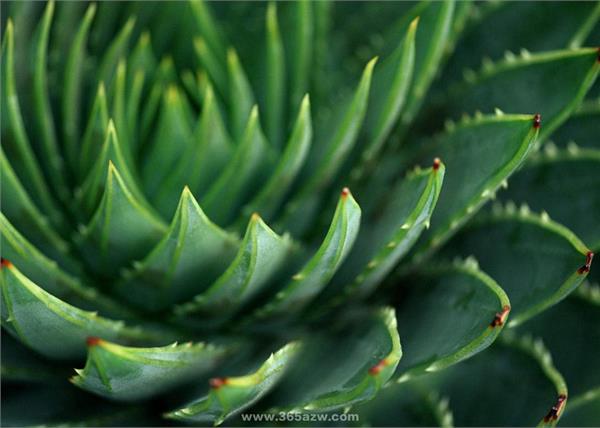
Fertilizer is indispensable for any plant. Aloe polyphylla not only needs nitrogen, phosphorus, and potassium, but also some trace elements, so use fermented organic fertilizer as much as possible.
5. Pest and disease control:
Common diseases of Aloe polyphylla include anthracnose, brown spot disease, leaf blight, southern blight, and Fusarium crown rot. Before disease occurs, or after removing the diseased parts from plants that have already become diseased, apply 0.5-0.8 Bordeaux mixture in equal lime formula (that is, for every 100 kg of water add 0.5-0.8 kg each of copper sulfate and lime) to the aloe leaf surface, which can effectively prevent and inhibit pathogen invasion and spread. Disease treatment. After disease occurs, systemic therapeutic agents such as thiophanate-methyl and metalaxyl, as well as antibiotics such as streptomycin sulfate, agricultural streptomycin, kasugamycin, and validamycin, can be applied directly to kill the pathogenic bacteria inside the aloe and control the spread of the disease.
Aloe polyphylla is most susceptible to Fusarium crown rot, and this pathogen is mainly caused during planting when the roots do not receive enough oxygen, so in cultivation this species is suitable for using large coarse stones as the upper layer of growing medium, together with carbendazim to control the disease.