What plants repel mosquitoes? A few practical mosquito-repelling methods for you
As summer arrives, many mosquitoes and insects also become more active. In our daily life, how can we prevent mosquitoes and insects? What plants can repel mosquitoes? What are the methods that can repel mosquitoes? Let's take a closer look~
Plants that can repel mosquitoes
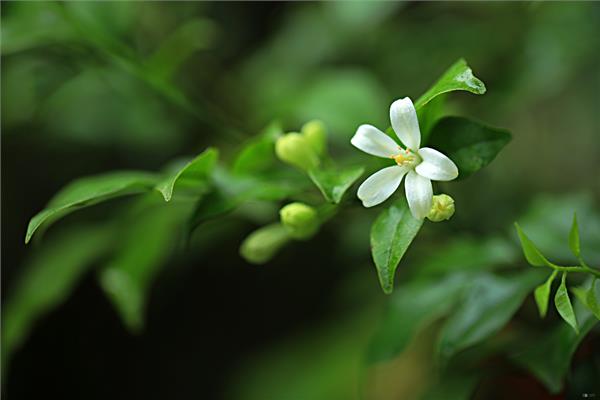
Orange jasmine (Murraya paniculata): This is a small evergreen shrub, with a corymb-like shape, many branches, compact growth, small glossy leaves, and dense white flowers. After blooming, it can also produce red berries, adding beauty to a humble room. If you touch its leaves, you will smell a rich sweet fragrance, and its mosquito-repelling effect is very good.
Venus flytrap (Dionaea muscipula): It is a herbaceous plant of the Asteraceae family, can grow to about 1 m tall, with small yellow flowers, and a single plant can have hundreds of flower heads. The bracts around each flower head have sticky liquid, just like 5 outstretched little fingers, which is very interesting. As long as small mosquitoes land on it, they are stuck, and afterward the insect corpses are slowly digested by it as nutrients for its growth. If dust sticks to it, after a few days it is also digested without a trace. Placed at home as a potted plant, it catches mosquitoes and absorbs dust.
Lantana (Lantana camara): Its branches, leaves, and flowers release a scent that mosquitoes and flies are sensitive to, with a strong effect of driving away mosquitoes and flies, while causing no harm to the human body.
Methods that can repel mosquitoes
1. Raising fish and plants together
In the container where hydroponic plants are grown, also keep small fish, so the small fish eat the insect eggs, which can prevent the breeding of mosquito larvae. This method is very eco-friendly, and at the same time the combination of the plants and the movement of the small fish makes a very beautiful scene, very suitable for home use.
2. Put vitamin B2 in the water
Put one or two tablets of vitamin B2 in the hydroponic container, because mosquitoes dislike the smell of vitamin B2. After the vitamin B2 completely dissolves in the water, mosquitoes will naturally stay away from the hydroponic plants.
3. Change the water often
The water in the plant container still needs to be changed often. Properly changing the water can not only maintain the nutrients in the water, but also keep the water clean, so that mosquito eggs cannot successfully hatch. If you are worried that changing the water too frequently will damage the plant roots, you can add a few drops of insecticide to the water to kill the insect eggs in the water, but this method is not suitable for hydroponic plants where fish and plants are raised together.
4. Make a container cover yourself
Cut waste foam board to the size of the container opening, poke a hole in the middle, and pass the roots of the hydroponic plant through it, so that the water in the container is isolated from the outside and mosquitoes cannot reach the water surface. The foam board can also be replaced with mesh. This method is very suitable for hydroponic plants with slender roots, such as pothos, lucky bamboo, and Dracaena sanderiana.
If you want to learn more related information, you can continue to follow No. 1 Home Network.