Key Points of Date Palm Cultivation Techniques and Price Trends
The date palm gets its name because its appearance resembles the coconut palm, while its fruit resembles the jujube. The date palm is one of the four earliest fruit trees domesticated and cultivated by humans (the other three being the grape, the fig, and the olive), and every part of the date palm is useful. Dates have extremely high nutritional value. Moreover, date palm fruit pulp is sweet and rich in nutrients; it can serve as both food and fruit, and is also a raw material for making sugar and brewing alcohol. It can be made into various candies, premium syrups, biscuits and dishes, as well as vinegar and alcohol.
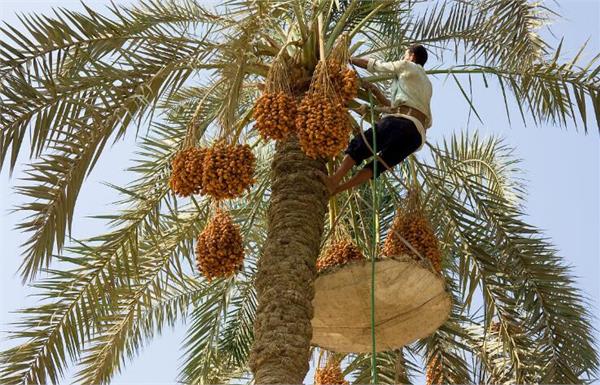
Date Palm Images
Daily Uses
The trunk of the date palm is used as a building material and for water troughs; the tree has an attractive form and is often used as an ornamental plant. The branches can be made into chairs, beds, and baskets for transporting fruits, vegetables, chickens and ducks, fish and shrimp; the leaves can be used to weave mats, tie brooms, make trays, and so on, and can also be used as fuel; the trunk is used to build farmhouses and bridges; the date seeds can be used as feed, and inferior dates are used as fertilizer or feed.
Dietary Therapeutic Effects
Dates have the effects of tonifying the middle and replenishing qi, relieving cough and moistening the lungs, and reducing phlegm and calming asthma. The fiber they contain is very soft and will not harm a sensitive stomach and intestines, and can treat gastric ulcers. Soaking peeled candied dates in whole raw milk is sufficient; the seeds of the date contain rich male hormone components. Dates are generally hailed as the most nutritious dried fruit; they are called the bread of the desert, and two-thirds of a date is sugar. The ancient Egyptians regarded the date harvest as a symbol of abundance, while the Romans and Greeks used dates to celebrate victory and welcome returning soldiers. We know that there are more than 600 varieties of dates worldwide.
Date Palm Prices
The price of date palms is around 500 yuan. Date palms mainly grow in northern Iraq. They are tree-shaped, up to 35 m tall, with stems bearing persistent leaf-sheath bases; the upper leaves rise obliquely and the lower leaves droop, forming a relatively sparse head-shaped crown. The leaves are up to 6 m long; the petioles are long and slender, mostly flat; the pinnae are linear-lanceolate, 18-40 cm long, shortly acuminate at the apex, grayish-green, with prominent keel-shaped ridges, 2 or 3 clustered together, pubescent, and the lower pinnae become long, hard, needle-like spines.
Date Palm Cultivation
1. A growing environment that is dry above and moist below
The date palm is drought-tolerant, alkali-tolerant, and heat-tolerant, yet it also likes moisture; "dry above and moist below" is its most ideal growing environment.
2. Temperature and Soil Requirements
Propagation by offshoots gives early results and can maintain the characteristics of the mother plant. It prefers high temperatures and low humidity; the temperature requirement for fruiting is above 28°C, and mature plants can tolerate a low temperature of -10°C. It is not demanding about soil, and is suitable for loose, fertile, well-drained neutral to slightly alkaline sandy loam; it is salt-alkali tolerant, but the soil salt content must not exceed 3%; it does not tolerate waterlogging, and grows poorly on infertile soil. After 10 years of artificial cultivation, it can flower and bear fruit. It is suitable to use sowing or division propagation. Offshoots planted can bear fruit after 5 years. The alternate bearing phenomenon is relatively common. When planting, 2% male plants should be allocated as pollinizer trees.
3. Key Points of Fertilization
The seeds germinate easily, with a general germination rate of over 80%. Every 2-3 years, base fertilizer can be applied together with repotting; during the growing season, apply a dilute liquid fertilizer once every half month; in late autumn, move it into a greenhouse to overwinter, and the minimum temperature must not be lower than 10°C.