A Complete Guide to Succulent Plant Types and Detailed Growing Methods
What types of succulent plants are there? Through a succulent plant illustrated guide, we can learn that there are many types of succulent plants. Some we can name, while others are quite unfamiliar. No matter what, they are all so lovely. As for the growing methods for succulent plants, let's take a look together below.
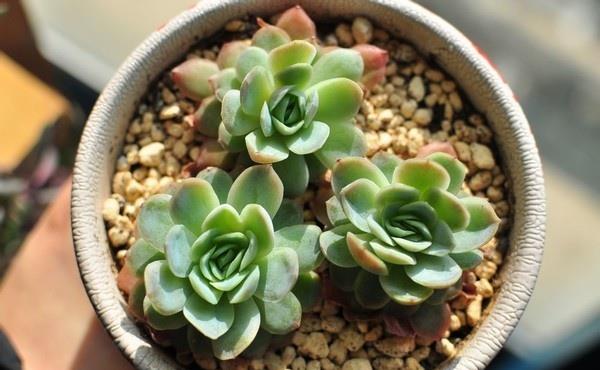
Growing Methods for Succulent Plants
In recent years, succulent plants have gradually become popular because they are small and delicate, plus their round and cute shapes, especially on the desks of urban office workers. Placing a small pot of such a cute succulent plant on the desk always makes people feel refreshed, full of vitality all day long, and when there is time, one can do a little tending, allowing a kind of communication and rest amid heavy work.
Succulent plants are not, as people imagine, all plants that grow in deserts. There are many types. Especially in Japan, succulent plant pots have gradually formed a new type of plant pot that adapts to modern people's home life. Moreover, some good brands have gradually integrated their own design and artistic concepts, and through flower vessels as well as careful selection and cultivation, they make the presentation of succulent plants richer and more beautiful.
How do you grow succulent plants? After killing who knows how many pots of succulents, a seasoned netizen figured out some tricks, for example: do not use all nutrient soil, and it is best to mix in some fully burned coal briquettes; most succulents have a growth period and a dormant period, and the watering frequency should be controlled according to the specific period... Over 2 years, clusters of plump succulents on the desk proved that Yanshui had completed the comeback from a rookie novice at growing succulents to an expert. To the successive waves of novices who want to join the succulent growing ranks, Yanshui only wants to say one thing: "Dear, whatever you do, do not go too hard."
On the whole, succulent plants are easy to grow. They will not die without light, but good ventilation and light are the key to growing "succulents" well. At the same time, pay attention to water control: rather too little than too much. Lack of water or lack of sunlight only makes their appearance poor, but they will not die. To grow succulents, you must be ruthless and not water them for ten days to half a month.
Plant growing always comes down to three points: water, medium, and light, and succulents are no exception. Light mostly affects how good the plant's growth condition is, and belongs to the advanced level. But water and medium can directly affect the life and death of the plant.
Many growing novices, when they first start growing something, always casually use some soil, and then enthusiastically and lovingly water the plants every day.
The soil should be loose and breathable, drain well, but have a certain water-retention capacity, and be neutral or slightly acidic. There are many media suitable for growing succulents, but a very important point is that they must be sterile. The direct cause of succulent death is often rot, and there is only one direct cause of plant rot: fungal infection.
During the transplanting process of succulents, if the medium itself carries various pathogens, plus improper later care (such as frequent watering), it is very easy to cause fungal infection.
Plant growing always comes down to three points: water, medium, and light, and succulents are no exception. Light mostly affects how good the plant's growth condition is, and belongs to the advanced level. But water and medium can directly affect the life and death of the plant. Many growing novices, when they first start growing something, always casually use some soil, and then enthusiastically and lovingly water the plants every day.
The soil should be loose and breathable, drain well, but have a certain water-retention capacity, and be neutral or slightly acidic. There are many media suitable for growing succulents, but a very important point is that they must be sterile. The direct cause of succulent death is often rot, and there is only one direct cause of plant rot: fungal infection. During the transplanting process of succulents, if the medium itself carries various pathogens, plus improper later care (such as frequent watering), it is very easy to cause fungal infection.
Repotting Succulent Plants
Succulent plants are generally repotted in spring. Spring repotting is an important part of spring management for succulent plants. The reason for repotting in spring is that under artificial potted conditions, the plant's root system is confined to the pot and finds it hard to stretch freely. After a period of growth, the root system fills the pot, which is not conducive to drainage and breathability.
Moreover, the soil held in the pot is limited. After continuous absorption by the root system and repeated watering, the nutrients are completely lost, and the growing soil also changes from its original granular form into a powdery form. In order to keep the plant able to grow freely, repotting must be carried out in spring.
When pot soil is used for a long time, the soil becomes compacted, and its breathability and water permeability worsen. At this point, the fertility has also been completely exhausted. Changing the soil can ensure a new supply of nutrients and can also improve the growing environment for the succulent plant's root system.
Flower enthusiasts can mix a new flower soil with better physical properties and more abundant nutrients for the succulents to enjoy. Various volcanic soils, granular soils, river sand, perlite, and coal cinders are all commonly used growing media for succulent plants.
In addition, succulent plants actually do not have a very large demand for fertilizer, but during the vigorous growth season, some nitrogen, phosphorus, and potassium fertilizer can also be appropriately added to promote rapid growth and allow sufficient nutrient reserves. It is recommended that when remixing the soil, a small amount of slow-release granular fertilizer or base fertilizers such as defatted bone meal and superphosphate can be mixed in, so there is no need to frequently apply additional fertilizer at ordinary times.
In areas where the temperature is below zero, keep them indoors for overwintering care, use less water, and give as much light as possible. In areas where the temperature is above 5, control watering, and generally there will not be much of a problem. For summer, shade them and strengthen ventilation. If conditions allow, move them into an air-conditioned room. For some varieties, during the hot summer, if they are not moved into an air-conditioned room, there is absolutely no way for them to get through the summer.