What are the common anti-pollution plants for purifying indoor air?
Many people assume that indoor air must be better than outdoor air. Actually, that is not the case. Outdoor flowers and plants filter harmful substances from the air very effectively. So should we also grow some green plants indoors to purify the air? So what are the indoor air-purifying plants? Let's take a look below.
[What are the indoor air-purifying plants?]
1. Spider plant: its ability to absorb harmful chemical substances in the air exceeds that of an air filter. One pot of spider plant can, within 24 hours, absorb all the carbon monoxide, nitrogen dioxide and other volatile harmful gases in a room.
2. Cactus: its characteristic is that it closes its stomata during the day to prevent water loss. At night it opens its stomata, absorbs carbon dioxide and releases oxygen. If two or three pots of cactus are placed indoors, they can increase the negative ions in the air, which is greatly beneficial to sleep and health.
3. Snake plant: a natural scavenger. One pot of snake plant can absorb more than 80% of various harmful gases in a room of about 10 sq m, and two pots of snake plant can basically completely purify the air in an ordinary living room; the snake plant can also release a large amount of oxygen during the day.
4. Aloe: a gardening saying goes, "Spider plant and aloe are the strong ones; formaldehyde is so frightened it hides away." Evergreen aloe has a certain ability to absorb odors, and its effect lasts a long time. In addition, aloe also has cosmetic benefits.
5. English ivy: one pot of English ivy can eliminate 90% of the benzene in a room of 8 to 10 sq m, can deal with bacteria and other harmful substances brought in from outdoors, and can even absorb dust that is difficult for even a vacuum cleaner to pick up.
6. Agave: in a room of about 10 sq m, it can eliminate 70% of benzene, 50% of formaldehyde and 24% of trichloroethylene.
7. Chinese rose: it can absorb relatively large amounts of harmful gases such as hydrogen chloride, hydrogen sulfide, phenol and ether.

8. Golden pothos: this highly efficient air purifier among living things originated from the Mexican plateau. Because it can simultaneously purify benzene, trichloroethylene and formaldehyde in the air, it is very suitable for placement in newly renovated rooms. Newly laid flooring is only one of the sources that breed harmful substances.
9. Brazilian iron: Brazilian iron, also known as fragrant dracaena, can remove harmful substances from the air.
10. Golden barrel cactus: it absorbs carbon dioxide and releases oxygen day and night. It is also easy to keep alive.
11. Osmanthus: it can remove harmful substances from the air. The volatile oils it produces have a significant sterilizing effect.
12. Money tree: it releases oxygen and absorbs carbon dioxide; it is suitable for warm, humid and well-ventilated environments, likes sunlight and also tolerates shade, and is convenient to manage and maintain.
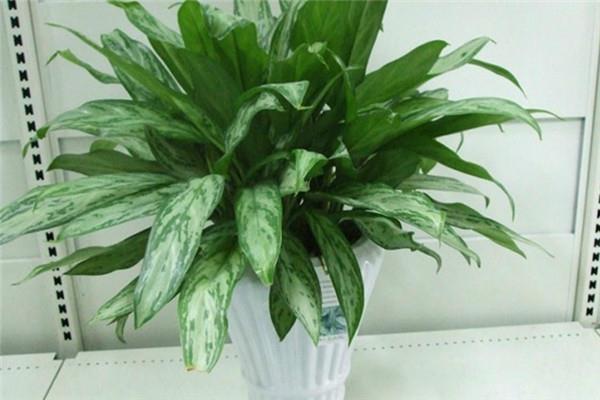
13. Aglaonema: it is famous for its unique air-purifying ability: the higher the concentration of pollutants in the air, the better it can exert its purifying ability! Therefore it is very suitable for dark rooms with poor ventilation.
14. Maidenhair fern: it can absorb about 20 micrograms of formaldehyde per hour, so it is considered the most effective biological purifier. People who deal with paint and coatings all day, or who have people around them who like to smoke, should place at least one pot of fern in the workplace. In addition, it can also suppress the xylene and toluene released by computer monitors and printers.
15. Schefflera: it brings fresh air to smoking households. Its leaves can absorb nicotine and other harmful substances from smoke-filled air, and through photosynthesis convert them into harmless substances of the plant's own. In addition, it can reduce formaldehyde concentration by about 9 mg per hour.
[What are the anti-pollution plants?]
1. Plants that can absorb harmful gases released by household appliances, plastic products, etc.
Sago palm, chrysanthemum, kumquat, pomegranate, four o'clock flower, purslane, Chinese rose, camellia, orchid tree, daisy, wintersweet and marigold can absorb harmful gases released by household appliances, plastic products and the like.
2. Plants that can absorb harmful gases released by renovation, etc.
(1) Plants that absorb formaldehyde: aloe, spider plant, snake plant, cast iron plant and Swiss cheese plant, natural scavengers. Research shows that aloe, snake plant and spider plant have extremely strong ability to absorb the indoor harmful gas formaldehyde.
(2) Eliminating xylene: English ivy, sago palm, chrysanthemum, etc.
(3) Absorbing harmful gases such as hydrogen sulfide, hydrogen fluoride, phenol and ether: Swiss cheese plant: also known as turtle-back banana, Penglai banana, wire lotus and translucent dragon palm, an evergreen vine.
(4) Effectively removing trichloroethylene pollution: daisy and lucky bamboo: daisy is also known as yanming chrysanthemum, spring chrysanthemum, little elegant chrysanthemum, glass chrysanthemum and malantou flower, etc.
(5) Plants that absorb benzene: "Chrysanthemum, sago palm and growing vines can absorb benzene gas clean." These three kinds of flowers all have the ability to absorb benzene and can reduce benzene pollution.
3. Absorbing carbon dioxide
The Swiss cheese plant has a very strong ability to absorb carbon dioxide at night, more than 6 times higher than other flowers.
4. Increasing negative ions
People feel suffocated in a stuffy room not because there is insufficient oxygen indoors, but because negative oxygen ions are extremely scarce. When a TV or computer is turned on indoors, negative oxygen ions rapidly decrease. Cactus, epiphyllum, Christmas cactus, night-blooming cereus, queen of the night, cypress, Chinese arborvitae and Japanese cedar can increase negative ions. This is because the stomata on the fleshy stems of these plants close during the day and open at night, absorbing carbon dioxide while releasing oxygen, thereby increasing the concentration of negative ions in the indoor air.
5. Plants that absorb odors
Golden pothos is a famous odor absorber. The smell of kitchen detergent and cooking fumes are harmful gases, and it can open its stomata and clean away 70% of the harmful gases for us every night. Golden pothos has strong climbing ability and well-developed aerial roots. It can be allowed to climb on a cylinder tied with palm fiber and placed in an entrance hall or hotel, or it can be trained into a hanging form and placed in a study or on a windowsill. It is a flower that is relatively suitable for indoor placement.
If you want to learn more related information, you can continue to follow No.1 Home Network.
placed in an entrance hall or hotel, or it can be trained into a hanging form and placed in a study or on a windowsill. It is a flower that is relatively suitable for indoor placement.If you want to learn more related information, you can continue to follow No.1 Home Network.