How to care for indoor green plants and which varieties are suitable for placing indoors
There are many types of green plants, and the common ones we know include pothos, spider plant, aloe, and so on. Which green plants are best suited for indoor placement? Of course, ones that can protect against radiation, purify the air, and most importantly are non-toxic and decorative. Let's take a look together below.
Types of green plants
Common green plants that are beneficial to human health include spider plant, aloe, cast-iron plant, snake plant, and Swiss cheese plant. What these plants have in common is that they are air purifiers, with a strong ability to absorb harmful indoor gases. Spider plant and snake plant in particular, according to research, can absorb more than 80% of harmful indoor gases.
But are all green plants like this? Are there also green plants that look fresh and lovely but are actually unhealthy to keep indoors? The answer is yes.
Evening primrose is one example. Some may wonder, how could evening primrose, which is favored for its delicate fragrance, also be harmful to human health? In fact, those fragrant gases are a large amount of waste gas released by evening primrose at night after it stops photosynthesis, and they are harmful to the human body. If evening primrose is often kept indoors, it can cause dizziness, and even asthma and insomnia. So placing evening primrose indoors during the day is fine, but by evening, it should still be moved outdoors. That is the healthy way to keep it.
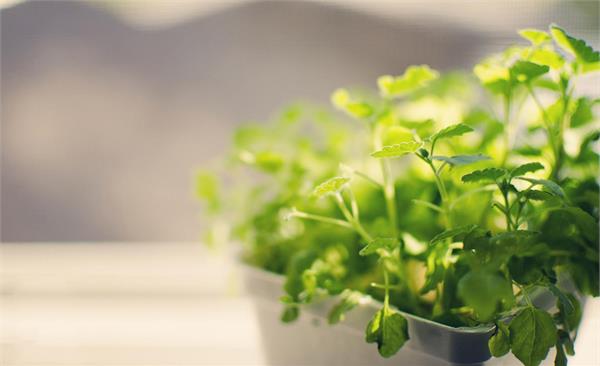
It is not difficult at all. As everyone knows, some flowers can be grown simply in water, that is, hydroponic plants. These plants can thrive as long as they are placed in a bottle of clean water. Below we introduce several green plants that can be grown hydroponically.
1. Mint, which can be used to make tea and cook dishes, and can clear the mind and reduce internal heat.
After mint grows taller, break off the stem and put it in clean water. After about a week it will take root. Look carefully, are there white root hairs?
Look at the effect of placing it in a bottle - the bottle is very simple, left over from used hand sanitizer, and I washed it clean and used it.
2. The most common indoor greenery, variegated spider plant, has a very good air-purifying effect.
After spider plant sends up runners, it produces many small plantlets. These plantlets will take root and slowly grow when placed in water. If you are worried that soil culture will not work well, pull the spider plant out of the pot, wash the soil off the roots, and put it in water.
3. Lucky bamboo, also a plant that does very well hydroponically. These few were picked up from a trash can. I do not know whose they were, but probably they never took root and the owner lost patience and threw them away. After picking them up and putting them in a bottle, half a month later, they finally took root. They are growing quite well now, right?
Cactus: has the effect of absorbing electromagnetic radiation. Placed at home or in the office, it can effectively reduce electromagnetic radiation pollution produced by various electrical and electronic products.
Cast-iron plant: can clear most harmful substances in the air, and has a particularly strong ability to absorb formaldehyde. Spider plant: has a very strong ability to absorb toxic gases, can absorb more than 80% of various harmful gases, and especially has an extremely strong ability to absorb formaldehyde. It can also greatly reduce bacteria and microorganisms in indoor air.
Snake plant: can release negative ions, and at the same time can absorb large amounts of radioactive nuclides such as uranium, remove formaldehyde, trichloroethylene, hydrogen sulfide, benzene, phenol, hydrogen fluoride, and ether, as well as heavy metal particles, and so on.
Aglaia: can absorb toxic gases such as sulfur dioxide, carbon monoxide, and nitrogen peroxide released by household appliances and plastic products, and can also absorb volatile gases such as formaldehyde and benzene.
After plants are converted from terrestrial forms to hydroponic cultivation, although there are some common care principles, they are not all the same from then on. For example, plants that like a dry environment cannot be sprayed on their leaves every day after being grown hydroponically, because their ecological habits have not changed. Therefore, when caring for them, we still need to follow their inherent ecological habits.
If you want to learn more related information, you can continue to follow No.1 Home Network.