Recommendations for the most effective formaldehyde-absorbing plants to help you improve your home environment
Formaldehyde-absorbing plants are usually green plants, such as pothos, aloe, and so on. In the content below, the editor will, based on the results of the ranking of the most effective formaldehyde-absorbing plants, give everyone a proper introduction, which will be of great help to the home environment.
Ranking of the most effective formaldehyde-absorbing plants
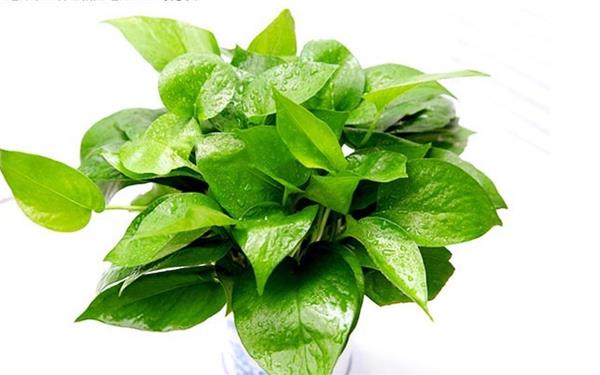
Pothos
Formaldehyde-absorbing ability: Pothos is a large evergreen climbing plant with a very strong ability to purify the air. Pothos can absorb benzene, trichloroethylene, formaldehyde, and other substances from the air, and can also absorb nicotine. For a newly decorated home or a home with smokers, placing pothos is more suitable than anything. According to research by environmental scientists, one pot of pothos in a room of 8~10 sq m is equivalent to an air purifier. It can be seen that pothos has a quite strong air-purifying ability.
Feng shui meaning: vitality. Pothos is a herbaceous plant with an extremely tenacious vitality; it can grow as long as there is water, and is also called the "flower of life." "Tenacious and kind, keeping watch over happiness" can show the host's fine qualities of tenacity, kindness, and hospitality. Pothos also carries the meaning of keeping watch over happiness; placing pothos in the bedroom is conducive to marital harmony.
Snake plant
Formaldehyde-absorbing ability: The snake plant is a natural sweeper and can remove harmful substances from the air. Studies have shown that the snake plant can absorb more than 80% of harmful gases indoors, has an extremely strong ability to absorb formaldehyde, and can effectively remove harmful substances such as sulfur dioxide, chlorine, ether, ethylene, carbon monoxide, and nitrogen peroxide. The snake plant has high ornamental value and can be used for potted display and flowerbed arrangement. It is suitable for decorating homes and office environments, and plays a good role in beautifying the environment and purifying the air.
Aloe
[Super-strength formaldehyde-removal type] If there is lighting within 24 hours, it can eliminate 90% of the formaldehyde in 1 cubic meter of air.
Ivy
[Powerful benzene-removal type] One pot of ivy can break down 90% of the benzene in a room of 8 to 10 sq m, and can take in tiny dust and absorb formaldehyde.
Agave
[All-around type] In a room of about 10 sq m, it can eliminate 70% of benzene, 50% of formaldehyde, and 24% of trichloroethylene.
Chinese rose
[All-around type] It can effectively break down and absorb harmful gases such as hydrogen chloride, hydrogen sulfide, phenol, and ether.
Begonia
[Powerful formaldehyde-absorbing type] Besides being able to absorb formaldehyde and purify the air, it is also highly ornamental.
Four principles to note when using plants to purify indoor environmental pollution
1. Choose plants in a targeted way according to indoor environmental pollution. Some plants have a relatively strong purifying and absorbing effect on a certain harmful substance. If they are selected and grown indoors in a targeted way, they can play a certain auxiliary role in pollution control.
2. Choose plants according to the degree of indoor environmental pollution. Generally, for indoor environments with light pollution and pollution values exceeding the national standard by no more than 1 time, using plants for purification can achieve relatively good results.
3. Choose and place plants according to the different functions of rooms. At night, plants have vigorous respiration and release carbon dioxide, so placing too many plants in the bedroom is not conducive to sleep at night. The decoration materials in bathrooms, studies, living rooms, and kitchens are different, and the pollutants are also different, so plants with different purifying functions can be chosen.
4. Choose and place plants according to the size of the room. The purification of the indoor environment by plants is directly related to the surface area of the plant leaves, so the height of the plant, the size of the crown diameter, and the amount of greenery will all affect the purification effect. In general, for a room of about 10 sq m, placing two plants 1.5 m tall is relatively suitable.
In addition, formaldehyde-absorbing plants also include some relatively common plants such as agave, gerbera, pothos, begonia, and chrysanthemum. However, what the editor wants to remind everyone here is: formaldehyde volatilizes for as long as 3~15 years. If you rely on plants to remove indoor harmful substances, it is far from enough. The best method is to place plants indoors while also ventilating, to reduce indoor formaldehyde concentration.
If you want to learn more related information, you can continue to follow No.1 Home Network.