How to grow Mimosa pudica: care methods, precautions and why it is shy
Mimosa pudica is a very interesting plant, and many people like to grow it. Mimosa pudica is a cute plant whose leaves fold up as soon as it is touched. It is suitable as a potted flower for balconies and indoors, and many people also plant it in courtyards. Below we will look at the care methods and precautions for Mimosa pudica, and why Mimosa pudica gets shy.
What is Mimosa pudica
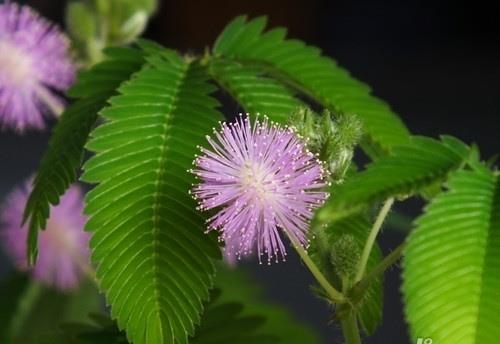
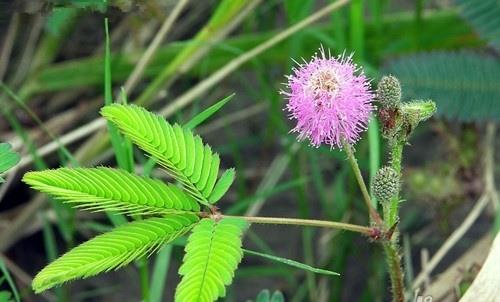
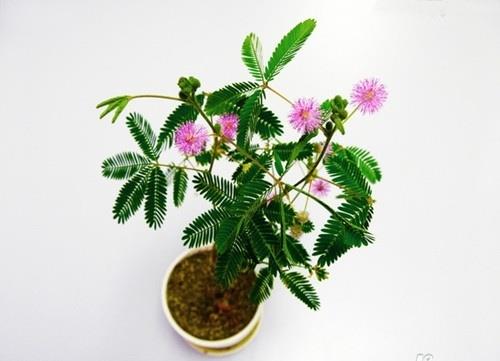
Mimosa pudica is a perennial herb or subshrub in the Fabaceae family. Because its leaves react to heat and light and close immediately when touched by an external force, it is named Mimosa pudica. It is native to the tropical regions of South America, likes warmth and humidity, and is not demanding about soil. The flowers are pink and shaped like fluffy balls, lovely and appealing. After flowering it produces pods, and the fruit is flat and round. The leaves are pinnately compound, alternate, and arranged in a palmate pattern. The flowers, leaves and pods of Mimosa pudica all have good ornamental value, and it is relatively easy to keep alive. It is suitable as a potted flower for balconies and indoors, and can also be grown in courtyards and other places. Mimosa pudica differs from ordinary plants in that when it is touched by the outside world, the petiole droops and the leaflets close. This action is understood by people as "shyness", so it is called Mimosa pudica, zhixiucao, and paichoucao.
Mimosa pudica pictures for appreciation 2
Mimosa pudica care methods:
1. Soil: Mimosa pudica has strong adaptability and is not demanding about soil. It grows well in moist, fertile soil. Sow it in a growing medium prepared by sieving and mixing 2 parts leaf mold, 3 parts garden soil, and 5 parts fine yellow sand.
2. Watering: Mimosa pudica likes moisture. During the summer growing period, water once a day.
3. Sunlight: Mimosa pudica likes sufficient light and tolerates partial shade slightly.
4. Temperature: As a potted ornamental flower, Mimosa pudica should be moved indoors to a sunny spot in winter. Maintaining a room temperature of 10-12°C is enough for it to overwinter safely.
5. Fertilizing: Mimosa pudica needs little fertilizer during the growing period. Applying diluted liquid fertilizer 2-3 times is enough. Do not let it grow leggy, because Mimosa pudica is mainly grown as an interesting foliage plant, and smaller is better.
Mimosa pudica pictures for appreciation 3
Precautions for Mimosa pudica care methods
Water: Mimosa pudica likes moisture. During the summer growing period, water once a day.
Fertilizer: Fertilize once every half month during the seedling stage.
Temperature: Mimosa pudica is not cold-tolerant and likes a tropical climate, so remember to keep it warm in winter.
Sunlight: Mimosa pudica likes sufficient sunlight, and a partially shaded state in summer is best.
Mimosa pudica pictures for appreciation 4
Reason one for why Mimosa pudica gets shy
Plants and animals are not the same. Plants have no nervous system and no muscles, and do not perceive external stimuli, but why Mimosa pudica gets shy is related to a nervous system. Mimosa pudica is supported by fine, net-like actin. When it closes, the actin falls off, producing the closing movement. The actin contains muscle fibers, which is very rare in plants.
Reason two for why Mimosa pudica gets shy
If the leaves of Mimosa pudica are touched, they immediately close up. The greater the touch, the faster they close, and in the end the whole leaf droops as if listless. The leaves and petioles of Mimosa pudica have a special structure, with a pulvinus in the middle that is most sensitive to stimuli. Once a stimulus is touched, the stimulus is transmitted directly to the pulvinus at the base of the petiole, causing the leaf to close.
The above is the relevant introduction in this article, and we hope it is helpful to those who need it. If you have other questions, you can follow Yihao Jiaju Wang to learn more.