An Introduction to the Peacock Plant and Care Precautions
What kind of plant is the Peacock Plant? The Peacock Plant is an expert at removing ammonia pollution from the air. Its formaldehyde-removal value is half that of the spider plant, but it is still much higher than that of ordinary plants. Below, let's look at an introduction to the Peacock Plant and precautions for the Peacock Plant.
Introduction to the Peacock Plant
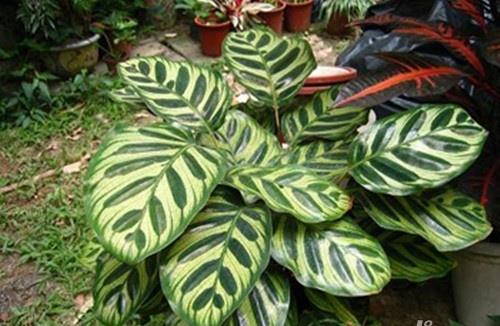
The Peacock Plant is a perennial evergreen herb. It is 30-60 cm tall, with leaves 15-20 cm long and 5-10 cm wide, ovate-elliptic, thin, leathery, and with purple-red petioles. The green leaf surface faintly shows a metallic luster and is bright and vivid, with feather-like, dark green, long elliptic velvety patches arranged alternately left and right along both sides of the midrib. The leaf underside is purple-red.
The Peacock Plant likes semi-shade and cannot tolerate direct sunlight; it adapts to growing in a warm, humid environment. When cultivating it, a certain degree of shading should be provided, and the temperature should be kept at around 12-29°C. In winter, the temperature should preferably be maintained at 16-18°C. It grows vigorously in spring and summer and needs relatively high air humidity, so misting can be carried out; it is not very demanding about soil, but the soil should be kept moderately moist. During the growing season, fertilize about once every 2 weeks, while in winter the soil can be slightly dry and cool, and the frequency of fertilization should be reduced; propagation mostly uses the method of root division; this is carried out in early summer, and cuttings can also be used; the main pests include mealybugs, red spider mites, aphids, scale insects, and so on.
How to Grow the Peacock Plant
For potted Peacock Plant, it is best to use loose, fertile, well-drained, humus-rich, slightly acidic loam. Generally, it can be mixed with 3 parts leaf mold, 1 part peat or sawdust, and 1 part sand, with a small amount of soybean cake added as base fertilizer. Do not use heavy clay garden soil. When potting, first place a 3 cm thick layer of coarse sand at the bottom of the pot as a drainage layer to facilitate drainage.
During the growing period, give sufficient water. Especially in summer and autumn, in addition to often keeping the potting soil moist, it is also necessary to frequently spray water on the leaf surface to lower the temperature and maintain humidity; it requires relatively high air humidity, preferably reaching 70% to 80%; avoid dry air and dry potting soil, but it must not become waterlogged. After late autumn, water should be controlled to help it resist cold and survive the winter. In winter, maintain a dry environment; if it is too wet, the basal leaves will turn yellow and scorch, affecting its ornamental value.
During the growing season from May to September, it should be placed in a shaded or semi-shaded place, maintaining 40%-60% light transmittance and avoiding direct exposure to strong sunlight. Too strong light or dry air can easily cause scorching at the leaf margins and tips and make the leaf surface markings dull and lusterless; however, the light should not be too weak either. If it is kept in a dark room for a long time, with low temperature and insufficient light, its growth will also weaken, which is unfavorable for leaf color formation, and it will lose the unique metallic luster of the leaf surface. In winter, it can receive direct sunlight through glass.
Precautions for the Peacock Plant
The Peacock Plant likes high temperatures and humid air, and grows fastest above 20°C. During the low-temperature season from October each year to April of the following year, in the north it should be moved into a greenhouse to overwinter. The overwintering temperature in winter should not be lower than 15°C, otherwise the leaf color will darken, the leaves will curl, and the leaf tips will turn yellow. If the cold damage is slight, promptly changing the environmental conditions will still allow new leaves to emerge the following spring. If the cold damage is severe, the leaves will die one after another, and even the whole plant may die.
When growing the Peacock Plant, if the indoor temperature difference between day and night is large, you can use plastic film to wrap the pot or use a glass box to keep it warm and humid, and wash the leaf surface once a month with warm water to maintain the color and luster of the leaves. Every spring, after the temperature steadily rises to 20°C, it can be repotted once. When repotting, add new growing medium, cut off residual roots and dead leaves, and replant to promote growth.
The above is the related introduction in this article. I believe that after reading it, you will also have a simple understanding of it. If needed, you can continue to follow No. 1 Home Network to learn more information.