A Detailed Guide to the Growth Habits and Cultivation Methods of Orchids
Orchids are a very popular indoor flowering plant, and cultivating orchids requires particular attention to technique, because they are a rather delicate flower. Below, let us look at the growth habits of orchids and what cultivation methods exist for orchids.
The Growth Habits of Orchids
Orchids are a plant that fears direct sunlight and prefers shade; they cannot tolerate dust and grime, prefer a warm and humid climate, and cannot tolerate waterlogging. During the growth process of orchids, careful attention is needed, otherwise the normal growth of the orchid will be affected.
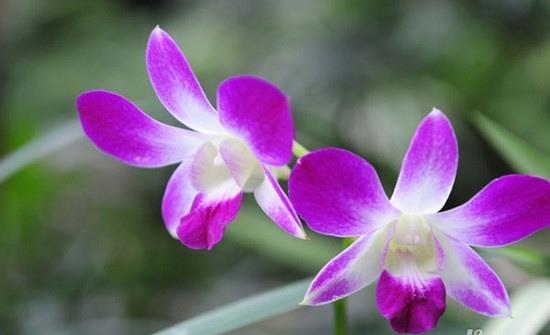
How to Grow Orchids 1. Choosing Soil
Peat soil, black mountain soil, pine needle soil, garden soil, fern roots, sphagnum moss and bark chunks can all serve as the culture medium for orchids. The bottom of the pot must be made to drain well to increase its permeability; you can use a tile shard to cover the drainage hole, then lay a layer of broken brick and stone granules with a thickness of one quarter of the pot's depth, and finally spread the culture soil on top. When planting an orchid, it should be held upright and inserted into the soil, then covered with soil up to the pseudobulb. Pack the soil firmly, and do not fill soil within 2 cm, to make watering easier. After planting, water thoroughly and place in a shady environment, then move it into a ventilated, sunny environment after half a month. The pot surface can be covered with small gravel, which both retains moisture and enhances the ornamental appearance.
How to Grow Orchids 2. Light and Moisture
"Do not take them out in spring, do not expose them to sun in summer, do not let them dry out in autumn, do not keep them wet in winter" - this is the cultivation principle that orchids need to follow. That is, in spring, because of the temperature, taking them out of the room makes them susceptible to cold, which affects their growth, so it is more appropriate to take them out in April. In summer, they should be under a shade canopy and must never be exposed to direct sunlight; they can be appropriately shaded. Autumn is the period when orchids sprout and send up flower spikes, so maintaining humidity is especially important. In winter, watering needs to be controlled, because their water requirement is low, and too much water easily causes root and leaf diseases.
How to Grow Orchids 3. Fertilizing
Fertilizer application should avoid being too concentrated, so during the growing period, you can use horse hoof sauce residue water, soybean cake water, etc., once every half month. If potassium dihydrogen phosphate is applied in an appropriate amount, the effect is even better. Fertilizing in the hot summer season is not appropriate, because the temperature is too high and water is lost quickly, so the fertilizer concentration will become thicker and affect plant growth. In addition, daily watering is needed, along with spraying water on the leaves several times. The water should be slightly acidic, which benefits plant growth.
How to Grow Orchids 4. Pruning
During the orchid cultivation process, the plant needs to be pruned; for example, when old leaves turn yellow and withered, they all need to be pruned, which both benefits the growth of other leaves and allows for ventilation. Diseased leaves especially need to be pruned promptly to prevent contagion. In addition, the scissors also need to be disinfected to prevent infection.
Orchids, these extremely delicate flowers, need to be cultivated in strict accordance with their cultivation techniques in order to ensure their growth. There are a great many varieties of orchids, and many are precious cultivars, hailed as the finest among flowers, with very high value, and they often appear in various exhibitions. The beauty of orchids makes countless people proud, and growing them indoors can beautify the environment and cultivate both body and mind.
The above is the related introduction in this article. I believe that after reading it, you now have a simple understanding of this. If you need more, you can continue to follow Yihao Home Network to learn more information.