How to Grow a Thick-Leaf Plant? A Brief Introduction to the Thick-Leaf Plant and Its Care Methods
The thick-leaf plant, which is a kind of plant, is inexplicably a little cute. Many people may never have come across a thick-leaf plant as a potted plant, or some people are just getting to know it and are not very familiar with how to grow it! Below, let's take a look at a brief introduction to the thick-leaf plant and how to grow it well.
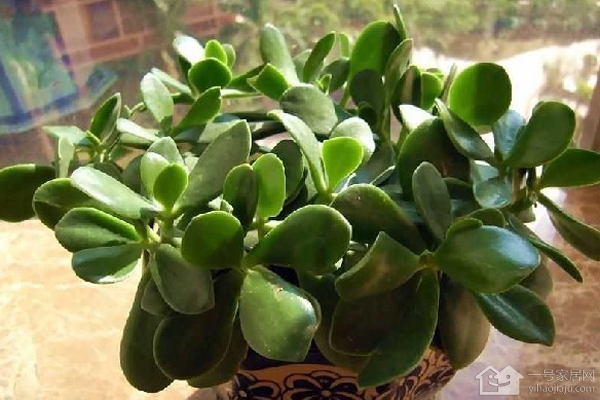
A Brief Introduction to the Thick-Leaf Plant
The thick-leaf plant originates from South Africa, and it is an evergreen shrub-type potted plant. It is relatively drought-tolerant by nature but not cold-tolerant, and it greatly loves warm environments with ample sunlight, while it can also survive in semi-shaded environments. In winter, the survival temperature and environment must not be lower than 6°C.
Care Method 1 for the Thick-Leaf Plant: Propagation
The thick-leaf plant is mostly propagated by cuttings. Generally, take plump and firm branches, preferably 8-10 cm long, cut them off and let them dry in a ventilated place, then insert them into the growing medium and water them appropriately; after about 3 weeks they will take root. This cutting method mostly uses terminal branches, but there is another cutting method that can use a single leaf, inserting it into a sand bed; it roots in about 4 weeks, and once the roots grow to about 2 cm, it can be taken out and potted for management.
Care Method 2 for the Thick-Leaf Plant: Repotting
The thick-leaf plant is a fast-growing plant, and generally it can be repotted every spring. When repotting, remove part of the old soil and replace it with some fresh soil. To ensure the thick-leaf plant has a full shape and lush branches and leaves, generally fertilizer should not be applied too much. During the growth period of the thick-leaf plant, it can be watered 2-3 times a week; in hot and humid environments, the number of waterings should be reduced. If it is really short of water, then water needs to be sprayed on the leaves to prevent waterlogging, and since the thick-leaf plant itself is drought-tolerant, this will not have no effect.
Care Method 3 for the Thick-Leaf Plant: Pruning
To ensure the thick-leaf plant grows luxuriantly, the branches and leaves generally need to be pruned. When pruning, its original shape should be maintained, and old leaves and yellow leaves should be cut off, leaving fresh branches and leaves, while too much should not be pruned at one time, so as to prevent the plant from being harmed.
Care Method 4 for the Thick-Leaf Plant: Water and Fertilizer Management
The principle of moderate watering for the thick-leaf plant must be strictly followed. In summer, when the climate is dry and the temperature is too high, more water should be given as a supplement, but it should not be poured directly into the soil, as this will cause root rot; the soil should be watered only when it looks dry, but water can be sprayed on the leaves to supplement moisture. In winter, watering should be restrained, once every half month is enough, which is half of the summer watering amount. Fertilize more in summer, and in winter the number of fertilizer applications can be reduced.
Care Method 5 for the Thick-Leaf Plant: Pests and Diseases
The only way to prevent pests and diseases is to spray pesticide, and the pesticide concentration should not be too strong. The main diseases are anthracnose and leaf spot, which can be sprayed with a 70% thiophanate-methyl 1000-fold solution.
The above is the relevant introduction in this article. I believe that after reading it, you also have a simple understanding of this. If needed, you can continue to follow No.1 Home Network to learn more information.