How to Grow a Peace Lily: Detailed Guide to Cultivation Methods and Precautions
The peace lily, also known as Spathiphyllum, is a very fine ornamental plant. Many people like to grow this plant. Below, let us look at how a peace lily should be grown and what precautions should be taken when growing a peace lily.
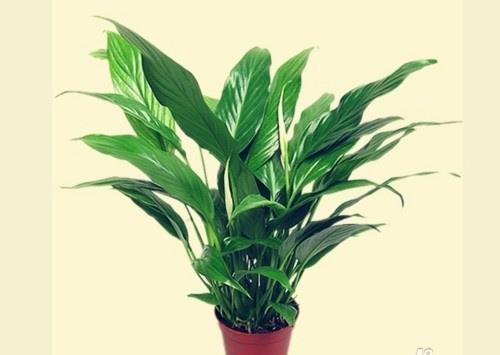
Cultivation Methods for the Peace Lily
1. Soil: Potted peace lilies require loose soil with good drainage and aeration; heavy clay soil must not be used. Generally, a substrate can be prepared by mixing leaf mold and peat soil with a small amount of perlite; when planting, add a small amount of organic fertilizer as a base fertilizer.
2. Timing: Carry this out in spring from March to May in conjunction with repotting, or after autumn.
3. Division: Select robust two-year-old plants for division propagation. Lift the entire peace lily out of the pot, cut the rhizome apart from the base of the plant clump, with each clump having at least 3 to 4 leaves.
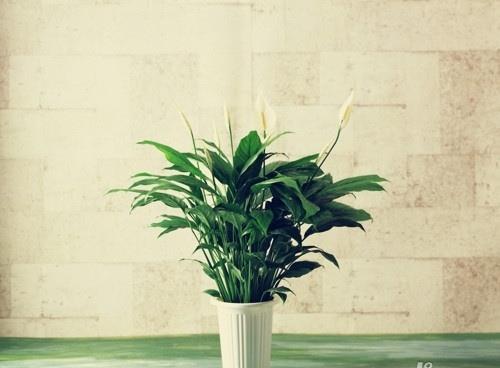
4. Potting: Replant the divided plants into the pot, and after planting place them in a semi-shaded spot to recover. Wait for them to take root. Here it should be noted that when cutting, a portion of the stem must be included, then apply charcoal ash to the wound to prevent rot. Once the root system has returned to normal, proceed with normal care.
5. Light: Light is very important for plant growth. Peace lilies need fairly good light in winter and early spring, but as the light gradually intensifies, shade should be provided gradually. If it is displayed in a shaded spot, it must not be placed directly in the sun, as this is very bad for the growth of the peace lily.
6. Temperature: The peace lily is a heat-loving species and should be cultivated in a high-temperature greenhouse. In winter, the minimum nighttime temperature should be 14-16°C, and the daytime temperature should be around 25°C.
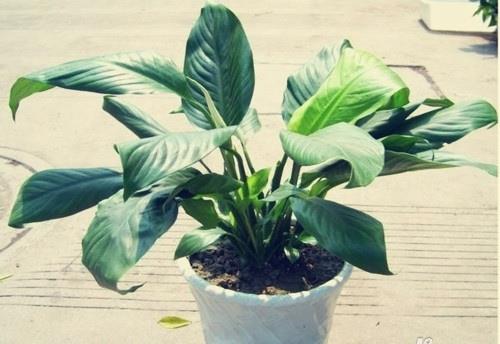
7. Watering: During the growth period, the peace lily should be kept with moist potting soil at all times, but it must not be watered excessively. Too much watering will keep the potting soil wet for a long time, which easily causes root rot and yellowing of the plant.
8. Fertilizing: Do not apply concentrated fertilizer or raw fertilizer, and after applying solid fertilizer, water once with clear water. It is best to use dilute fertilizer water instead of clear water for irrigation; this generally will not cause fertilizer burn, and the peace lily will grow very luxuriantly.
9. Pests: Plants are most susceptible to pests during the growth period. Mite-specific pesticides should be sprayed regularly for prevention and control, such as dicofol, hexythiazox, and pyridaben.
10. Repotting: Repot once every 1-2 years. In conjunction with repotting, prune the root system, remove some old roots and overly long roots, pick out the old soil, and replace it with new potting soil to promote flowering of the peace lily.
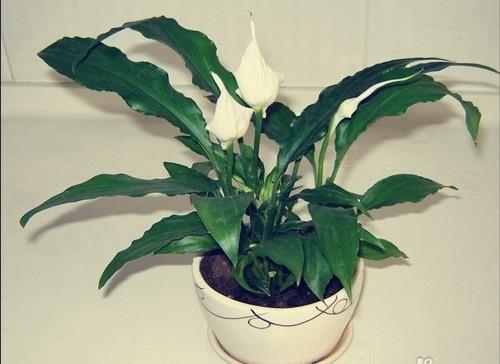
Precautions for Growing a Peace Lily
1. Because the peace lily grows quickly and has a relatively high fertilizer requirement, liquid fertilizer must be applied once every 1-2 weeks during the growing season;
2. At the same time, provide sufficient water and always keep the potting soil moist. During high-temperature periods, water should also be sprayed on the leaves and the ground to increase air humidity. If the surrounding environment is too dry, new leaves will become smaller and yellow, and in severe cases will wither, turn yellow, and fall off. In late autumn and winter, the amount of watering should be reduced, and it is enough to keep the potting soil slightly moist;
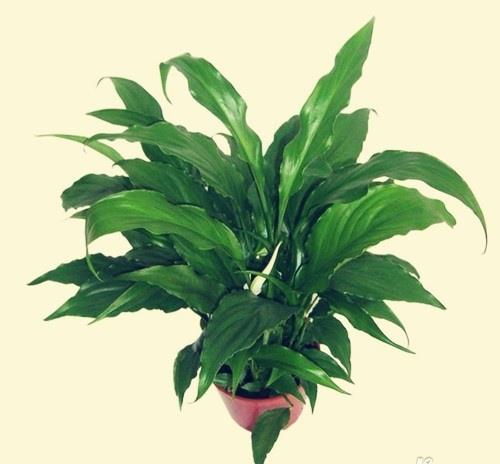
3. It requires semi-shade or diffused light conditions, and during the growing season it must be shaded by 60%-70%. If the light is too strong, the leaves are easily scorched and withered, and the leaf color becomes dull and loses its luster; if the light is too dim for a long time, the plant will grow weakly and will not easily bloom;
4. As a heat-loving species, prolonged low temperature and dampness easily cause root rot and yellowing of the aboveground parts, so in winter attention should be paid to cold protection and heat preservation, while keeping the potting soil moist.
The above is the relevant introduction in this article. I believe that after reading it you have also gained a simple understanding of this. If needed, you can continue to follow No.1 Home Network to learn more information.