How to Grow Clivia Seedlings in Summer
Clivia symbolizes wealth, good fortune, and happiness, and dwelling in the valley without being humble is the flower language of Clivia, so it is even more widely grown by people. Below, let's look at how to grow Clivia seedlings and how to grow Clivia in summer.
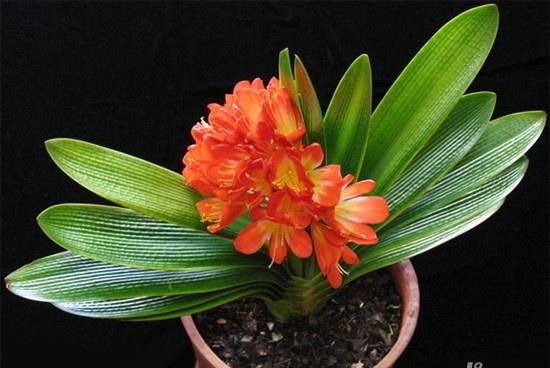
I. How to Grow Clivia
Clivia has extremely strong shade tolerance and likes a moist, cool environment. It is neither cold-tolerant nor heat-tolerant. When growing Clivia in summer, prevent exposure to blazing sun. When growing Clivia in winter, prevent it from freezing. When the temperature is below 10 degrees, the growth rate of Clivia slows down. Last winter, the temperature was not controlled well, and it was clearly observed that Clivia almost stopped growing. When the temperature is 15-25°C, it is the most suitable growing temperature for Clivia. Next, let's introduce every detail in detail.
1. Soil
Fertile, loose neutral or slightly acidic humus soil is the most suitable hotbed for Clivia. Soil choice is the number one key factor for Clivia, and it is also one of the reasons many people fail to grow it well.
2. Light
Clivia likes semi-shade. When growing Clivia indoors, the effect of light on it needs to be adjusted manually. The leaves of Clivia are phototropic. If it is kept in one place indoors for a long time, the leaves will definitely turn toward the direction of the sun, and as far as its plant shape is concerned, it will be difficult to achieve the ornamental effect of forming a line when viewed from the side and looking like a fan when viewed from the front.
3. Temperature
As mentioned in the summary, the most suitable temperature is 15-25 degrees.
4. Watering
Clivia has fleshy roots and likes air but fears waterlogging. In addition, Clivia leaves have a waxy layer, and in winter when the temperature is low, transpiration and evaporation of water are low. Therefore, watering should not be excessive; just water together with fertilizing and keep the potting soil moist. The soil should not be too dry or too wet. Each watering must soak through, and after flower buds appear, water a little more. About every 20 days, combined with watering, apply once fermented soybean cake water, diluted fishy water, or water from soaking water chestnuts, combining watering and fertilizing. When room temperature is low, watering should be controlled to prevent the potting soil from becoming too wet; overly wet potting soil can cause root rot and death of the plant, but the potting soil must not be allowed to become too dry either.
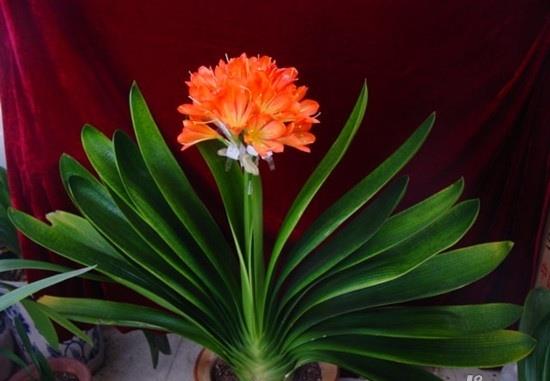
5. Fertilizing
When Clivia lacks nutrients, various problems appear, such as narrow new leaves and very pale color. In terms of nutrients, the needed nutrients should be added according to the season. Clivia is generally fertilized in winter. Phosphorus fertilizer and potassium fertilizer are more beneficial for growing Clivia; when topdressing, apply less nitrogen fertilizer. Be sure to control the amount of fertilizer, otherwise it is easy to cause scorch-like symptoms at the leaf tips of Clivia. Especially in winter, if spots appear on the leaves and the root system turns yellow, it is due to excessive fertilizing. Here, I'll teach you 2 ways to obtain household phosphorus fertilizer and potassium fertilizer. You can choose eggshell powder and thoroughly rotted fishy water; these two are very good organic phosphorus fertilizers. Rice bran ash and tobacco ash can be used as potassium fertilizer when fertilizing Clivia. Three months before flowering, apply liquid fertilizer mainly based on phosphorus and potassium fertilizer to promote flower stalk emergence and blooming.
6. Keeping Warm
The suitable growing temperature for Clivia in winter is 15-20°C, and it is best not to go below 10°C. After the flower stalk emerges, the temperature should be kept at around 18°C, and the day-night temperature difference is best around 10°C; otherwise, the flower stalk will bloom before reaching the proper height, and "stalk clamping" is likely to form. When the outdoor temperature at night is below 10°C, Clivia should be moved indoors. When the indoor temperature is below 10°C, in addition to covering the surface of the potting soil with a 1 cm thick layer of charcoal powder for insulation, the flowerpot should also be placed in a sunny, warm place indoors. When the indoor temperature is especially low, a plastic film can be placed over the flowerpot to raise the temperature, but the temperature inside the cover must not exceed 25°C; if it exceeds that, ventilate promptly to cool it down.
7. Extending the Flowering Period
Extending the flowering period: The flowering period of Clivia is mostly from December to March of the following year. The method to extend the flowering period is to place it in a dark place when the flowers are about to open, appropriately control watering, and keep the temperature at 8-12°C. In this way, the flowering period can be extended by 10-20 days.
8. Protecting Leaves
Short, broad, thick, green, glossy, and upright leaves are the characteristics of healthy Clivia. In addition to providing reasonable fertilizer and water, the leaf surface must be kept clean to improve photosynthetic efficiency. First, regularly wash the leaves, using clean water at the same temperature as the room to spray, rinse, or wipe away dust on the leaves; second, promptly spray fungicide to prevent leaf spot disease, leaf blight, and stem rot, ensuring the leaves remain green.
9. Time for Repotting
The time and frequency of repotting and changing soil for Clivia depend on the size of the seedling and the season. Mature Clivia like these need to have their soil changed once a year. The best time to change the soil is in spring and autumn, because Clivia grows vigorously at this time and will not be affected in growth by changing the soil. Take the Clivia out of the pot, cut off rotten roots and old roots with no absorption capacity, and remove the spent soil. Spray "Hushu Jiangjun" inside and outside the leaves to disinfect, sterilize, keep warm, and protect against cold. After that, fill in 2-5 cm thick nutrient soil, grab a handful of soil to fill the inside of the root mass firmly, then place the plant in the pot, and when the nutrient soil filled into the pot reaches half the height of the pot, gently press downward along the edge of the pot with your hand, so that the roots all stand in the pot and are not easily bent. The key point of changing soil is to fill the root area firmly with soil. Otherwise, if there is no soil around the roots, water and nutrients cannot reach the roots, and root rot and stalk clamping are likely to occur (what is Clivia stalk clamping). After changing the nutrient soil, water thoroughly.
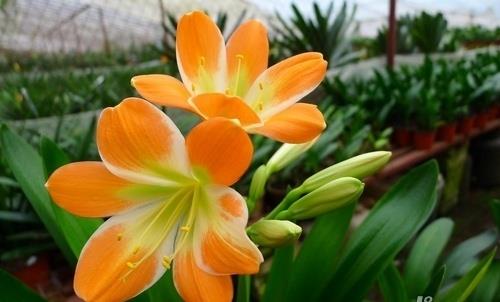
II. How to Grow Clivia Seedlings
1. Temperature: appropriately slightly higher than for mature Clivia. 15-30 degrees is best.
2. Environmental humidity requirement: not very high; normal household humidity is enough.
3. Light: cannot be exposed to direct sunlight and needs shading; placing it on a south-facing windowsill in a spot not reached by direct sun is enough. As for the watering cycle, frequent observation is best; avoid water accumulating at the bottom of the pot or the flower soil drying out completely. When flower soil can be pinched into a ball by hand and breaks apart as soon as it is touched, that is the sign that it is time to water. (For Clivia seedlings, the best method is spray irrigation with a spray bottle. Point the nozzle upward and spray onto the leaves. The benefit of doing this is that besides achieving the purpose of watering, it can also wash off dust, and at the same time leave mist droplets on the leaf surface, ensuring a certain humidity on the leaf surface. In sunlight, water evaporation can lower the leaf surface temperature and prevent sunscald.)
4. Soil: The flower soil should not be too coarse or too fine. Since there is only 1 root, overly coarse flower soil makes it easy to lodge, and at the same time being too air-permeable easily damages the roots of the seedling. It also must not be too fine, or it will fail to achieve drainage and aeration and can very easily cause root rot. After the leaf of a 1-leaf seedling has grown fully, hardening off can be carried out by increasing the watering interval so that the flower soil is slightly drier than usual (but must not dry out completely). In winter, the seedling can also be placed in a relatively cold environment (absolutely not below 5 degrees) for a period of time. This can strengthen the stress resistance of the seedling. Growth will be healthier.
5. Fertilizing: Seedlings do not need base fertilizer, nor do they need liquid topdressing. Foliar fertilizer can be applied appropriately, and the fertilizer must be dilute. Once seedlings have 2 or more leaves, managing them is basically no different from managing large flowering plants.
III. How to Grow Clivia in Summer
Summer is about to begin, so friends should pay special attention to Clivia growing methods. As mentioned above, Clivia fears sun exposure. So protect it from sun. There are also several other points to pay special attention to:
1. Prevent direct sunlight; do not expose to blazing sun
In summer, Clivia should be shielded from strong light all day. Using the oblique sunlight in the early morning each day to sun it for a while is enough to satisfy photosynthesis.
2. Prevent high temperatures; do not let it dry out
The suitable temperature for Clivia in summer is 18°C-25°C. Placing it in an air-conditioned room is best; a shaded, ventilated spot on a balcony is also fine. When watering, it is best to use tap water that has been left in the sun for two or three days, and water once every day after 6 p.m. Do not let the potting soil become too dry or too wet.
3. Prevent leggy growth; do not fertilize
Summer is the dormant period for Clivia, so stop fertilizing, water moderately, and control humidity as effective measures. If the potting soil has been fertilized too heavily or the fertilizer effect is too strong, pour out the soil from the upper part of the flowerpot, mix in 1/3-2/3 sand, mix evenly, and put it back into the pot. This not only reduces fertilizer strength but also helps lower the temperature.
4. Prevent dust pollution; do not water with dirty water
The leaf surface of Clivia should be kept clean. Once a week, dip fine gauze in clean water, wring it dry, and gently wipe once. Watering with dirty water will cause roots and leaves to rot and turn yellow.
5. Prevent soil compaction; do not use clay (loess) in the pot. Clivia is suited to cultivation in loose, air-permeable, water-permeable, fertile humus soil with a pH value of around 7.0.
6. Prevent disease; do not let it become infected
When changing soil or wiping leaves, movements should be gentle to prevent roots and leaves from being wounded and exuding sap, which can trigger infection and cause decay.
The above is the relevant introduction in this article. I hope it is helpful to those who need it. If you have other questions, you can follow No.1 Home Network to learn more.
II. How to Grow Clivia Seedlings
1. Temperature: appropriately slightly higher than for mature Clivia. 15-30 degrees is best.
2. Environmental humidity requirement: not very high; normal household humidity is enough.
3. Light: cannot be exposed to direct sunlight and needs shading; placing it on a south-facing windowsill in a spot not reached by direct sun is enough. As for the watering cycle, frequent observation is best; avoid water accumulating at the bottom of the pot or the flower soil drying out completely. When flower soil can be pinched into a ball by hand and breaks apart as soon as it is touched, that is the sign that it is time to water. (For Clivia seedlings, the best method is spray irrigation with a spray bottle. Point the nozzle upward and spray onto the leaves. The benefit of doing this is that besides achieving the purpose of watering, it can also wash off dust, and at the same time leave mist droplets on the leaf surface, ensuring a certain humidity on the leaf surface. In sunlight, water evaporation can lower the leaf surface temperature and prevent sunscald.)
4. Soil: The flower soil should not be too coarse or too fine. Since there is only 1 root, overly coarse flower soil makes it easy to lodge, and at the same time being too air-permeable easily damages the roots of the seedling. It also must not be too fine, or it will fail to achieve drainage and aeration and can very easily cause root rot. After the leaf of a 1-leaf seedling has grown fully, hardening off can be carried out by increasing the watering interval so that the flower soil is slightly drier than usual (but must not dry out completely). In winter, the seedling can also be placed in a relatively cold environment (absolutely not below 5 degrees) for a period of time. This can strengthen the stress resistance of the seedling. Growth will be healthier.
5. Fertilizing: Seedlings do not need base fertilizer, nor do they need liquid topdressing. Foliar fertilizer can be applied appropriately, and the fertilizer must be dilute. Once seedlings have 2 or more leaves, managing them is basically no different from managing large flowering plants.
III. How to Grow Clivia in Summer
Summer is about to begin, so friends should pay special attention to Clivia growing methods. As mentioned above, Clivia fears sun exposure. So protect it from sun. There are also several other points to pay special attention to:
1. Prevent direct sunlight; do not expose to blazing sun
In summer, Clivia should be shielded from strong light all day. Using the oblique sunlight in the early morning each day to sun it for a while is enough to satisfy photosynthesis.
2. Prevent high temperatures; do not let it dry out
The suitable temperature for Clivia in summer is 18°C-25°C. Placing it in an air-conditioned room is best; a shaded, ventilated spot on a balcony is also fine. When watering, it is best to use tap water that has been left in the sun for two or three days, and water once every day after 6 p.m. Do not let the potting soil become too dry or too wet.
3. Prevent leggy growth; do not fertilize
Summer is the dormant period for Clivia, so stop fertilizing, water moderately, and control humidity as effective measures. If the potting soil has been fertilized too heavily or the fertilizer effect is too strong, pour out the soil from the upper part of the flowerpot, mix in 1/3-2/3 sand, mix evenly, and put it back into the pot. This not only reduces fertilizer strength but also helps lower the temperature.
4. Prevent dust pollution; do not water with dirty water
The leaf surface of Clivia should be kept clean. Once a week, dip fine gauze in clean water, wring it dry, and gently wipe once. Watering with dirty water will cause roots and leaves to rot and turn yellow.
5. Prevent soil compaction; do not use clay (loess) in the pot. Clivia is suited to cultivation in loose, air-permeable, water-permeable, fertile humus soil with a pH value of around 7.0.
6. Prevent disease; do not let it become infected
When changing soil or wiping leaves, movements should be gentle to prevent roots and leaves from being wounded and exuding sap, which can trigger infection and cause decay.
The above is the relevant introduction in this article. I hope it is helpful to those who need it. If you have other questions, you can follow No.1 Home Network to learn more.