What is the flower language of Echeveria? How to grow Echeveria well
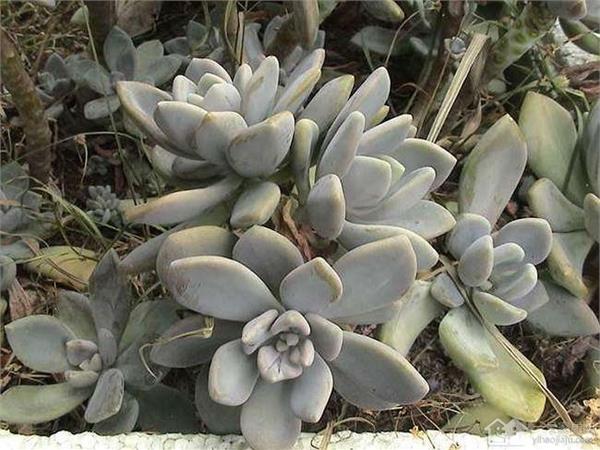
Echeveria is a succulent plant, named for its rosette-shaped leaf disc that closely resembles a blooming lotus. Nowadays many people like to grow this plant. Below let us learn about what the flower language of Echeveria is and how to grow Echeveria well.
The benefits of Echeveria
Jewelry flower, also known as Echeveria, with aliases pink lotus, Graptopetalum paraguayense, immortal lotus, first frost, and lotus palm, is one of the most beautifully shaped foliage flowers. Native to Mexico. Perennial herb. Echeveria tastes sweet and mild, is cool in nature, mainly enters the liver and kidney meridians, and has the effects of calming the liver and cooling the blood, so it can treat liver disease, cirrhosis, and high blood pressure. As mentioned earlier, its special feature is that it can treat uric acid and gout. In addition, it has significant curative effects on women's conditions such as red and white vaginal discharge, dark spots, and liver spots. It also has some skincare effects. Echeveria is also the most convenient raw fresh food for treating high blood pressure; simply pick the leaves, wash them, and chew them. Patients with liver disease, uric acid, gout, high blood pressure, and other conditions can grow it in pots on a balcony at home for ornamental purposes and frequently pick and eat it, which can keep the body healthy and the spirit happy.
The flower language of Echeveria
What is the flower language of Echeveria? The flower language and symbolic representative meaning of Echeveria: love that never withers. Echeveria is named for its rosette-shaped leaf disc that closely resembles a blooming lotus, and is praised as the "flower that never withers."
How to grow Echeveria
1. Soil: It prefers sandy loam rich in humus, and can also adapt to poor soil. The potting soil should be loose, fertile sandy soil with good air permeability. It can be mixed with 3 parts leaf mold, 3 parts river sand, 1 part garden soil, and 1 part furnace slag, and mixed with a small amount of calcium materials such as bone meal.
2. Watering: Follow the principle of "do not water until dry, and water thoroughly when watering" to avoid water accumulation in the potting soil, otherwise root rot will occur. When the air is dry, water can be sprinkled around the plant, but water should not accumulate on the leaf surface, especially the center of the leaf rosette, otherwise heart rot will occur. In particular, avoid prolonged rain exposure.
3. Sunlight: Echeveria tolerates high temperatures and intense sun. However, if the light is too strong, the leaves are prone to aging, which affects the ornamental effect. Therefore, when the weather is hot, it should be placed on a balcony or windowsill with light in the morning and evening for cultivation.
4. Temperature: In winter, place it indoors in a sunny place. If the minimum nighttime temperature is around 10°C and there is a certain temperature difference between day and night, water appropriately and fertilize as needed so the plant continues to grow. If such a high temperature cannot be maintained, control watering, keep the potting soil dry, and stop fertilizing, allowing the plant to go dormant; it can tolerate a low temperature of 5°C, and some varieties can even tolerate a low temperature of 0°C.
The above is the relevant introduction in this article. I believe that after reading it, you also have a simple understanding of this. If needed, you can continue to follow No. 1 Home Network to learn more information.