Growing Conditions for Rubber Plants and Points to Note When Growing Rubber Plants
Many people like to grow rubber plants (Ficus elastica) because their leaves are large and evergreen. But there are still many people who do not know how to grow rubber plants, and some even kill them. Below we take a detailed look at the growing conditions for rubber plants and points to note when growing them.
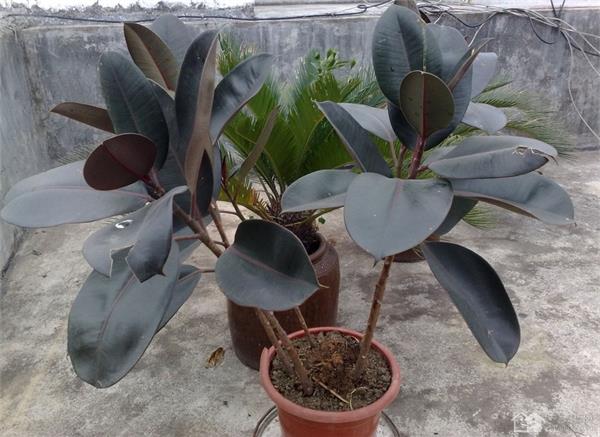
Temperature for Rubber Plants
Rubber plants grow fastest at a high temperature of 30°C, but they fear extreme summer heat; when the weather is hot, you should spray water on the leaves to increase air humidity. They are not cold-tolerant, and the overwintering temperature should preferably not be lower than 15°C; when the temperature is below 5-8°C, they are prone to cold damage.
Light for Rubber Plants
Rubber plants like light, can tolerate direct sun, and can also tolerate semi-shade; in a semi-shade environment they grow relatively well. They like warmth and are not cold-tolerant; they like good ventilation, and poor ventilation will cause leaf drop. They like moisture and are slightly tolerant of drought. They like humid air; if the air is too dry for a long time, growth will be poor and the leaves will become smaller.
Soil for Rubber Plants
Soil selection: Rubber plants are highly adaptable to soil and like loose, fertile humus soil; they can tolerate light alkalinity and slight acidity. Small plants should be repotted every spring, while mature plants can be repotted once every two to three years. When growing them at home, in order to control the size of the plant, it is not advisable to repot them into a large pot.
Fertilizer and Water Management for Rubber Plants
Rubber plants are woody plants and need a large amount of fertilizer throughout their growth process. In addition to applying some horse-hoof slices and the like as a base fertilizer each spring when repotting, during the peak growing season apply a dilute thin cake fertilizer water or compound flower fertilizer mainly based on nitrogen fertilizer about once every half month. Fertilizing should be done on the evening of a sunny day and when the potting soil is on the dry side, which helps the plant absorb it. With sufficient fertilizer and water, growth will be vigorous and the leaf color dark green.
Rubber plants like water and moisture, but they are averse to waterlogging and are not tolerant of drought. In spring and autumn, the potting soil should be kept moist, and water should often be sprinkled on the leaves and around the plant to increase air humidity. In summer, rubber plants need a relatively large amount of water and need to be watered every day to keep the potting soil moist, while also increasing the number of times water is sprinkled. When the temperature is lower in winter, it is better to water so that the potting soil is moist but leaning dry, but if the winter temperature is around 10°C, the potting soil should be kept moist; when the potting soil is relatively dry, leaf drop is likely.
Water moderately during the growing period to make the potting soil completely moist. In midsummer, in addition to watering, water should also be sprayed on the leaves several times. In autumn and winter, reduce the amount of watering. When the temperature is relatively low in winter, watering must be controlled, otherwise long-term low temperature or moist potting soil can easily cause root rot, yellowing and falling leaves, or even death.
Points to Note for Rubber Plants
1. Rubber plants have strong apical dominance and should be pruned in time to encourage side branches.
2. Rubber plants like light and can also tolerate shade; variegated varieties need bright light every day, otherwise the leaf color will be poor.
3. Sudden leaf drop in rubber plants: For tree-type varieties, it may be due to overwatering; winter temperatures that are too low; too much or too concentrated fertilizer; or a sudden attack of cold wind. For trailing varieties, it may be due to light that is too weak; or it may be because the plant was moved from a suitable environment to another environment.
4. Insufficient nitrogen fertilizer in rubber plants will cause the oldest lower leaves to drop, so fertilizer should be supplemented in time.
5. During the vigorous growing season, diammonium phosphate, potassium dihydrogen phosphate, etc. should be applied as a top dressing.
6. It is enough to keep the soil in a slightly dry or slightly moist state often. Summer is the stage when rubber plants need the most water, so they can be watered more. Winter is the period when rubber plants need the least water, so water should be supplied sparingly.
The above is the relevant introduction in this article. I believe that after reading it you also have a simple understanding of this. If needed, you can continue to follow No. 1 Home Network to learn more information.