What are the cultivation methods and precautions for Anthurium?
Anthurium can be grown as a potted plant. A single potted bloom can last as long as 4-6 months, and it can flower year-round. Many people keep it at home, and its ornamental value is very high. It looks like an open red palm, with a small golden-yellow spadix standing upright on the palm, making it especially eye-catching; botanically it is called a "spathe". Below, let us take a detailed look at how to grow Anthurium and the precautions for growing it.
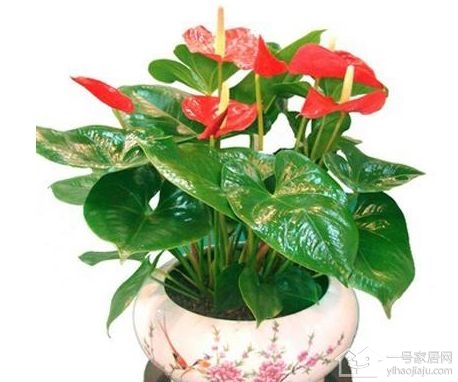
How to grow Anthurium
How to grow Anthurium well is a meticulous task. Drainage at the bottom of the pot must be considered, and more broken bricks, tiles, gravel and similar materials should be added. After planting, water thoroughly and place it in a cool place to recover; just spray water on the leaves 1-2 times a day and keep the surrounding air humid. Repot once every 1 year in spring, remove dead roots and some old roots to encourage new roots to sprout, and add some fresh soil at the same time.
Precautions for growing Anthurium
Humidity
Normal growth of Anthurium requires about 70% air humidity, which is generally very difficult to achieve in ordinary home cultivation. You can wipe the leaves wet with a clean damp towel several times a day, or spray water around the plant regularly to increase air humidity. (But be sure not to sprinkle water on the flowers, so as not to affect their ornamental quality.)
Watering and fertilizing
Under normal growth conditions, water the potting soil weekly, allowing it to dry out and become moist alternately. Generally follow the principle of not watering when the soil surface is dry, and watering thoroughly when you do water. In spring, autumn and winter, the frequency and amount of watering can be reduced appropriately. Every half a month, apply a 7-8% special nutrient solution or fertilizer water diluted 500 times along with watering.
Pruning
Generally, during the growth of Anthurium, the petioles at the base gradually degenerate, and when the stipules become dry they can be cut off promptly. After flowering, when the flower stalk turns yellow, it must also be cut off as soon as possible from the base, leaving a 2 cm protective stub.
Temperature
When growing Anthurium at home, the temperature should be maintained as much as possible. The optimal growth temperature for Anthurium is 16-24°C, and the minimum temperature should be kept above 12°C. In ordinary households with heating facilities, this condition is easy to meet. But at the same time, note that the flowerpot must not be placed on a radiator or too close to a radiator. When the summer temperature exceeds 30°C, the plant must be moved to a relatively north-facing room in a ventilated position, and water can be sprayed around the plant to cool it down.
Light
Normal growth of Anthurium requires sufficient scattered light. For home cultivation, generally note the following: in summer, avoid strong direct light on the leaves and flowers; in autumn and winter, when conditions permit, move it near a window to increase light. The plant also needs to be rotated regularly to ensure it receives even light and to promote a full, rounded crown shape.
The above is the relevant introduction in this article. I believe that after reading it, you also have a simple understanding of this. If needed, you can continue to follow No. 1 Home Network to learn more information.