Ivy care methods and precautions
Ivy can add color to indoor spaces and absorb toxic and harmful gases indoors, with a very obvious effect. Ivy adapts to various climates, and no matter what the indoor environment is like, it can grow tenaciously. Below, let's look at how to grow ivy well and the precautions for growing ivy.
Growing methods
1. The temperature should be suitable. Ivy by nature prefers warmth, and the suitable growth temperature is 20°C-25°C, so it is best to place it indoors for care. Also, in summer, pay attention to air circulation and suitable temperature, and in winter the minimum temperature should be kept at 5°C. Of course, it can generally be kept at 10°C.
2. The light intensity should be moderate. Only in this way can the leaf shape remain consistent and the leaf color vivid. But also avoid direct strong light, because too much strong light can cause sunscald.
3. Watering should be moderate. During the growing season, water based on dry and wet conditions (that is, the potting soil should not be too wet or too dry). If there is too much water, it will cause root rot and leaf drop. Especially in winter, when the temperature is relatively low, watering should be controlled even more; just keep the potting soil slightly moist.
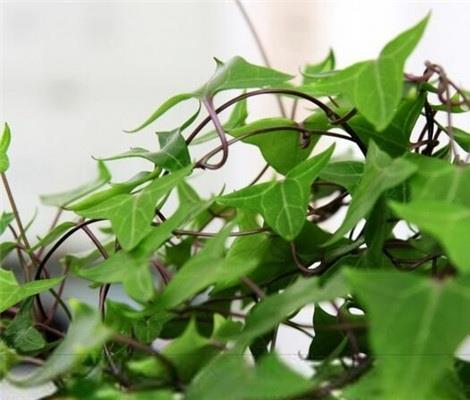
4. Reasonable fertilization. When growing ivy at home, the potting soil can be made by mixing leaf mold or peat soil with 1/4 river sand and a small amount of bone meal. During the growing season, apply a dilute cake fertilizer water once every 2 to 3 weeks. Generally, do not fertilize in summer and winter, and when fertilizing, also be careful not to apply only nitrogen fertilizer. When fertilizing, also be careful not to stain the leaves, so as to avoid causing the leaves to scorch.
Precautions
(1) Planting can be done during the period when the vines stop growing. For potted cultivation, it is best to use a loose, fertile soil mixed with garden soil, leaf mold, and sand. Repot once every 1-2 years. During the growing period, keep the potting soil moist, and frequently spray water on the leaf surfaces and the surrounding ground to increase air humidity; move it indoors in winter, and it can overwinter at above 3°C. Place it in a spot with sufficient light, pay attention to ventilation, and reduce the frequency of watering.
(2) For newly planted plants, pinch the tips after bud break in spring to encourage branching. For perennial plants, strengthen pruning and remove dead branches, thin and weak branches, and diseased and pest-infested branches.
(3) Frequently spray the leaf surfaces of ivy to prevent dry air from causing the leaf tips to turn brown and wither.
(4) If placed on a windowsill or stand so that the stems and vines hang down, it will look messy and have low ornamental value. In an indoor garden, it can be used as a material for beautifying walls. Pull thin strings on the wall for them to twine and climb. If displayed as a single pot, use a bamboo trellis or No. 8 galvanized wire to make a frame, and through artificial guiding, distribute the stems and vines evenly on the frame for shaping. Pruning should also be strengthened to prevent the stems and vines from winding in multiple layers and causing disorder. There are many forms of frames for potted ivy to climb on, and they can be tied according to personal preference. Common frame forms include spiral, cylindrical, spherical, fan-shaped, and so on.
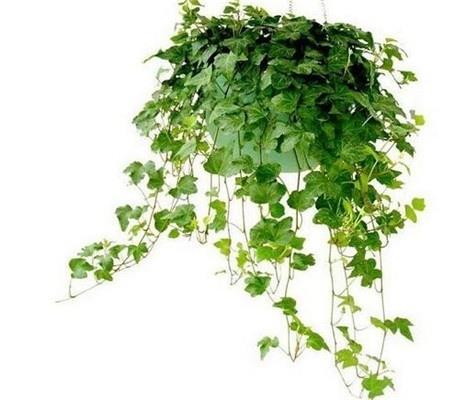
(5) Ivy has relatively strong cold resistance and can overwinter safely in ordinary homes. In winter, water less and stop topdressing. Place it near a south-facing window so it can get more sunlight. In a home without heating equipment, if leaves drop because of low temperature, as long as the stems and vines are not frozen, there is no need to worry about it. After the weather warms in the following spring, carry out a heavy pruning to let the dormant buds at the lower part of the stems and vines sprout and send out new stems and vines, then guide and tie them again, so that the plant is renewed once each year. This can also keep the size of the plant within a certain range, making it convenient for indoor display.
The above is the relevant introduction in this article. I believe that after reading it, you also have a simple understanding of this. If needed, you can continue to follow No. 1 Home Network to learn more information.