How to Grow Asparagus Fern and Its Diseases and Prevention
Asparagus fern has now become one of the common household potted plants. But many owners cause the leaves of asparagus fern to turn yellow or the plant to die because they do not understand how to grow it. So how should asparagus fern be grown? Its diseases and prevention.
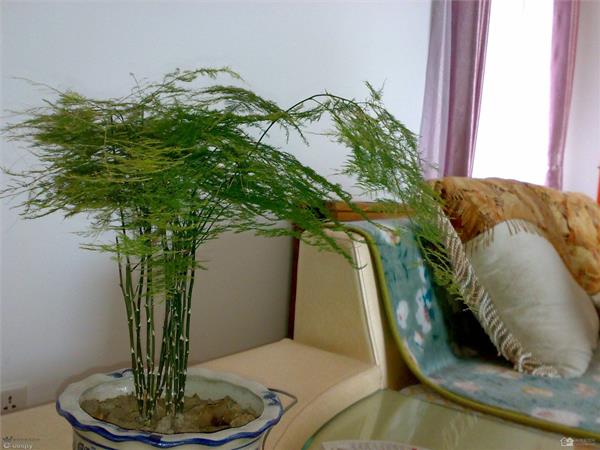
How to Grow Asparagus Fern
1. Potting soil: For the potting soil used to cultivate asparagus fern, fertile sandy loam is suitable. It requires warmth and moisture, rich organic matter, and good drainage. Generally, it can be prepared with a ratio of 4 parts garden soil, 2 parts leaf mold, 2 parts compost soil, and 1 part sand, and the soil should be changed and fertilized regularly. If excessive fertilizing causes "root burn," you need to tip out the pot to remove the fertilizer, rinse the root ball with clean water, and then replace it with new soil for growing.
2. Watering: Watering is the key point in cultivating and growing asparagus fern. Too much watering and overly wet potting soil easily cause root rot, while too little watering leads to scorched, yellow leaf tips. Therefore, during watering, it should be determined according to the weather, growth condition, and the dryness or moisture of the potting soil, following the principle of not watering when dry and watering thoroughly when watering. In hot, dry weather, you can spray the leaf surface with water to increase humidity and lower temperature; in winter, water less.
3. Fertilizing: Asparagus fern does not like heavy fertilizer, but it cannot lack fertilizer either. Limited by the potting soil of container growing, asparagus fern must be supplied with nutrients in time to meet its growth requirements. When fertilizing asparagus fern, apply small amounts frequently, and do not apply concentrated fertilizer, otherwise it will cause yellow leaves. Generally, applying a thin, fully decomposed liquid fertilizer once a month is sufficient. After the plant grows larger and its form is set, fertilizing can be appropriately controlled and reduced.
4. Light: Asparagus fern should not be exposed to the scorching sun when being grown. In hot seasons, it should be placed in a cool, ventilated place. At the same time, during the flowering period, asparagus fern is afraid of both wind and rain, so attention should be paid to good ventilation. In good weather, it can be appropriately placed outdoors to receive sunlight. In winter, the temperature for potted asparagus fern should be kept above 5°C to avoid freezing.
5. Placement: Asparagus fern is mostly used for indoor desk display. Because asparagus fern is very afraid of smoke and dust, and if it encounters toxic gases, its branches and leaves easily turn yellow, it should be placed in a clean and well-ventilated environment.
How to Grow Asparagus Fern - Propagation
Asparagus fern is generally propagated by sowing or division. Sowing is best carried out in mid-spring, and after sowing, it will sprout in 30~40 days. Under normal growth, it can bloom and bear fruit after 4 years of cultivation, and asparagus fern aged 3~5 years can be propagated by division. When propagating by division, use a sharp blade to cut the joint of the rhizome to prevent affecting the growth of the asparagus fern and its future ornamental effect.
How to Grow Asparagus Fern - Diseases and Prevention
1. Small branches turn yellow but do not fall off: This is mainly caused by insufficient nutrients in the potting soil, hard and compacted potting soil, poor ventilation, and malnutrition. The solution is to repot with culture soil rich in organic matter, and at the same time often loosen the surface of the potting soil and strengthen fertilizing to supplement nutrients.
2. The tips of asparagus fern branches are dark yellow or yellow-green: This is mainly caused by strong light exposure or excessive watering. It should be moved promptly to a shaded place (such as: by a window with curtains) to avoid direct sunlight, and at the same time pay attention not to water excessively.
3. The roots of asparagus fern rot, and the branch tips scorch, yellow, and fall off: This phenomenon may be caused by being hit by strong winds in hot seasons, or by long-term water accumulation in the flowerpot. Therefore, when summer comes, special attention should be paid to the impact of thunderstorms or typhoons.
The above is the relevant introduction in this article. I believe that after reading it, you also have a simple understanding of this. If needed, you can continue to follow No.1 Home Network to learn more information.