How to grow sago palm? Pest and disease control methods and cultivation precautions
Hydroponic spider plants are very popular now, and many people grow a pot of them at home. Below, let's look at what methods there are for hydroponic spider plants, and hydroponic spider plant care and management.
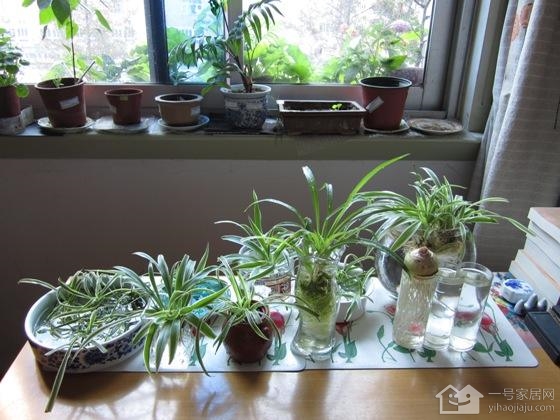
Method one for hydroponic spider plants
1. Container: The container bottle can be single-layer or double-layer. A single-layer bottle means taking a bottomless plastic bottle or bottomless ceramic bottle and planting the spider plant in it. For a double-layer bottle, take a plastic sieve as the upper layer, and the lower layer is a bottomless bottle vessel; plant the spider plant in the upper plastic sieve and let the spider plant roots hang down into the bottle.
2. Taking seedlings: Remove a potted or field-grown spider plant from its pot or dig it up from the ground, remove the soil from its roots, wash its roots with clean water, cut off old roots and rotten roots, keep the fibrous roots, cut off some leaves (old leaves and pest- or disease-damaged leaves), and keep healthy leaves, generally keeping 6-10 leaves.
3. Potting: For the single-layer bottle potting method, insert the prepared spider plant into the bottle, tightly tie the bottle mouth with sponge and insert a plastic straw, which is used for supplying water. Let the spider plant stand upright, put clean water and flower nutrient solution into the bottle, and let the spider plant roots grow immersed in the water. For the double-layer bottle cultivation method, plant the spider plant on the plastic sieve, with the roots passing through the small holes of the plastic sieve into the lower bottle; put ceramic granules or stone grains (large particles) in the sieve, let the spider plant stand upright, and put clean water and flower nutrient solution into the lower bottle. After potting is complete, place the spider plant indoors or in a cool place for management.
Method two for hydroponic spider plants
1. Choosing a container: Generally, the vase should be chosen according to the size of the hydroponic spider plant; it is best to choose one with a neck at 1/3 of the height, and it may be fixed or not fixed.
2. Choosing hydroponic seedlings: You can choose new small plantlets on runners, preferably with aerial roots; you can also wash the soil off a soil-cultured spider plant and then hydroponically grow it. Note that disinfection must be carried out before hydroponic culture.
3. Carrying out hydroponic culture: Choose a good vase according to the size of the spider plant. When hydroponically growing it, do not add too much water; just enough to submerge 1/3-1/2 of the root system.
Hydroponic spider plant care and management
Change the water once every 2-3 days. For those changed from soil culture to hydroponic culture, some roots will rot in the early stage, and these need to be cut off when changing the water, and disinfection is best carried out. When new water roots are 3-5 cm long, nutrient solution needs to be added to the water, and the amount does not need to be large.
The care environment is best with scattered light; it must not be too shady or exposed to the sun. If any leaf tips are dry, prune them in time.
① Water: For single-layer container bottle cultivation, add water and flower nutrient solution once every 4 days, with water input through the straw until full. For double-layer bottles, change the water once a week; when changing the water, pour out the bottle water, wash the container bottle clean, put in clean water and flower nutrient solution, and then place the plastic sieve on the water bottle.
② Fertilizer: Through adding water and changing water, flower nutrient solution is also added to the roots. For foliar topdressing, spray the branches and leaves once every 3 days with diluted flower nutrient solution.
③ Pest and disease control: If pests or diseases are found, spray the leaves with all-purpose powder mixed with water.
④ Promoting flowering: Spider plants bloom half a year after potting. When blooming, do not spray water on the flowers, to prevent premature flower drop. After the flowers fade, cut the flowers off from the branch tips to promote reblooming.
The above is the relevant introduction in this article. I believe that after reading it, you also have a simple understanding of this. If needed, you can continue to follow No.1 Home Network to learn more information.