How to Grow Succulents? Detailed Explanation of Succulent Care Methods and Precautions
Many friends are not particularly familiar with the methods of growing succulents, so today we will briefly introduce what you need to know about growing succulents. Let's take a look together.
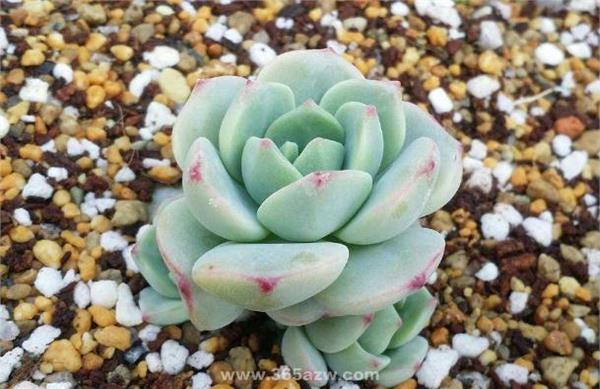
What Are Succulents?
There are two interpretations of the definition of succulents: broad and narrow. In the broad sense, succulents refer to all plants with thick, fleshy stems, leaves, or roots, including all species in the Cactaceae and Aizoaceae families as well as some species in more than 50 other families, totaling more than ten thousand species.
In the narrow sense, succulents or succulent flowering plants do not include plants of the Cactaceae family; instead, plants of the Cactaceae family are specifically called cactus plants or cactus flowering plants, abbreviated as cacti or cactus types. The reason they are separated is that they differ in habits, cultivation, and propagation. At present, experts at home and abroad basically describe them separately. Generally, when succulent flowering plants or succulents are mentioned, it refers to the narrow definition, mainly referring to species with thick, fleshy roots, stems, or leaves in the Aizoaceae, Crassulaceae, Euphorbiaceae, Agavaceae, Asclepiadaceae, Liliaceae, and other families, while not including plants of the Cactaceae family.
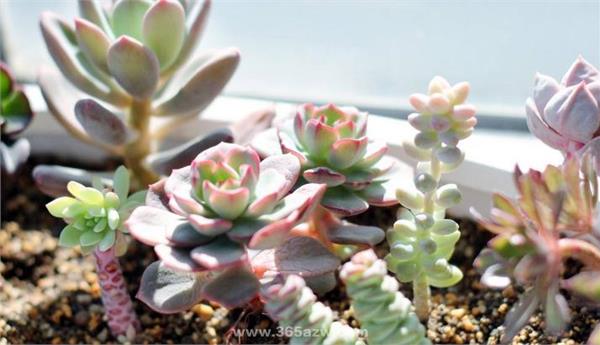
What You Need to Know About Growing Succulents
1. Seed propagation
Among succulents, except for a few species that can self-pollinate, most belong to insect-pollinated or bird-pollinated flowers and must be artificially pollinated in order to set fruit. The seeds of succulents have short lifespans; for example, the seeds of Lithops optica have a lifespan of only a few weeks. Generally, under normal temperature conditions, the germination rate of succulent seeds declines rapidly after 1 year of storage. For this reason, many succulents are sown immediately after the seeds mature or stored for spring sowing the following year. The germination time after sowing also differs among different families and genera; the earliest can germinate in 2 days, while the latest will germinate only after 25 days.
2. Leaf cutting propagation
Succulents often use their thick leaves placed on a slightly moist sand bed or loose soil surface; they will soon take root, and adventitious buds will grow from the base of the leaves to form small plants, such as Adromischus, Echeveria, and Kalanchoe daigremontiana.
3. Stem cutting propagation
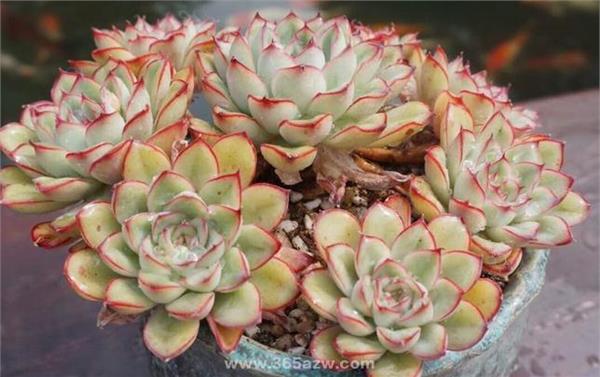
Succulents are suitable for pruning and shaping; cut branches into sections as cuttings, such as Adenium obesum, Stapelia, Euphorbia milii, and Euphorbia tirucalli. For Adenium obesum, African baobab, and Euphorbia tirucalli, whose cut wounds exude white latex, the wound must be cleaned thoroughly and dried slightly before inserting the cutting for better results.
4. Root cutting propagation
For the relatively valuable varieties of the Liliaceae Haworthia genus, the roots are very thick and well developed. Cut off the relatively mature fleshy roots, bury them in a sand bed with the upper part slightly exposed, and maintain a certain degree of moisture and bright light. New buds can sprout from the top of the roots to form complete small plants.
5. Grafting propagation
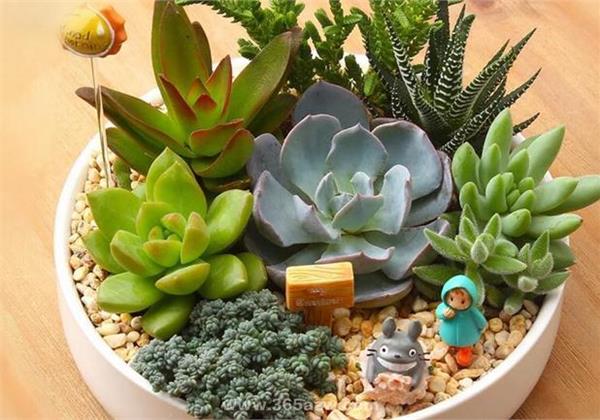
Grafting of succulents is often used to propagate variegated and cristate varieties, such as using Euphorbia neriifolia as rootstock to graft Euphorbia lactea, using Portulacaria afra as rootstock to graft Portulacaria afra 'Variegata', using African baobab as rootstock to graft cristate African baobab, and using Stapelia grandiflora as rootstock to graft Stapelia, etc., with good ornamental results. However, during the grafting process, because the plants contain white milky sap that is highly sticky, the grafting operation must be as fast and skillful as possible in order to succeed.