Boxwood bonsai look remarkably true to life, and the finest of horticulture brings visual and emotional enjoyment
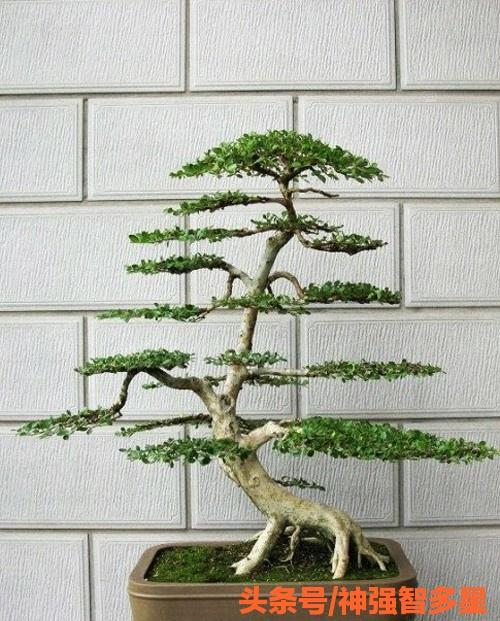 Boxwood bonsai
, with its small evergreen leaves and slow growth that makes it hard to lose shape, has become a treasure of the art. Generally speaking, boxwood bonsai material is mostly taken from wild old stumps growing by the water. Boxwood stays glossy green all year round, and purple clay pots are commonly used, with pot colors mostly purple or light yellow. The pot shape is determined by the styling form. For the cliff-hanging style, a deep cylindrical pot is suitable; for the slanting-trunk or curved-trunk style, an oval or rectangular pot is used. Boxwood bonsai is relatively cold-tolerant. Boxwood buds vigorously, so it is coarsely wired and finely pruned into cloud-pad or steamed-bun shapes, or worked into a natural tree form. The trunk follows its natural tendency and is made into a slanting-trunk or prostrate style. Some boxwood bonsai are accented with ornamental stones, forming a "boxwood overlook." In spring, when the tender new leaves first emerge, the whole tree is fresh green and very pleasing to the eye. The ancients wrote poems about boxwood: a boxwood tree just a foot away, with lush branches layered a thousandfold, leaves deep as a jade garden, gnarled as a coiled dragon.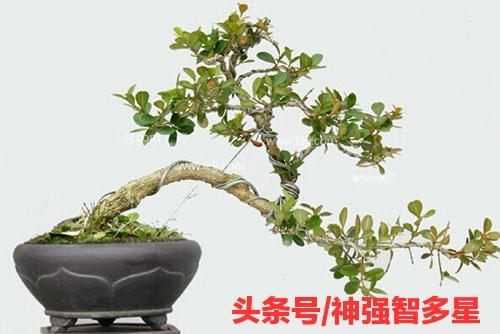 Care of boxwood bonsai: The placement of sufficient sunlight and water for the Chinese boxwood (Buxus sinica var. parvifolia) bonsai is best chosen in a spot where it "gets sun in the morning, is fairly shady in the afternoon, has good air circulation, and relies on natural rain and dew." If kept indoors for viewing, it is best to let it get sun and rain again after ten days to half a month. The pot of the Chinese boxwood bonsai should be kept constantly moist, because its root absorption, leaf photosynthesis and entire growth process all need a great deal of water, though of course the amount needed also changes with the seasons and climate. The Chinese boxwood has gone from the banks of rivers and streams to growing in a small pot in the garden; the biggest change in environment is that the humidity is lower, so our care must replenish it with timely and appropriate amounts. Therefore, watering should take the climate into account, follow proper technique, and ensure quality. When the temperature is above 20°C and the pot is short of water, water in three steps: first, flush without disturbing the soil (to meet the pot's water needs); second, wet the branches and leaves thoroughly (watering from multiple angles); third, mist. In hot weather or when the temperature is above 20°C and the pot is not short of water, just do the second and third steps; when the temperature is below 20°C and above 10°C and the pot is not short of water, in winter in the morning sunlight do the third step once a day. After "White Dew" in autumn, once the dew has dried, mist according to the third step. On frosty days do not water in the morning or evening; before a cold wave in the "sanjiu" days do not water, to prevent frozen soil and frozen branches and leaves; likewise keep the pot draining and aerated well. Light fertilizer, frequent application: For the Chinese boxwood, fertilizer should mainly be base fertilizer, mainly natural fertilizer, mainly human and livestock manure. Apply chicken and duck manure and high-efficiency fertilizers with caution, and remember never to apply unrotted fertilizer or over-fertilize; achieve light fertilizer applied frequently. Before the seasons change, apply some seasonal fertilizer, such as sprouting fertilizer in early spring, leaf-strengthening fertilizer in summer, heat-resistance fertilizer in hot weather, and warmth-preserving fertilizer in winter; after each pruning apply some compensatory fertilizer, in the rainy season and hot weather when the pot has excess water apply some supplementary fertilizer, and for poor growth apply fertilizer as appropriate.
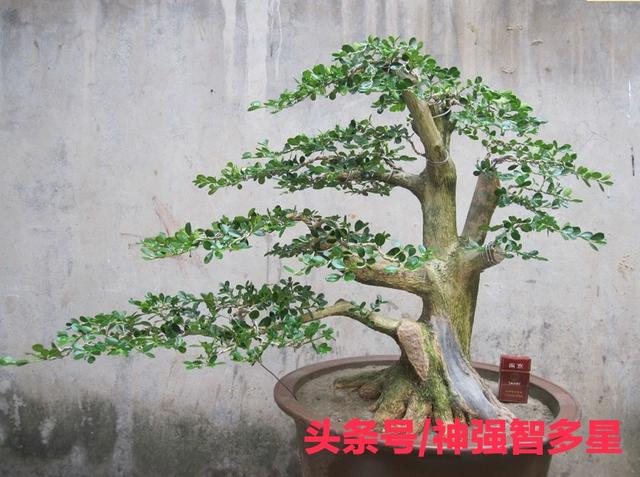 Styling mainly by pruning: The Chinese boxwood's wood is hard and brittle, its branch bark is thin and easily damaged, and it is not very malleable, so first pay attention to selecting the stump, then suit measures to the tree, guide it according to its tendency, and styling must be mainly by pruning. You may also appropriately use rope tying and pulling; for large branch repositioning, do it in several stages, neither demanding perfection nor rushing for quick results, otherwise you will get the opposite of what you want. Avoid twisting branches with rusty wire: first, to prevent damaging the bark, and second, to prevent killing the branch. The trunk of the Chinese boxwood bonsai grows very slowly and is extremely gnarled and vigorous, but the young branches grow relatively fast, and the density of leaves inevitably stretches out, making it look loose and soft; only by "pinching" can you control this and preserve its ornamental value. That is, before the branch has lignified, keep one pair, or at most two pairs, of young leaves and remove or snip off the rest; under suitable conditions of water, fertilizer and so on, in ten days to half a month it will put out two new shoots. Repeating this cycle over and over, its branches become short and thick, and the leaves can multiply by powers of 2, steadily raising its ornamental value. Also, promptly remove flower buds. The Chinese boxwood begins to form flower buds before summer and autumn, blooms in spring, and the nutrition needed for flowers and fruit takes up 70%-80% of the whole tree, which inevitably affects its normal growth and beauty; we mainly grow it for its foliage. So from the moment flower buds appear, they must be removed.
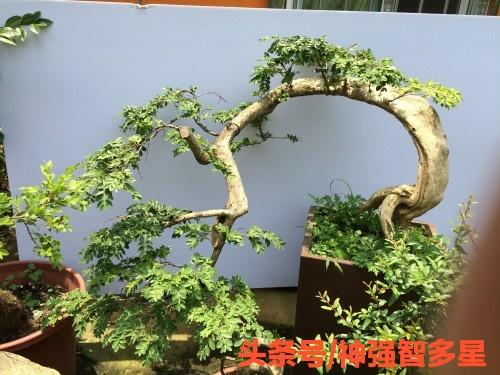 Repotting requires shortening most of the root system: The Chinese boxwood has fine fleshy roots, and its water and nutrient absorption depends mainly on the absorbing function of the root tips, with the length of the root arms being of secondary importance. If the roots are left long, they cannot spread out in the pot. Bending and crumpling them is very harmful. Moreover, to absorb nutrients the root tips naturally extend forward and contact the new soil. If the roots are left long, before long the root tips will hit the wall; although root tips can turn, it takes effort and time and affects growth. In particular, the pot wall and pot bottom will quickly be strung full of roots again, forming a soil-less "root mat," requiring another repotting. This creates a vicious cycle. When repotting with soil (do not take much soil), cut off the long roots exposed above the soil surface. The best seasons for repotting are, first, early spring (after the roots settle they can sprout). Second, the hot season when growth is vigorous (after repotting, set it in a cool place for seven or eight days and it will regain its vigor). Controlling tortricid larvae: The larvae of the tortricid moth love to suck the leaf sap of boxwood. After hatching, the leaf-roller spins silk and curls the surrounding leaves into a ball, hiding in the middle to suck the leaf sap; in two or three days it will have sucked dry the sap of the curled leaves, leaving behind a white network of leaf veins, and then it moves on to do more damage. If not caught and killed in time, in five or six days it will destroy all the leaves. This not only ruins the beauty, but trees in poor condition may die from it. Leaf-rollers can be killed by ordinary pesticides that work by ingestion or contact; the key is to discover and destroy them promptly. It is worth noting that tortricid eggs, in hot weather, especially when the temperature is above 30°C, can hatch into damaging larvae in just three or four days, the fastest generational turnover. So when the temperature is high, it is best to catch and kill them once a week.
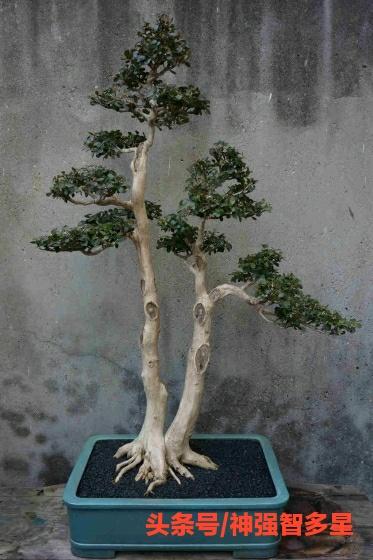 Techniques for promoting buds in boxwood bonsai
Among the various boxwood collected stumps there is no lack of fine specimens. I also like boxwood very much, especially the pearl boxwood (Buxus sinica var. parvifolia 'Pearl'). The pearl boxwood has made its home for generations on high mountain ridges or in rock crevices; tempered by the harsh grinding of wind, frost, ice and snow, it naturally grows into gnarled branches, curved trunks and strangely varied tree forms, making it an excellent material for stump bonsai. In the Yuan dynasty, Hua Youwu's poem in praise of boxwood says: "A boxwood tree just a foot away, with lush branches and trunks layered, leaves deep as a jade garden, roots ancient as a coiled dragon. Through years of wind and frost long endured, from time to time bathed in heavy rain and dew. It should not meet misfortune in a leap year; its firm substance is like the cold pine." Boxwood bonsai has a graceful tree posture, leaves as small as broad bean petals, thick and glossy, evergreen through the four seasons, and can be viewed all year round. The Yang-school boxwood bonsai has branches and leaves cut and wired into "cloud-pad" shapes, flat and thin as if pared, then accented with mountain stones, elegant and beautiful as a painting. In spring the boxwood's tender new leaves first emerge, and the whole tree is fresh green, very pleasing to the eye. The ancients wrote poems about boxwood: a boxwood tree just a foot away, with lush branches layered a thousandfold, leaves deep as a jade garden, gnarled as a coiled dragon. Although boxwood bonsai is good, its one flaw is that some branches and trunks are bare, seriously affecting the styling. After a period of repeated experiments and drawing on the experience of online seniors, I have worked out a set of boxwood bud-promoting techniques. Though not absolutely perfect, they have definite practical value, and I hope they can help fellow bonsai enthusiasts solve problems in this area. Boxwood dislikes strong light, so during planting it should only get diffused light, not strong direct sun. Newly collected, long-distance transported, or newly repotted boxwood should first be grown in shade for a period, then moved to normal care. You can spray the foliage year-round with a very dilute nitrogen fertilizer (urea dilution, 2000 times), and remember never to let it touch phosphate or potassium fertilizer. When watering normally, you can also mix in a trace of nitrogen fertilizer; the leaves grown that way are very beautiful, dark green with a layer of gloss. Getting to the point: how do you make a bare trunk section put out new buds? (Some trees that have lost leaves or even all their leaves due to improper care should not be thrown away either; this method can be used.) It is very simple, and the material is not expensive: it is gibberellin, that is, 920. When using it, judge by how aged the trunk is; for severely aged wood appropriately increase the concentration, generally around 1000 times, dissolve it in alcohol then add water to dilute, and use a bristle brush to apply an even coat on the places where you want branches to emerge, once a day, two or three times is enough. Don't worry, the new buds will soon push out. The newly emerged buds are very tender, so by no means touch them.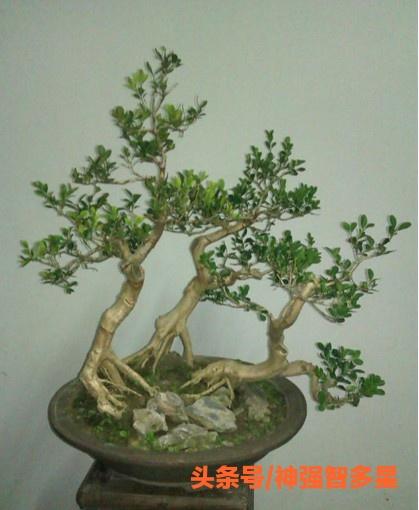 Appendix: Why can't potassium fertilizer be applied?
Potassium exists in the plant body mainly in ionic form and does not take part in forming important organic compounds (unlike nitrogen and phosphorus); it has a marked effect on reproductive growth centered on flowering and fruiting. Therefore, for collected stumps centered on growing buds and roots, its effect is not obvious and it even has side effects. The main reasons are: on one hand, as potassium ions increase, the concentration of the guard cell fluid in the stomata rises, making the stomata open wide and causing water in the plant to be lost easily. On the other hand, the accumulation of potassium ions requires a corresponding supply of energy, which intensifies the consumption of the limited "reserves" of the collected stump and is unfavorable for raising the survival rate. Excess potassium fertilizer very easily causes leaves to yellow and drop, and may even cause the plant to have difficulty breathing and die. The need for phosphate fertilizer is extremely small, so there is no need to apply it specially. Foliar fertilizer can sometimes play a role that soil fertilization cannot. For collected stumps, it can quickly and promptly supply the needed mineral nutrients, promptly promote photosynthesis, promptly replenish insufficient reserves, and raise the survival rate. The fertilizer for foliar feeding is quick-acting nitrogen fertilizer; nitrogen is the "life element" for the formation of cell protoplasm and for the metabolic process.
Pairing boxwood bonsai with the home
1. Scientific evidence shows that brightly colored food can greatly increase appetite. As a space for eating, the dining room can be accented with some brightly colored green plants to adjust the color of the dining room's style; placing ornamental flowering potted plants can arouse people's appetite. So you can place a small boxwood bonsai in the dining room to relax the mood even more while enjoying good food. 2. If the living room style is minimalist, boxwood may be a good choice; place it on one side of the sofa, or on both sides of the TV wall. Any blank spot in the home can be accented with boxwood bonsai; it will not make things crowded, and will add color to your living room. When combining and arranging them, you should lay out large and small potted plants reasonably according to the space; too large or too many will make the living room look unbalanced.
Thank you all for reading. If you like it, follow the editor and give the editor a like. Wishing everyone a happy 2018 New Year.