Master All the Balcony Vegetable Gardening Tips, and Your Family Will Have More Vegetables Than You Can Eat
Balcony vegetable gardening is something everyone is familiar with by now, and it is becoming more and more popular. For one thing, you get to eat fresh, pollution-free vegetables; for another, it can beautify your home environment.
Why not do it?
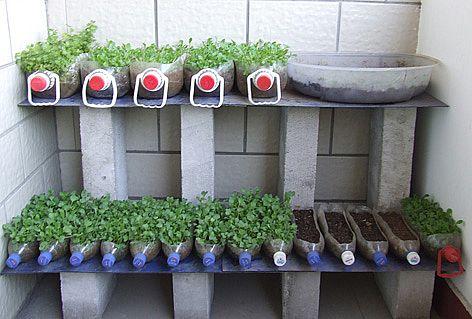
In fact, balcony vegetable gardening involves a lot of knowledge, and we will walk you through it one by one.
What kind of balcony is suitable for growing vegetables?
Not all balconies are suitable for growing vegetables. If you ignore the actual environment and plant haphazardly, you may well end up with more loss than gain. A balcony suitable for growing vegetables should have: ample sunlight, good ventilation, a floor that does not leak, and good drainage.
Can you still grow vegetables if your balcony space is small?
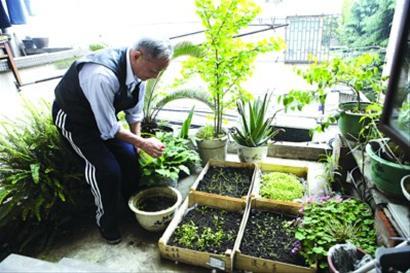
When balcony space is limited, you have to expand upward or onto the walls, using hanging plant racks, hanging pots and other aids. But note that an overly crowded growing environment easily leads to poor air circulation and pest and disease problems, so you should leave a certain amount of space during planting to keep the air flowing, and only then will the vegetables grow well.
What vegetables are usually grown on a balcony?
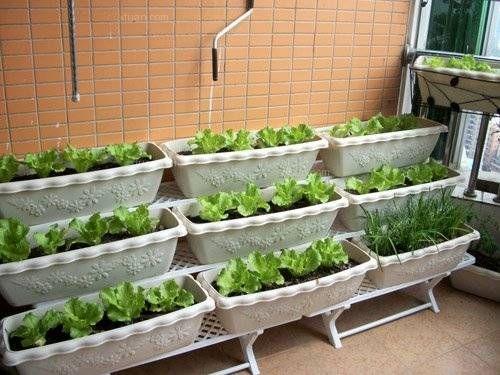
What you grow on a balcony depends on the one hand on your personal preferences and needs, and on the other hand on which vegetables suit the environmental conditions of your balcony. Generally speaking, if space allows, most vegetables, melons and fruits can be grown on a balcony.
Fast-growing vegetables with a short cycle: baby bok choy, green garlic, sprouting vegetables, mustard greens, bok choy, leaf lettuce;
Vegetables with a long harvest period: tomato, chili pepper, Chinese chives, coriander, cilantro, scallion, etc.;
Space-saving vegetables: carrot, radish, lettuce, scallion, ginger, cilantro;
Easy-to-grow vegetables: bitter melon, carrot, ginger, scallion, lettuce, baby bok choy;
Vegetables that rarely attract insects: scallion, Chinese chives, sweet potato leaves, ginseng herb, aloe, cekur.
What kind of pots should be used for balcony vegetable gardening?
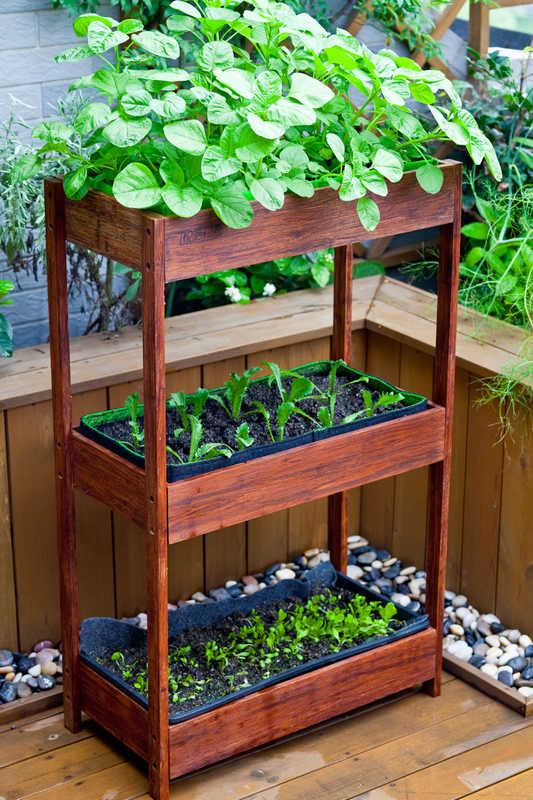
1. Choose wide, well-ventilated containers, such as growing boxes, large clay pots, wooden boxes, etc. Foam boxes and plastic pots are both poor choices, as they easily lead to problems such as root rot and mildew. What is more, plastic pots are not resistant to sun exposure and age very quickly!
2. For balcony vegetable gardening, growing boxes are the best choice. The material of growing boxes has antioxidants and UV absorbers specially added, which extends the life of the box and allows it to be used outdoors for more than 8 years.
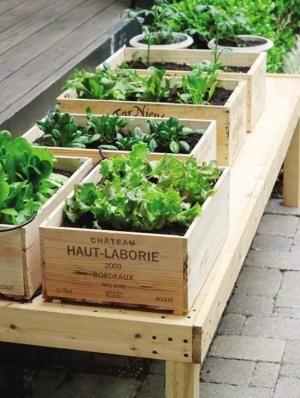
What methods are there for growing on a balcony?
One is to raise seedlings first and then transplant them, and the other is to sow directly. Some people like to buy seedlings directly for planting, which is faster and more convenient, while others prefer to start from seed.
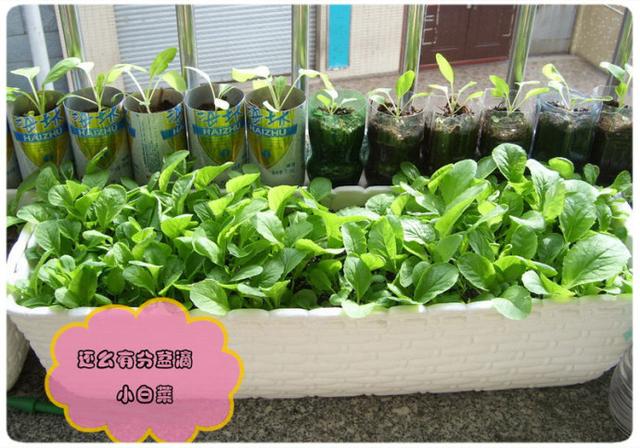
What are the light and temperature requirements for balcony vegetable gardening?
Different vegetables have different sunlight requirements. Most vegetables like sunlight, but some do not, so you can place them according to each vegetable's light preferences.
As for temperature, balconies or windowsills with different orientations should be insulated or cooled according to weather changes, and at the same time you should shade or supplement light according to the intensity of the light.
What are the watering requirements for balcony vegetable gardening?
1. A balcony is an enclosed environment, and excess water in the soil is hard to dissipate, which can cause vegetables to get sick or to "grow leggy."
2. Therefore, the biggest taboo in balcony vegetable gardening is watering heavily at the seedling stage. Not only will it fail to promote growth, but it will cause the vegetables to grow slowly or the roots to rot and the plants to die.
3. In balcony vegetable gardening, you must water less and in small amounts at the seedling stage.
What are the fertilizer requirements for balcony vegetable gardening?
I. Soilless cultivation
1. The key is the application of nutrient solution. The principle for applying nutrient solution is to apply it on sunny days and not on cloudy or rainy days; apply less in the early growth stage and more during the fruiting stage.
2. Generally, completely replace the nutrient solution once about every 20 days.
II. Soil cultivation
1. Materials such as rice-washing water, fruit peels and kitchen scraps are composted into organic fertilizer for the vegetables, so that what we eat is a healthy, pollution-free food.
2. There are various special organic fertilizers on the agricultural market, and you can choose a suitable organic fertilizer according to the type of vegetable.
3. Soil cultivation can also use nutrient solution.
What are the ventilation requirements for balcony vegetable gardening?
1. Poor ventilation leads to various pests and diseases, such as rot at the base of the plants and aphids. Especially in summer, high temperatures with no ventilation are a breeding ground for all kinds of diseases.
2. During the growing process, we should rotate the positions of these plants at regular intervals so that all the vegetables can get plenty of fresh air without being hit by strong winds.
3. The higher the floor, the greater the effect of wind on the plants on the windowsill or balcony. When ventilation is sufficient, you can use windbreak boards to prevent some leafy vegetables from being damaged by wind.
What should you do if pests and diseases appear in balcony vegetable gardening?
1. Growing your own vegetables is all about going green and organic, so you absolutely must not casually apply pesticides. In fact, spraying some garlic water or tobacco water on the plants works, since these have pungent odors that pests do not like.
2. Do not grow just one kind of vegetable in one container for a long time, otherwise soil degradation and an increase in diseases easily occur.
Once you have mastered these techniques, will you still worry about having no vegetables to eat?