How to grow geraniums? Detailed guide to cultivation methods and precautions
Geraniums are loved by many homeowners not only for their strong ornamental value, but to grow geraniums well, you need to look at how to grow geraniums well and the precautions for growing geraniums.
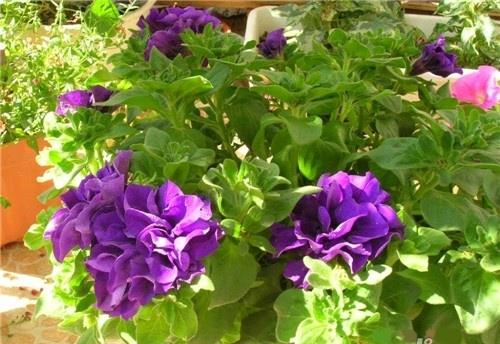
Cultivation methods for geraniums
1. Soil: Geraniums are also highly adaptable and can grow in various soil types, but they grow best in sandy loam rich in humus.
2. Watering: Geraniums like dryness and dislike dampness, so watering should not be excessive in winter; water only when the soil is dry and let it dry between waterings. When the soil is wet, the stems are tender and soft, which is unfavorable for the sprouting and opening of flower stems; long-term excessive moisture will cause the plant to grow leggy, the flower stem attachment points to move upward, and the leaves to gradually yellow and fall off.
3. Sunlight: Geraniums need sufficient sunlight during the growing period, so in winter they must be placed in a sunny spot. With insufficient light, the stems and leaves grow leggy, the flower stalks become thin and soft, and the inflorescences develop poorly; flower buds under weak light often fail to open smoothly and wither prematurely.
4. Temperature: Geraniums like warm winters and cool summers. Keeping the indoor temperature at I0-15°C during the day in winter and above 8°C at night will allow normal flowering. But the optimum temperature is 15-20°C.
5. Fertilizing: Geraniums do not like heavy fertilizer; too much fertilizer will make geraniums grow too vigorously and be unfavorable for flowering. To make flowering abundant, apply a dilute thin fertilizer solution (decomposed soybean cake water) once every 1-2 weeks; applying 800 times diluted potassium dihydrogen phosphate solution every 7-10 days can promote normal flowering.
6. Pests and diseases: When geraniums have poor ventilation and are too humid, they are prone to leaf spot disease and flower wilt disease. After discovery, attention should be paid to ventilation, and the diseased flowers and leaves should be removed immediately to prevent infection, and an equal-part Bordeaux mixture should be sprayed for control. The main pests are red spiders and whiteflies, which harm the leaves and flower stems, and can be killed by spraying 1000 times diluted 40% omethoate emulsion.
7. Pruning: Pruning branches and pinching off growing tips. To encourage geraniums with more branches to bloom more, the plant should be pinched multiple times to promote more branching and flower bud formation. After the flowers fade, the spent flowers should be cut off in a timely manner, and overly dense and thin weak branches should be cut off to avoid excessive consumption of nutrients, but in winter when it is cold, heavy pruning is not advisable.
Cultivation methods for geraniums - precautions
1. In order to control plant height and achieve the goal of large flowers and bright colors, in addition to choosing dwarf geranium varieties, the application of growth regulators is very important. Two weeks after geraniums are planted in 12 cm or 15 cm pots, 0.15% chlormequat or daminozide can be sprayed on the leaf surface once a week for 2 consecutive times, with 14-18 hours of light per day. This can effectively control the height of geraniums and provide high-quality commercial potted flowers.
2. It is relatively tolerant of dryness and afraid of waterlogging; too much water easily causes plant death, and if it is hot and humid, the roots easily rot. It requires well-drained, loose soil rich in organic matter. The flowering period is long, with the peak flowering period from April to June. If a relatively high temperature is provided in winter and management is proper, it can bloom continuously from September in autumn to June of the following year.
The above is the relevant introduction in this article. I believe that after reading it you also have a simple understanding of this. If needed, you can continue to follow No. 1 Home Network to learn more information.