The reason night-blooming jasmine (Cestrum nocturnum) blooms at night and how to care for it
Many people like night-blooming jasmine because it releases a great deal of fragrance at night, but many people do not know that the scent this plant gives off is not good for human health, so growing this plant requires caution. Still, for most people this plant is quite nice. Let's take a look below at why night-blooming jasmine blooms at night and how to grow it.
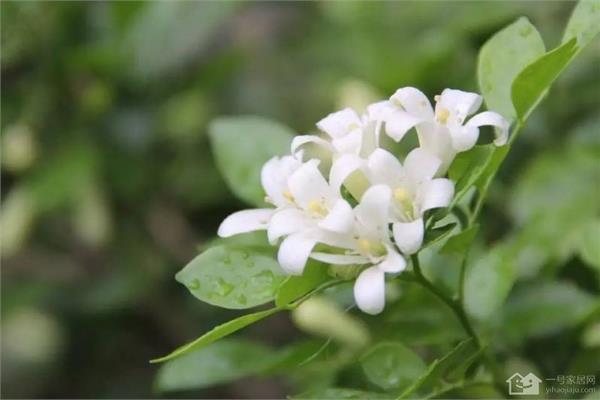
I. Which months night-blooming jasmine blooms
Generally speaking, the flowering period of night-blooming jasmine is from May to October. The reason the span is so wide is that it is affected by variety, temperature, humidity, soil and the climates of north and south, and thus appears in different seasons, but we can already see that night-blooming jasmine opens on summer nights. In the north the peak flowering season is in late June, while in the south it is mostly in August to September. This is because the summer heat in the south causes very high air humidity, which suits night-blooming jasmine's blooming.
II. Why night-blooming jasmine blooms at night
1. There are two main reasons. The first is that this plant relies on rather ugly-looking moths for pollination, unlike other flowers that rely on bees and other small creatures, and moths only come out at night. So in order to attract night moths to pollinate it, night-blooming jasmine chose to be overwhelmingly fragrant at night. This is the plant's own ability to adjust to its environment. Only, having heard this, do you still have the habit of picking one in Nangang District and holding it to your nose for a light sniff?
2. Another reason is that the stomata of night-blooming jasmine are completely the opposite of those of many flowers. In other flowers, when air humidity is high the stomata close somewhat, and when air humidity is low they open wide, whereas night-blooming jasmine is the reverse. If the air humidity is very high, its stomata open very wide, and the aromatic substances inside can spread out more quickly, producing a rich fragrance. At night, because there is no sun to cause evaporation, the ground temperature drops abruptly, cold air descends, and humidity suddenly increases - which is also why fog easily forms at night. In such a humid environment, night-blooming jasmine naturally opens more easily, and opens all the more intensely.
II. How to grow night-blooming jasmine
1. Night-blooming jasmine likes loose, well-drained, organic-rich, slightly acidic soil. So the soil we choose is generally made from peat soil or leaf mold, even with a small amount of farmyard manure, that is, the droppings of various animals. When growing it in a pot, the bottom should be filled with granular crushed brick pieces to help the pot drain. You should also choose an environment with good ventilation. From early May to the end of September it is best kept in a sunny spot in the yard or on a balcony. Although it likes plenty of sunlight, at noon in summer you should avoid scorching sun exposure.
2. If it is the peak growing season in summer, besides applying enough fertilizer, the pot soil must be kept constantly moist, and if necessary water it 2 times a day. If it is a seedling, spray the leaves with water 1 to 2 times a day. After winter arrives it should be moved indoors. If the temperature is below 5°C, the leaves will turn yellow and drop until the plant dies, so friends in the north should think carefully before going ahead. During this process, also note that it is best to fertilize once every two or three months, and pay attention to the prevention and control of pests and diseases.
Because the scent this plant gives off is very bad for human health, it is not suitable for growing indoors. This plant is suited to growing outdoors for ornamental viewing. Although the fragrance of night-blooming jasmine is harmful to human health, its flowers and leaves have the effect of clearing the liver and brightening the eyes, so it is also widely used in the medical field. Of course, if you want to plant night-blooming jasmine, you can follow the methods above, and by no means plant it indoors.
The above is the related introduction in this article. I believe that after reading it you now have a simple understanding of this. If you need more, you can continue to follow No. 1 Home Network to learn more information.