What are the reasons for yellowing leaves on a money tree?
The money tree (Zamioculcas zamiifolia) is a common houseplant, and this plant is relatively easy to care for, but if unsuitable conditions occur, leaf yellowing can also happen. So what causes yellowing leaves on a money tree? Do you know?
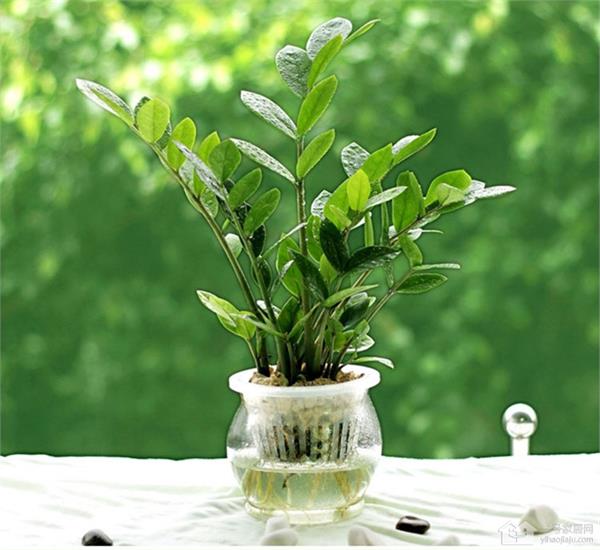
What should you do if the money tree's leaves turn yellow?
Reason 1, water yellowing: The potting soil is waterlogged and wet for a long time, causing a lack of oxygen in the soil, which makes some roots rot and weakens their ability to absorb water and nutrients. This shows as tender leaves turning dark yellow and lusterless, new shoot tips shrinking, and stems becoming thin and yellow-green. In this case, loosen the soil, control watering, and stop fertilizing. In severe cases, remove the plant from the pot, place it in a shaded area to dry the root ball, and then repot it.
Reason 2, fertilizer yellowing: Leaf yellowing caused by too much fertilizer or too high a concentration, especially excessive nitrogen fertilizer, shows as new leaves being thick and glossy, but the leaf surface is uneven and not smooth, while old leaves gradually turn yellow and fall off. At this point, stop fertilizing and appropriately increase watering to dilute the nutrients. If the potted plant lacks fertilizer and water, or the plant is large and the pot is small, or the roots in the pot are aging or too crowded, the leaves of the plant will also become thinner and yellow. In this case, change the pot and soil, usually from Rain Water to the Start of Summer.
Reason 3, alkaline yellowing: This is often caused by the soil tending toward an alkaline reaction, leading to chlorosis and yellowing. It shows starting between the veins of new leaves at the branch tips, while the veins, especially the main veins, remain green, and the alternating yellow and green phenomenon is very obvious. As the degree of chlorosis worsens, the veins gradually lose their green color, and then the whole leaf turns white, the leaf margins scorch, and the leaves drop. In severe cases, the branch tips die back and even the whole plant dies. For this "chlorosis" phenomenon, acidic fertilizer or acidic substances can be used to improve it, or alum fertilizer water can also be applied regularly.
Reason 4, shade yellowing: This is often caused by insufficient indoor light, leading to withered and yellow branches and leaves. At this time, the pot should be moved outdoors to a ventilated, bright place. For semi-shade flowers such as asparagus fern, strong light can also cause the leaves to turn yellow, so avoid exposure to high temperature and strong light in summer, and move them indoors or set up a shade shed to keep them.
Reason 5, drought yellowing: Due to long-term lack of watering, or too little watering, the leaves turn yellow or have brown tips and brown edges, and old leaves wither, yellow, and fall from the bottom upward. However, new leaves generally grow normally. When this phenomenon occurs, replenish water so that the soil no longer lacks moisture.
Reason 6, scorch yellowing: When this phenomenon occurs, simply place the pot in a shaded area.
Reason 7, damp-heat yellowing: Yellow leaves caused by poor ventilation and improper shading in midsummer, such as fuchsia in summer having this phenomenon. Therefore, high temperature and high humidity can also easily cause leaves to turn yellow. As long as attention is paid to ventilation and cooling, and the potting soil is not too wet, this kind of leaf yellowing can be prevented.
The above is the relevant introduction in this article. I believe that after reading it, you also have a simple understanding of this. If needed, you can continue to follow No. 1 Home Network to learn more information.