Clivia Care Methods and Watering Techniques Explained in Detail
Clivia is a choice flower for many people growing plants indoors. This flower is relatively easy to cultivate. First, choose a good potting soil, and it can be placed near a window indoors, with fertilizer and water managed according to the temperature characteristics of each region. Below, let us take a detailed look at an introduction to Clivia care methods and how to water Clivia.
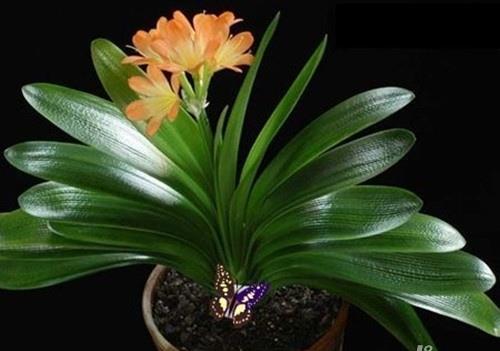
How to Grow Clivia
How to Grow Clivia - Shading from Sunlight
In summer, Clivia should be placed in a well-ventilated environment without direct strong light. Clivia is a medium-light flower, suited to the soft light of spring and autumn, and not suited to harsh sun exposure. In summer, it is best to place the potted plant under a shade shed, with sunlight filtering in through the gaps of the shade shed, so the plant receives weaker light. If it can be placed in a spot that blocks direct sunlight at noon while still receiving sunlight in the morning and evening, that is most ideal. Generally, summer shading should reach 60%-70% or more.
How to Grow Clivia - Lower the Temperature and Increase Humidity
In summer, Clivia should be placed in a ventilated spot. If the ambient temperature is above 35°C, moisture in the soil evaporates too quickly, which will leave Clivia unable to meet its demand for water and nutrients. Therefore, it is best to place the Clivia pot on a water pool or water basin (propped up with a wooden board), and frequently spray water around the plant and on the leaf surfaces to improve the temperature and humidity environment for Clivia, so that it can grow in a small environment below 25°C with humidity reaching 60%-70%, helping it pass the summer safely and promoting its summer growth.
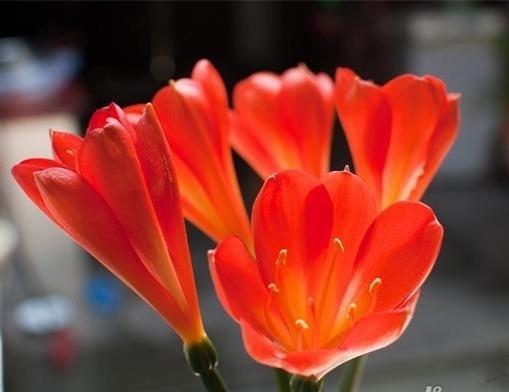
How to Grow Clivia - Water Moderately
Clivia originated in the primitive forests of South Africa, which gave it special characteristics in form and physiological function. Clivia has broad leaves with a tender texture, requiring relatively high soil moisture content and relatively high air humidity. In the hot summer, Clivia grows slowly and its roots absorb little water, but the amount of water evaporating from the leaf surface is very large. Therefore, Clivia must not lack water; otherwise the fleshy roots shrink, the leaves become thin and weak, and lose their luster. When watering, adhere to the principle of watering when half-dry, and watering thoroughly when you do. But do not water as soon as you see the surface soil is dry. Otherwise, if the potting soil remains moist for a long time, it is very easy for roots to rot and leaves to turn yellow. When watering, be very careful not to let water run into the leaf center, so as to avoid rot in the heart and cause "beheading."
How to Grow Clivia - Control Fertilization
Summer temperatures are high, and Clivia is in a semi-dormant or dormant state, so fertilization should be controlled, with as little or no fertilizer as possible. This is because during this period its root absorption capacity is weak; if fertilizer is applied or slightly too much is applied, the fertilizer accumulates around the roots for a long time, easily causing root rot and stem rot. However, during this period, if the temperature of the Clivia growing environment is lowered below 25°C, then some dilute liquid fertilizer can be applied appropriately to promote its growth and shorten its dormancy period; if the temperature drops below 20°C and the humidity also meets the requirements, then fertilizer can be applied as usual.
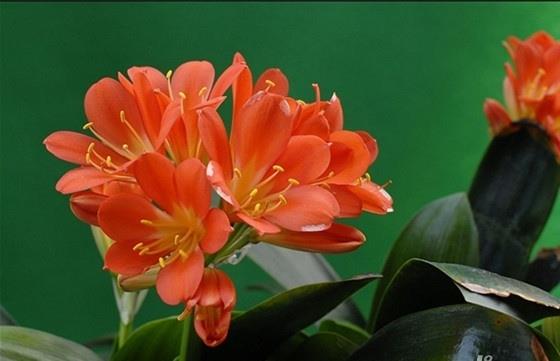
Clivia Watering Methods
The temperature and humidity at home, the size of the flower pot, the permeability (air permeability) of the flower soil, the season, and other conditions all differ, so the watering interval should not be fixed as only one value. The length of the interval should be considered according to changes in the environment.
To judge whether it is time to water, I will tell everyone a few little tips:
1. Tap. Lightly tap the flower pot at the 1/2 to 1/3 point. A crisp sound means the flower soil no longer has enough moisture and needs watering. A dull sound means there is sufficient moisture and no watering is needed.
2. Weigh by hand. Before watering, lift the flower pot to feel its weight. Water it. After watering, lift the flower pot again to feel its weight. Over time, with some experience, one lift of the flower pot is enough to know whether it is time to water.
3. Probe. This is the most direct method. Insert a finger about 1/3 of the way into the flower soil to feel the moisture. If it is moist, no watering is needed. If it is damp, get ready to water. If there is still a slight trace of moisture, it is time to water.
The above is the relevant introduction in this article. I believe that after reading it you also have a simple understanding of this. If needed, you can continue to follow No.1 Home Network to learn more information.