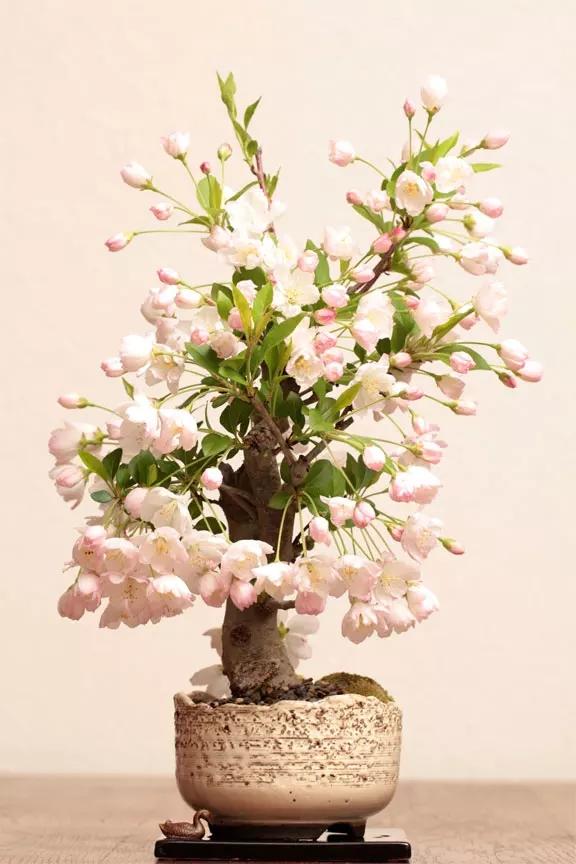
Cherry blossom bonsai embodies purity and nobility, fully displaying the beauty of horticultural visual artistry and plant art
Cherry blossom
A red cherry tree newly planted in the small garden, strolling idly around the flowers is a fine outing.
Why bother following the horse-mounted procession, plunging through mud and rain to the head of Qujiang?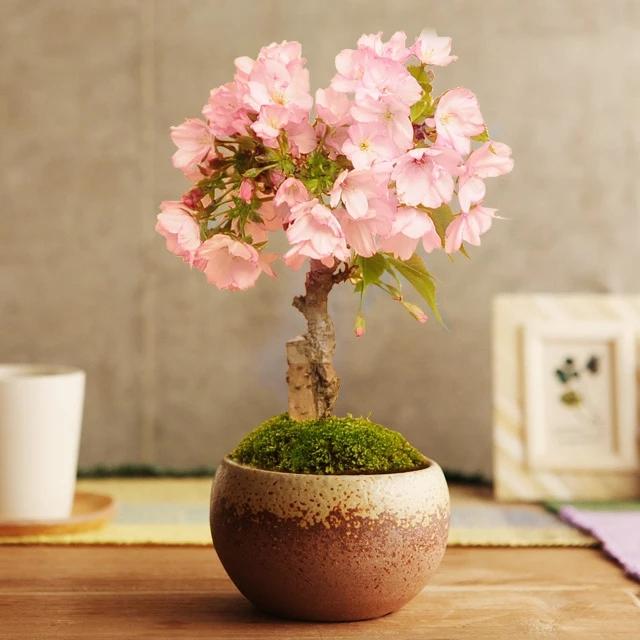 Cherry blossom: it is the collective name for several plants of the genus Cerasus in the rose family; in the newly revised nomenclature of the Flora of China, it refers specifically to "Tokyo cherry," also known as "Japanese cherry." There are an extremely large number of cherry cultivars, exceeding three hundred, and there are about 150 species of wild cherry in the world, with more than 50 in China. Of the approximately 40 wild ancestral species of cherry plants worldwide, 33 are native to China. The others are cultivars derived through horticultural hybridization. Cherry blossoms originated in the temperate Himalayan rim region of the Northern Hemisphere, and grow throughout the world, mainly in Japan. Each branch bears 3 to 5 flowers in umbel-like inflorescences, the petal tips are notched, and the flower color is mostly white or pink. The flowers often open together with the leaves in March or bloom after the leaves, and with the changing seasons the cherry blossoms are delicately fragrant and gorgeously colored, often used for garden ornamental viewing. Cherry blossoms can be divided into single-petaled and double-petaled types; the single-petaled type can bloom and bear fruit, while the double-petaled type mostly does not bear fruit. According to documentary research, more than two thousand years ago during the Qin and Han dynasties, cherry blossoms were already cultivated in Chinese palace gardens. By the Tang dynasty, cherry blossoms commonly appeared in private courtyards. At that time, when all nations came to pay tribute, Japanese visitors brought cherry blossoms back to Japan, where they have a history of more than 1000 years.
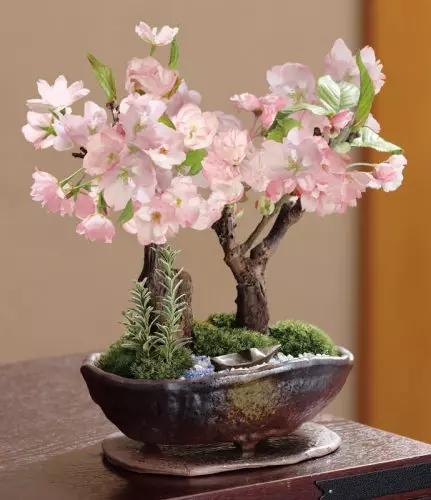 Symbolic meanings of cherry blossom: passionate, pure, noble. Flower language: life, happiness, never giving up for a lifetime, loving only you for a lifetime. Mountain cherry: smiling at you, beauty of spirit. Western cherry: the education of kindness. Winter cherry: the mystery of the East. Double-petaled cherry: quiet and gentle. Cherry grass: youth. Mountain cherry blossom: purity/nobility/faintness. Cherry blossoms are passionate, pure and noble, representing that the law of fate is circulation. After the harsh winter it is the first to bring the breath of spring to the Japanese people, and every year from March 15 to April 15 is Japan's "Cherry Blossom Festival." Japanese people believe that life is short, and that while alive one should shine like cherry blossoms; even in death, one should leave decisively. When cherry blossoms fall, they are unstained and undefiled, very crisp, and are revered as a symbol of the Japanese spirit.
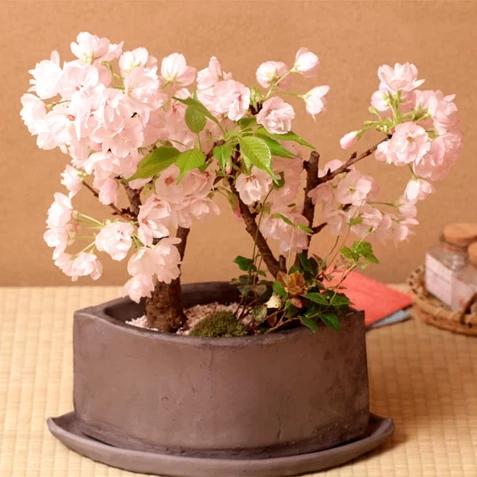 Cherry tree propagation methods
Seed propagation: viable cherry seeds are sown right after collection; when growing cherries by sowing, be careful not to let the seed embryos dry out, and they should be sown as soon as collected or stratified in wet sand and sown the following spring, in order to cultivate seedlings for grafting.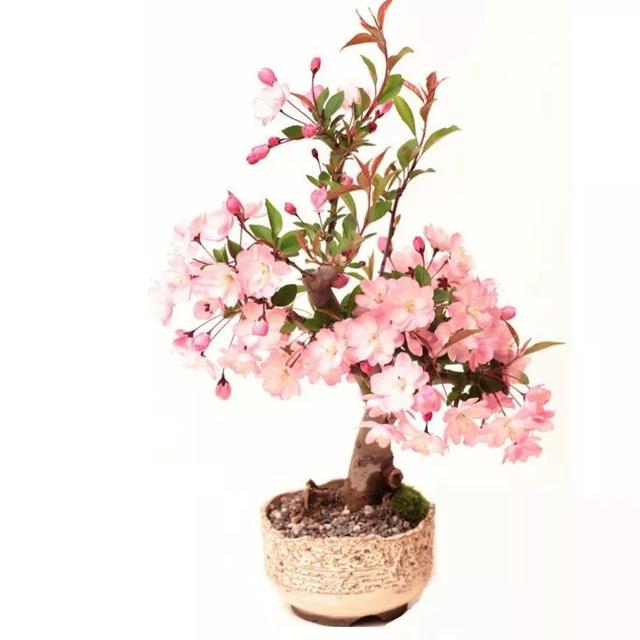 Cutting propagation: cherry tree cutting propagation usually uses one-year-old hardwood branches in spring and current-year softwood branches in summer. Cuttings can be treated with NAA, and the seedbed needs shading, moisture retention, and a well-aerated medium to achieve a high survival rate.
 Grafting propagation: because most cherry species do not bear fruit, grafting can use cherry or mountain cherry as rootstock, either by cleft grafting in late March or bud grafting in late August, and after the graft takes, 3 to 4 years of cultivation allows it to be planted out. High-branch top grafting can also be used to change the head; insert the sharpened scion into the rootstock using the cleft grafting method, wrap tightly with a plastic bag, and cover with a plastic bag for warmth and protection; the survival rate is high and it can be used to replace with new cultivars.
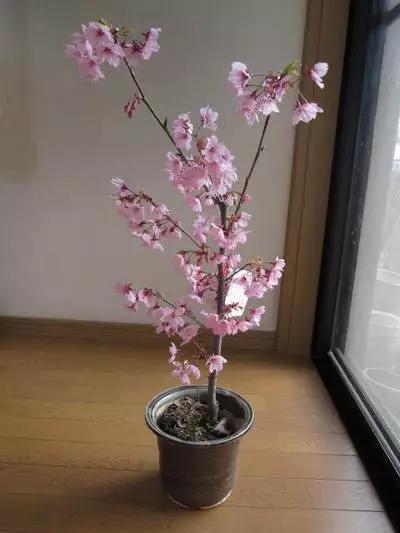 Care of cherry blossom bonsai:
Soil: for potted cherry blossoms, first prepare the soil quality; generally homemade leaf mold can be used, made specifically by collecting leaves along with acidic soil, chicken manure, charcoal powder and microorganisms and composting them. Homemade leaf mold has good drainage and aeration, and is suitable for the growth of potted cherry blossoms.
Watering: cherry blossoms dislike waterlogging; water reasonably according to different seasons and the size of the cherry seedling, following the principle of drying out between waterings, and the soil must not be too wet or waterlogged, otherwise it will cause root rot, ranging from leaf drop and affected flowering to the death of the whole plant in severe cases.
Fertilizing: potted cherry blossoms should be fertilized adequately to ensure the nutrients needed for their growth and development, making the plant lush with branches and leaves and the flowers brightly colored; generally apply decomposed liquid fertilizer once a week, mainly nitrogen fertilizer in the early stage to promote vegetative growth, and in the later stage pay attention to applying phosphorus fertilizer in combination to prevent excessive vegetative growth that affects flower bud differentiation; in May to June, combine with foliar spraying of 0.1%-0.2% monopotassium phosphate, and apply a base fertilizer once each before and after flowering to lay the foundation for flowering in the second year.
Pest and disease control for cherry blossom bonsai:
Cherry blossoms mainly have two conditions, gummosis and root rot, both of which require timely treatment, soil improvement, strengthened water and fertilizer management, and reasonable pruning. During a year of growth, cherry blossoms may suffer damage from aphids, red spider mites and scale insects; generally spray 3 to 4 times, the first before flowering, the second after flowering, and the third in July to August. Careful observation and timely control are necessary to achieve better results.
Follow the editor, help the editor create more experience sharing; bookmarking and commenting is a virtue. Wishing everyone a new atmosphere in the new year, and great wealth in the new year.