Succulent seed sowing experience sharing: a growth record from seed to old plant
1. About containers:
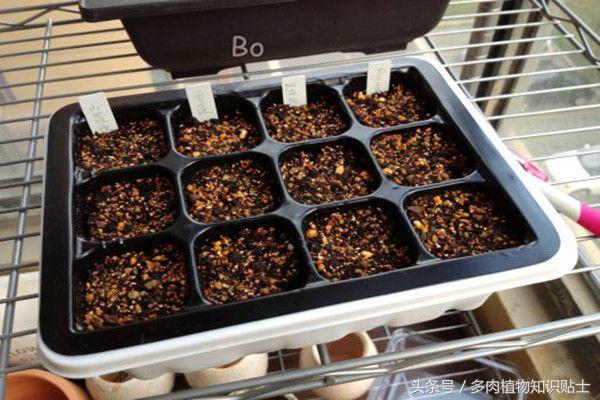
1. Container choices: 7MM small square pots, 12-cell sowing trays, plastic lunch boxes, fruit plastic boxes, and Wanxiang pots are the most commonly used, among others. Growers can choose according to their actual needs. (Thanks for the material)
2. About the soil mix:
1. My soil mix (for reference): akadama: peat (after sieving): perlite or kanuma (small granules): rice husk charcoal (can prevent uneven sterilization and serves a sterilizing function, prevents pests and diseases, and prevents surface moss and mold): vermiculite (after sieving): a small amount of sieved fine granules of coal cinder, or it can be omitted. 1:2:1:1:1:0.5
2. Notes: 1. Never use pure peat, otherwise it easily compacts later, drains slowly, and holds too much water, which easily causes seedling root rot, melting, and stunted growth. 2. Do not make the granule proportion in the mix too high, otherwise the soil's water retention becomes too low and the seedlings dry out and die. Seedlings need a lot of water during growth. 3. Different succulents have slight differences in soil mix, but they are still largely the same. Growers can make small adjustments according to their local environment, temperature, and other reasons.
3. About sterilization:
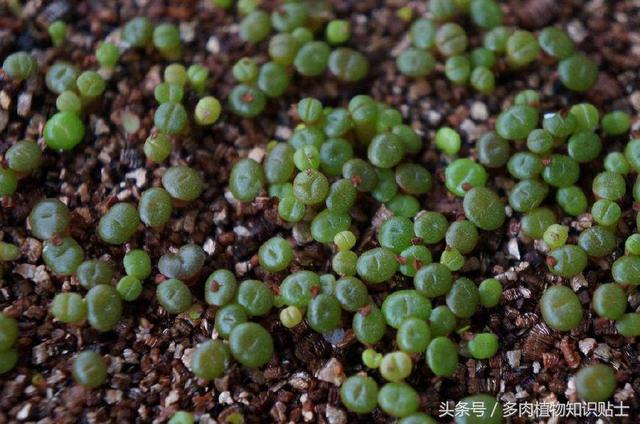
1. Potassium permanganate sterilization method: soak the prepared soil in potassium permanganate for 1 hour. Note (control the potassium permanganate concentration, otherwise it will damage the seeds or affect the germination rate). Solution: after soaking in potassium permanganate for 1 hour, soak in clean water for another 10 minutes to dilute the concentration in the soil.
2. High-temperature sterilization method: control the microwave sterilization time yourself.
3. Natural sterilization method: sun exposure
4. The most tedious method I have used: place the prepared soil under running tap water to rinse, not with a very strong flow! It should be drip-style, or leave it outside during continuous rainy days to let rainwater rinse it. Then dry it in the sun. It is quite time-consuming.
5. Other methods: 1. Add carbendazim or other brands of sterilization powder to the soil mix (control the dosage yourself; use with caution if you are clumsy). 2. Add rice husk charcoal to the soil mix; it has a certain sterilizing effect and prevents pests and diseases, and is relatively eco-friendly.
4. About pests and diseases:
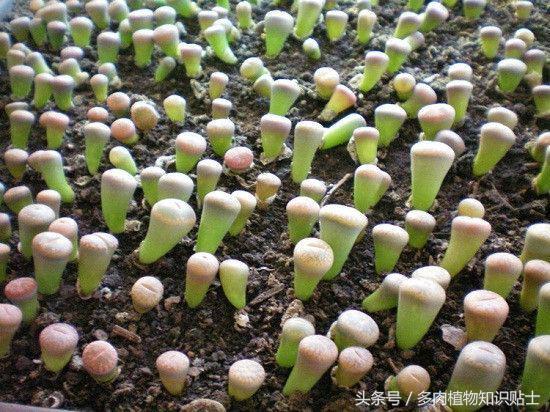
1. Pest problems: 1. Fungus gnats, their destructive power is very strong. Many of my valuable seedlings were eaten by them. Basically, if one pot has them, the whole pot is lost. It is recommended to move the seedlings. Cause analysis: thoroughly. Using medicines such as Xiaolvyao and Huhuashen to kill insects easily kills the seedlings, in my personal experience. Once I find them, I move the seedlings. Prevention and control: before sowing, they can be placed in a large transparent unused container for prevention and control; they are sold on Taobao.
2. Before sowing, do not make the soil layer too thick; 3 to 4 cm is enough. Reason: on light rainy days it is too easy for the soil not to dry for a long time, causing seedling rot, melting, and other factors.
3. When seedlings grow to a certain size, they must be top-dressed, which effectively prevents moss, mold, and other factors.
4. Sown seedlings do not have high sunlight requirements; be careful not to expose them to direct sun or places with strong sun. Provide shade, diffused light, and ventilation as much as possible.
5. Watering: do not water directly on the seedlings; due to environmental issues, it easily causes seedlings to melt and rot. Bottom watering is recommended.
5. About temperature:
1. For fresh seeds, I believe there is no effect of temperature on germination rate. Basically, around 25, they can all achieve a very high germination rate. Because there is a certain element in the seeds; the higher the temperature (but not too high), the faster cell division, the faster the seeds wake up, and the faster they sprout.
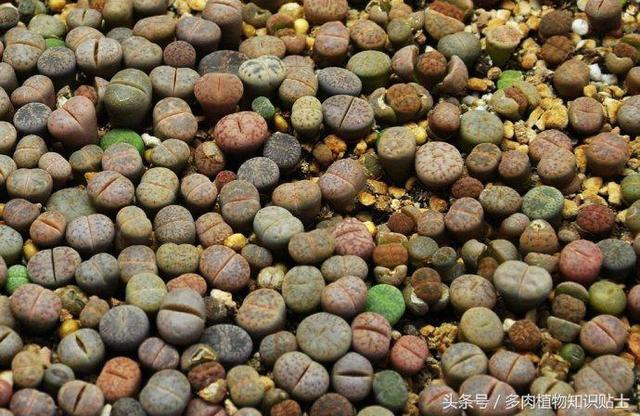
2. For foreign seeds or seeds stored for a long time, it is still recommended to control the temperature at 20°C for Sedum, 15~25°C for Lithops, around 15°C for Conophytum, and 30°C for Cactaceae. (Expert recommendation; I have not done related experiments)
6. About seeds:
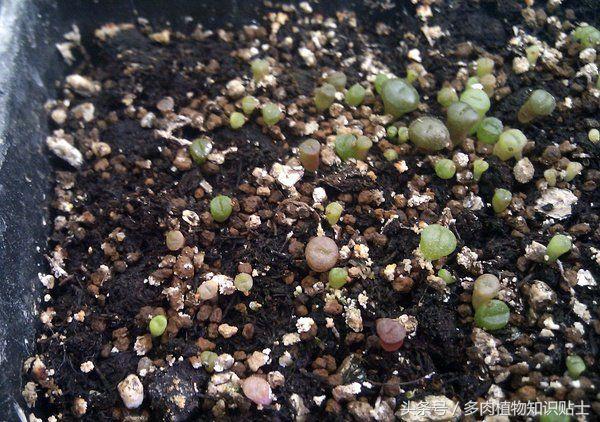
1. Seed germination levels:
2. First factor: 1. Seed freshness (commonly known as the difference in seed harvest time; seeds harvested within 1 year and kept well basically have very high germination rates)
3. Second factor: 2. Complete pollination of the seeds (fully developed seeds obtained) and seed plumpness (the plumper they are, the faster the seedlings sprout, the stronger the seedlings, and the less likely they are to die young)
4. I personally recommend growers pollinate their own seeds from the same year, or preferably the same month (within 4 months). I am not optimistic about KK and foreign seeds. Reason: the germination rate cannot be guaranteed; the local environment differs from the domestic environment in climate, temperature, and humidity. Seed freshness and completeness cannot be ensured. Compared with domestic seeds (grower-pollinated seeds), the germination rate is worse and germination is slower.
Final summary:
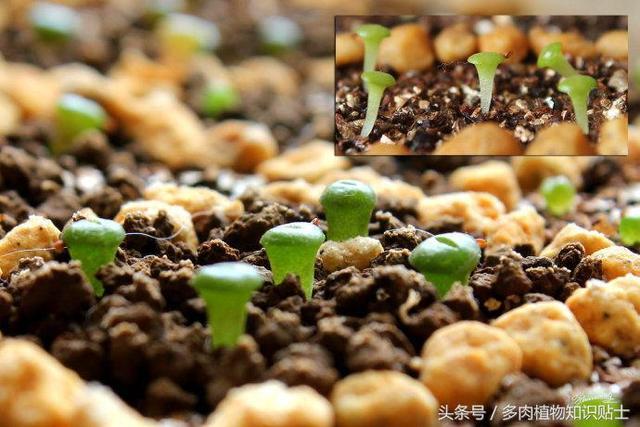
The sowing soil should have good permeability; pay attention to ventilation and watering; do not expose to direct sun; grow under diffused light; the sowing soil must not be too dry for a long time; when you see it is dry, bottom-water it; do not use medicine and do not fertilize. Apart from a few clumsy or impulsive people, basically there will be no problem.
There are still some flaws in certain details; please forgive me, viewers.