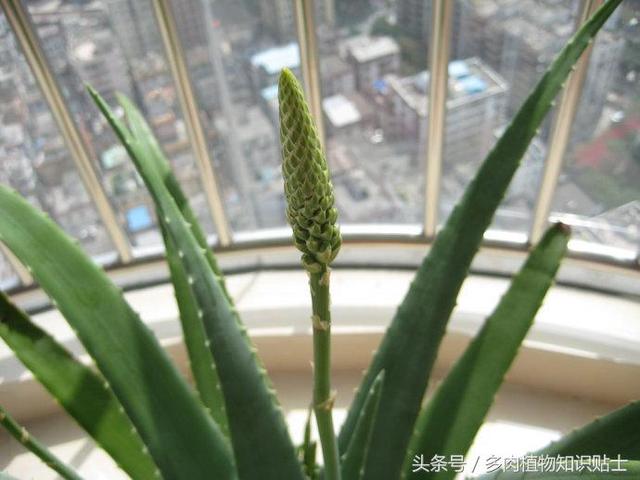
How do you pollinate aloe flowers to get seeds? A gardening expert teaches you the method
On rainy days, believe that whether it is aloe or Haworthia, more or less some flower stalks will appear. Today, when I was exchanging aloe experience with a friend, I found that some aloe growers, when pollinating aloe, refer to the pollination experience for Haworthia (twelve-volume). There are quite a few premium posts on Haworthia pollination in the forums, with every kind of method available, so everyone can choose what suits them and put it into practice for reference. But aloe, Gasteria and other succulents that are not currently mainstream in the Asphodelaceae family have relatively less information in all respects.
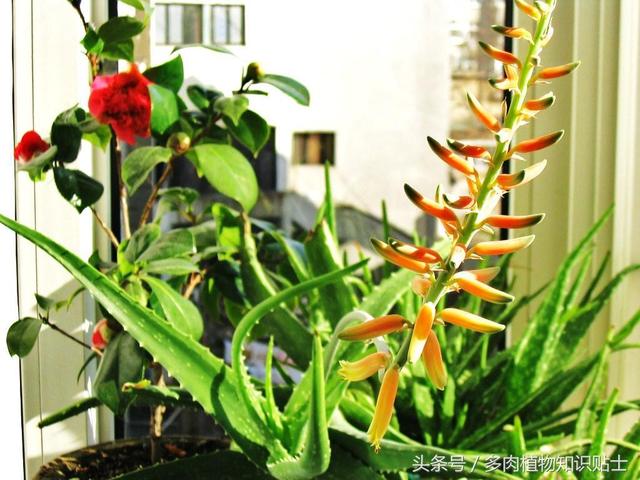
Alright, next I will start introducing the pollination method for the Aloe genus. If I, a humble beginner, say anything wrong, please correct me, great masters. Here there will certainly be friends asking, why can't aloe pollination refer to the pollination method for Haworthia? The answer is simple, because Haworthia is pollinated by hummingbirds, while aloe is pollinated by insects.
The Aloe genus is pollinated by insects, so the stamens mature first and extend out from the petals. (Here it should be said that aloe pollen, compared with the Haworthia genus, is for most aloes far more abundant than that of Haworthia. Of course, there are many aloe varieties, so one cannot generalize, and perhaps there are also varieties with smaller stamens.) After the stamens mature, some time later the pistil matures, and the mature pistil likewise extends out from the petals. Only then does it mean pollination can be carried out, rather than pollinating within 2~3 days after flowering as with Haworthia, because Haworthia is pollinated by hummingbirds, so neither the pistil nor the stamens extend out from the petals after maturing, while the Aloe genus is pollinated by insects, so after the stamens and pistil mature they both extend out from the petals, making it convenient for insects to pollinate.
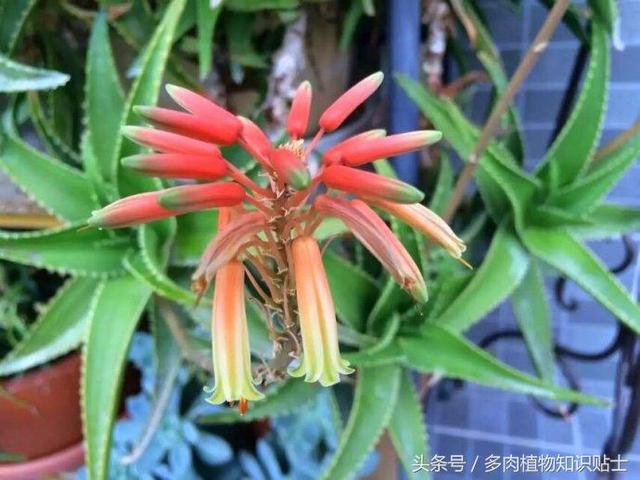
Of course, aloe and Haworthia share the same characteristic that they cannot pollinate themselves, which is what we commonly call self-pollination. Because most aloe varieties have abundant stamen pollen, and the pistil actively extends out from the petals, we do not need to peel off the petals and then pollinate the pistil as with Haworthia. When the aloe pistil extends out, you can use a brush to collect stamen pollen and pollinate the pistil, or you can directly take the aloe flower and touch the stamens to the pistil. The specific method depends on personal preference. After successful pollination, in about three days the flowers that did not succeed will wither, and the ovary of successfully pollinated flowers will begin to swell. In about one to two weeks the seed pods will burst through the petals. Personally, I feel that aloe seed pods mature relatively slower than those of Haworthia. The aloe seed pod I confirmed successfully pollinated on the 31st of last month still has not split open even now, almost three weeks later. Perhaps it is because these past few weeks have had many rainy days and the temperature is not high, so the seed pod matures slowly. I dare not casually say the specific reason.
Next, a brief talk about sowing. I think sowing of the Aloe genus can refer to the Haworthia genus. There are also quite a few premium posts on Haworthia sowing in the forums. I think that on the basis of the Haworthia sowing soil mix, one can add a little more peat and other nutrient-rich planting medium. Personally, I feel that compared with Haworthia, aloe has less demanding requirements for air circulation around the roots, so one can add a little more peat to increase the growth speed of aloe seedlings.
Finally, to summarize the differences between the Haworthia genus and the Aloe genus in flowering and pollination:
1. Haworthia is pollinated by hummingbirds, and after the stamens and pistil mature neither extends out from the petals. Aloe is pollinated by insects; the stamens mature first and extend out from the petals, then the pistil matures and also extends out from the petals.
2. Haworthia pollen is relatively less than that of the Aloe genus. Directly touching the stamens to the pistil can avoid wasting pollen. The Aloe genus has more pollen, so tools such as a small brush can be used, and of course direct touching is also possible.
3. Haworthia flowering forms one flower bud and opens one flower, and the flower buds at the very top of the flower stalk will slowly form. Most of the Aloe genus first forms many flower buds, even the entire flower stalk, and then blooms in sequence.
4. Haworthia varieties have a rough annual flowering pattern; for example, the earliest bloomer, Kangping, blooms around April, and relatively later ones like Crab, Wanxiang, are about two months apart from Kangping. Most bloom in spring. Some Aloe genus varieties mostly depend on the environment for flowering; as long as the environment is suitable, they can bloom several times a year, whether in spring or autumn. One aloe I grow bloomed twice last autumn and once this spring.
5. Additions welcome~ (Thanks to w235761289 for the material)