Firethorn bonsai is the essence of ornamental horticulture, hear the master explain it in detail
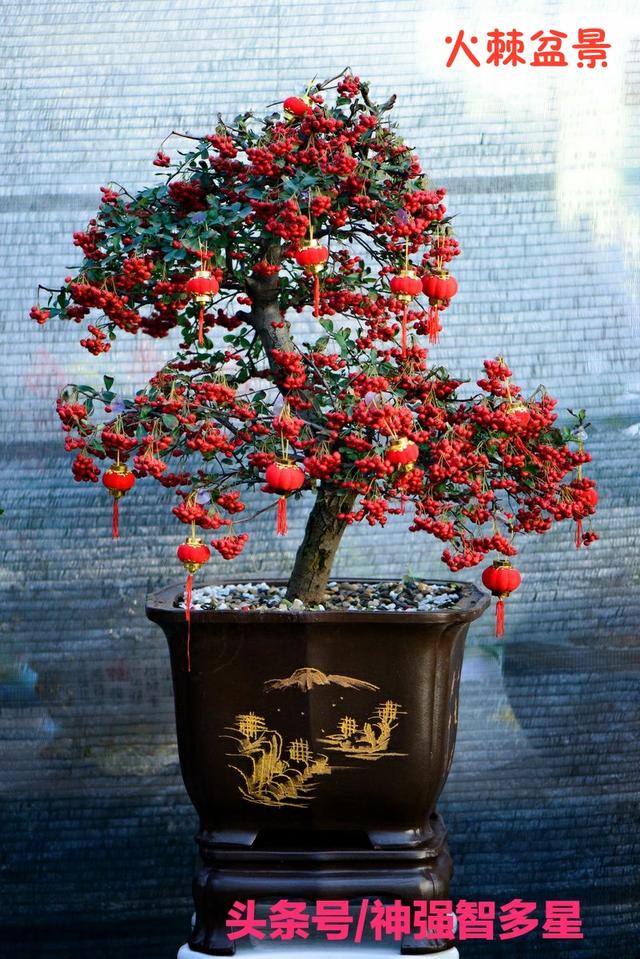 Firethorn, also known as Huobaguo, Jiumingliang, Chiyangzi, Doujinniang, Shuicuizi, and also known as Taiwan red fruit, red pearl, auspicious fruit, Zhuangyuanhong, and in dialect Suanpanzhu. It belongs to the shrub family Rosaceae, genus Pyracantha, is evergreen through all four seasons, with soft and small branches and leaves, and waxy leaves. It blooms white flowers in spring, then bears green fruit, and in late autumn the fruit turns fire-red. The plant is 1 to 3 m tall, with obovate, bright green leaves, compound corymbose inflorescences, and white flowers. The fruit is round, and the ripe fruit is bright red, remaining on the branches without falling after frost, until spring of the following year. The red fruit is abundantly produced in Taiwan, China, Japan, and various parts of Southeast Asia, and is also distributed in southern China. In summer, under the scorching sun, the snow-white flowers bloom fully. In a courtyard or indoors, the snow-and-jade-like firethorn flowers add a touch of coolness. In winter, when snow lies thick, the firethorn has green branches and leaves, and its fruit is red as fire, warm and lovely. The roots, trunk, branches, flowers, and fruit of firethorn all have extremely high ornamental value, making it an excellent plant for viewing flowers in spring and fruit in winter. Firethorn fruit is rich in organic acids, protein, amino acids, vitamins, and various mineral elements, and can be eaten fresh or processed into various beverages. Firethorn is distributed in China's Shaanxi, Jiangsu, Zhejiang, Fujian, Hubei, Hunan, Guangxi, Sichuan, Yunnan, Guizhou and other provinces and regions. The genus has 10 species, 7 of which are produced in China, and many excellent cultivated varieties have been bred abroad.
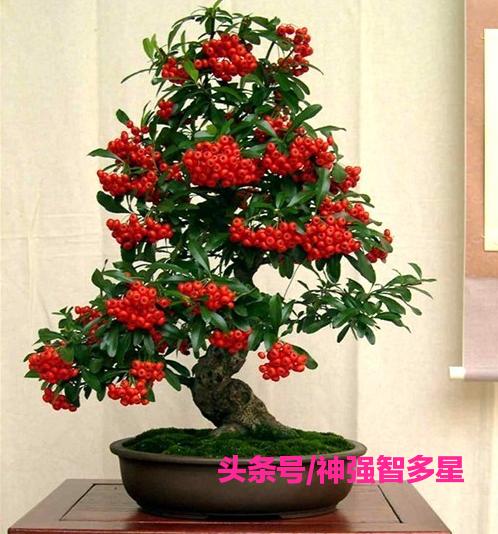 Key points for cultivating firethorn bonsai
Firethorn bonsai is evergreen through all four seasons, compact in form, with lush branches and leaves, and is valued both for its leaves and flowers as well as its fruit, thus making it deeply favored by bonsai enthusiasts. To cultivate firethorn bonsai well, the following key elements must be grasped well. First, one must understand firethorn's physiological characteristics and growing conditions. Firethorn likes moisture and fertilizer, likes sufficient light, and likes a well-ventilated and warm, humid climate environment. It has a well-developed root system, likes heavy fertilizer and heavy watering, sprouts branches quickly, grows rapidly, tolerates pruning, and tolerates wiring; it has abundant flowers and fruit, with the fruit initially green, then yellow, and red when ripe, and the entire red fruit can almost completely cover all the leaves, and it does not fall throughout winter and spring, with the fruit-viewing period lasting as long as half a year. Therefore, it is necessary to ensure proper water and fertilizer, alternating dry and wet, sufficient sunlight, and good ventilation, so that firethorn bonsai can grow normally. Second, seasonal management for cultivating firethorn bonsai. After winter dormancy, because of characteristics such as bearing much fruit, a long fruiting period, and early sprouting, the firethorn plant should have its fruit picked and fertilizer supplemented in time. Picking fruit is a necessary condition for abundant flowers and fruit the following year. If the fruit is allowed to remain on the plant, it can even stay until May or June of the year after fruiting without falling, which both consumes a large amount of the plant's own nutrients and is even more unfavorable for flowering and fruit set that year. And timely replenishment of nutrients is another condition for strong spring buds and vigorous growth. Generally, in summer, fertilizer mainly based on phosphorus and potassium can be applied in a timely manner. Better wet than dry. Even if it dries out once, severe water loss in branches and leaves will cause the plant to die, and all previous efforts will be wasted. In autumn, phosphorus and potassium fertilizer should continue to be applied to promote fruit ripening and coloring. In winter, it can be viewed indoors, requiring ventilation, and the temperature must not be too low, the temperature must not be too high, and sunlight must be sufficient; otherwise it will drop leaves, sprout winter buds, or die from excessive water loss. For fertilization, it is best to apply solid fertilizer on the pot surface. If overwintering outdoors, it should be protected from dry wind attacks that cause damage. As long as the pot soil is kept appropriately dry and wet, a low temperature of about -10°C will not cause damage.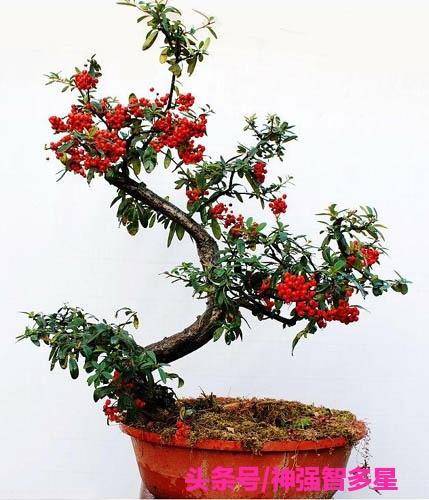 Third, maintaining the form of firethorn bonsai. For a finished firethorn bonsai, spring is the beginning of another growth cycle, and letting it grow rampantly is very necessary. Only with lush branches and leaves in spring will it better carry out photosynthesis and better promote root growth and development, so as to facilitate nutrient absorption, promote growth and metabolism, and thus make the whole plant vigorous and full of vitality. Otherwise, the plant will suffer severe malnutrition, poor resistance, severe aging, or even death. From late spring to early summer and even into autumn, pruning and shoot pinching should be the main tasks. Pruning and shoot pinching should mainly preserve the original tree form, and in individual cases one may add one's own creativity. Autumn is another growth peak, so nitrogen fertilizer is prohibited, and shoot pinching is best done by removing the apical dominance. This avoids autumn shoots consuming nutrients and bringing disadvantages to overwintering and fruit set. Fourth, repotting firethorn bonsai. To grow it well, the fertilizer must be good. Pot soil is the medium on which firethorn bonsai depends for survival and nutrient absorption, so fertility must be sufficient, slightly acidic, and relatively loose. The soil is best sterilized, pest-free and disease-free, and relatively fertile garden soil or surface soil from mountain forests, and may include decomposed base fertilizer, fine sand, and culture soil. The pot soil can be used continuously for one to two years. Repotting is best done once a year or even twice. It is best to choose late autumn or early spring, that is, after new shoot growth stops or before new shoots begin to grow. For vegetative growth plants that have not set fruit, the pot and soil can be changed throughout the year. Whenever the soil is changed, some original soil must be retained, long roots cut off, and root balling must not occur; the plant should be repotted as soon as it is removed, and the speed must be fast, so as not to affect plant growth. Under shade and greenhouse conditions, repotting can be done throughout the year; under natural conditions, it is best during the dormant period. Fifth, pest and disease control. Although firethorn bonsai has many advantages, it also has quite a few disadvantages. Fear of drying is one of its typical shortcomings. Next is susceptibility to pests and diseases. Diseases mainly come from external invasion or pot soil, mainly fungal infection, black rot, and powdery mildew, with powdery mildew being especially severe. Prevention and control mainly use fungicides such as carbendazim and thiophanate-methyl, mainly by spraying branches and leaves or drenching the roots. At ordinary times, placing it in a ventilated and clean environment with sufficient light and vigorous growth can greatly reduce the incidence of disease. Among insect pests, aphids are the most common. Trichlorfon, emulsified dimethoate, and the like can be sprayed in time. Generally, spray in the afternoon, at least once every three days, and more than three times can achieve complete control; it can also be sprayed as soon as pests are found. The results are all quite good.
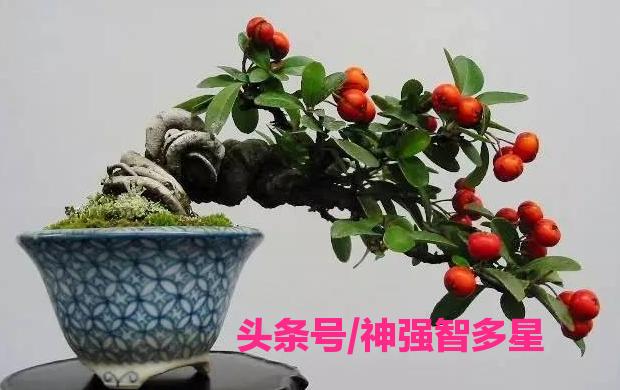 Make firethorn bonsai bloom abundantly and bear plentiful fruit
Firethorn is an excellent tree species for making bonsai, and the ornamental value of its roots, trunk, branches, leaves, flowers, and fruit is very high. How can firethorn bonsai achieve abundant flowers and plentiful fruit? After nearly 20 years of practice in cultivating and making them, I have several personal insights, and now I will share and discuss them with fellow bonsai enthusiasts. 1. Sunlight Firethorn likes a warm, humid climate and an environment with sufficient sunlight. Placing it in a wind-sheltered, sunny spot allows relatively extensive management; even in the scorching heat of summer it does not need shading, and in severe cold winter it will still grow well. However, in order to achieve more flowers and more fruit, spring, summer, and autumn must have direct sunlight conditions, and no less than 4 to 5 hours of exposure per day. 2. Soil Firethorn grows rapidly, has strong sprouting ability, and has many and dense roots. Although it can adapt to poor soil, it prefers fertile soil with good fertility, and is best suited to breathable, slightly acidic sandy soil or leaf mold plus vegetable garden soil, etc. Generally, replacing two-thirds of the old soil in the bonsai once a year is sufficient. 3. Watering Firethorn bonsai requires even more attention during the flowering and fruit-setting periods, and the soil should be kept moist as much as possible but not waterlogged. In autumn and winter, it may be appropriately on the drier side. If the bonsai becomes waterlogged, it can cause root rot, leaf drop, or even death. In short, careful attention is beneficial, and the principle is the old saying: do not water if not dry, and water thoroughly when watering. 4. Fertilization Firethorn likes fertilizer, and during the periods of sprouting, blooming, and fruit formation in spring, summer, and autumn, fertilizer and water must be guaranteed. From March to May, during the bonsai's shoot-pushing and flowering period, a liquid fertilizer with relatively high nitrogen and phosphorus content can be applied 1 to 2 times per month, best using cake fertilizer, farmyard manure, and the like, which can promote vigorous sprouting and growth of branches and buds and can also make the branches bloom more and set more fruit. After the plant sets fruit, the use of nitrogen and phosphorus fertilizer can be stopped, and potassium dihydrogen phosphate liquid fertilizer can be applied 1 to 2 times per month, continuing until September. If organic fertilizer is applied, it must be strictly fermented before use, and the amount should also be determined according to the size of the bonsai. In short, frequent application in small amounts is required. 5. Pests and diseases The main insect pests of firethorn bonsai are aphids and red spiders, which may occur in spring and autumn. Diluting omethoate 1000 times and spraying once every 7 days can kill them. If powdery mildew, leaf blight, sooty mold, etc. occur, a 500 to 1000 times carbendazim solution can be sprayed. 6. Pruning Whether firethorn bonsai can achieve the ultimate goal of abundant flowers and plentiful fruit, the most critical step is to do the pruning work well. First, pruning maintains the tree's posture, cutting back leggy branches and removing useless branches, etc., so as to facilitate full ventilation and light penetration of the branch pads; second, it is beneficial for more flowering and normal fruit growth. The flower bud differentiation period of firethorn is on the fruit-bearing branches that grow in October to November of the previous year, so when pruning each autumn, one must keep the short branches grown that year and cut off surplus vegetative branches. This kind of pruning can both take into account keeping the bonsai's branch pads and crown width unchanged, and also allow the flowers blooming abundantly the following year to drift like patches of white clouds on the outer layer of green leaves. After the fruit ripens in golden autumn, it is even more bustling and lively, full of a festive atmosphere.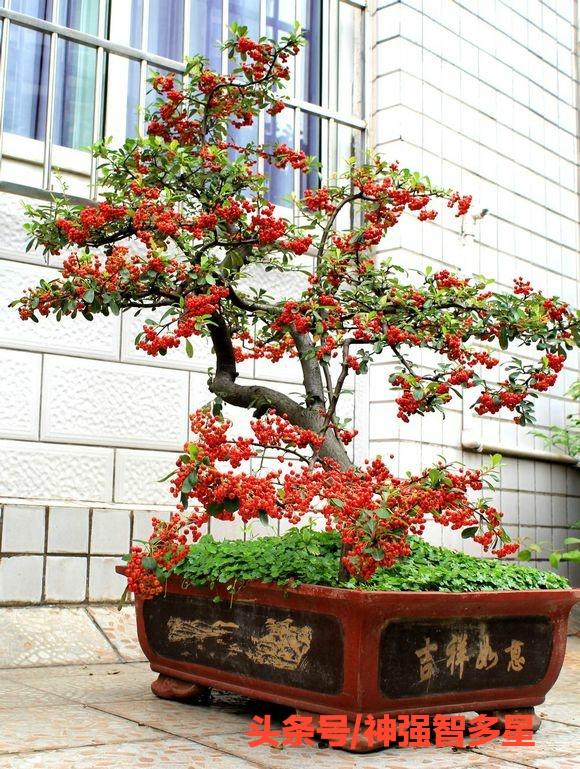 How to make firethorn bonsai: seedling source treatment
The seedling source for firethorn bonsai can be propagated by sowing and cutting. For sowing, spring sowing can be done after germination promotion in early spring. For cutting, in February to March of spring, select robust one- or two-year-old branches, cut 10-15 cm long sections as cuttings, and insert them as they are cut. Softwood cuttings can also be done during the plum rain season, which makes rooting easier. Seedlings generally take 3-4 years to bear fruit. In order to make them bear fruit and take shape as quickly as possible, hardwood cuttings with fruit can be selected; fruiting cuttings are usually done in summer. Use vermiculite, sand, or sawdust as the substrate, and disinfect before inserting.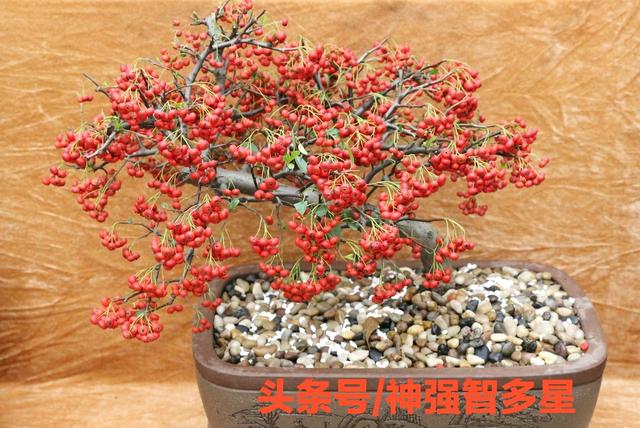 How to make firethorn bonsai: shaping and pairing.
Firethorn bonsai should adopt the shaping method of coarse wiring and fine pruning, generally carried out in autumn. First use iron wire or palm fiber to coarsely wire the trunk into different forms such as slanting trunk or lying trunk, cultivate for a period, and then prune and shape the layers of the bonsai according to the design, so that the entire tree form has distinct layers and charm. Firethorn is very particular about its pot. To set off its red fruit, generally white, light blue, light green, or pale yellow and other light-colored, cool-colored bonsai pots are used as matching pots.
How to make firethorn bonsai: maintenance methods
The soil used for firethorn bonsai is best relatively fertile garden soil or surface soil from mountain forests, and decomposed base fertilizer, fine sand, and culture soil can also be used. Firethorn likes moisture and fertilizer, and likes an environment with sufficient sunlight, good ventilation, and a warm, humid climate. Firethorn tolerates barren conditions, and the temperature can be as low as 0°C-5°C or lower. Firethorn has a well-developed root system, sprouts branches quickly, grows rapidly, tolerates pruning, and tolerates wiring. Firethorn bonsai is especially afraid of drying out and is susceptible to pests and diseases. Diseases mainly come from external invasion or pot soil, mainly fungal infection, black rot, and powdery mildew, with powdery mildew being especially severe. Firethorn is best repotted once a year. Choose late autumn or early spring for repotting, that is, after new shoot growth stops or before new shoots begin to grow. For firethorn that has not set fruit, the pot and soil can be changed throughout the year. Whenever the soil is changed, original soil must be retained, long roots cut off, root balling must not occur, and the speed of potting must be fast, so as not to affect growth. Among insect pests of firethorn, aphids are the most common. The control method is to spray trichlorfon, emulsified dimethoate, and the like in time. Generally, spray in the afternoon, at least once every three days, and more than three times can achieve complete control; it can also be sprayed as soon as pests are found. The control method mainly uses fungicides such as carbendazim and thiophanate-methyl, mainly by spraying branches and leaves and drenching the roots. At ordinary times, placing it in a ventilated and clean environment with sufficient light and vigorous growth can reduce the incidence of disease.
Thank you for being here, follow the editor, share more experience, and wish you rolling wealth in 2018.