6 little tips for growing orchids, cultivate beautiful and elegant orchids
Orchids have been praised and loved as flowers since ancient times. Many people like to grow orchids, but quite a few of them actually do not know how to grow them. Below, let us learn about the 6 little tips for growing orchids, so you can cultivate beautiful and elegant orchids.
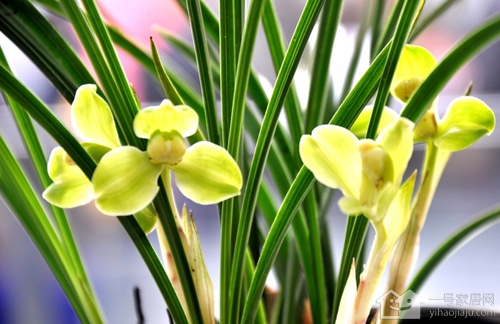
Orchid growing method 1: Soil selection
The soil used for orchids should be mainly humus, primarily leaf mold or mountain forest humus soil. In the south, the humus soil from the place of origin, commonly known as orchid mud, can be used; leaf mold, vermiculite, perlite, etc. can also be used to artificially prepare a loose, airy, water-permeable growing medium. Generally, 8 parts leaf mold and 2 parts river sand are mixed into a growing medium, or 7 parts leaf mold, 2 parts perlite, and 1 part river sand are mixed into a growing medium, or 6 parts leaf mold (peat soil), 3 parts compost soil, and 1 part river sand are mixed evenly into a growing medium. All the growing media prepared above are slightly acidic.
Orchid growing method 2: Fertilization method
For fertilizing orchids, one way is to apply base fertilizer into the growing medium, and the other is topdressing during the growing period. Topdressing mostly uses liquid fertilizer or foliar fertilizer, and the concentration should be lighter than for other flowers. Orchids should have their growing medium changed once a year, and during the growth period, topdressing can be applied sparingly, with attention to timing. Generally, in the growing season, a fully decomposed thin cake fertilizer water of about 15% can be applied as topdressing, or 0.1% urea fertilizer water plus 0.2% potassium dihydrogen phosphate fertilizer water, applied once every 15~20 days; from before flowering to the flowering period, 0.2% potassium dihydrogen phosphate or plant ash water can be sprayed on the leaves 2~3 times to promote the development of roots, stems, and flowers. Orchids have fleshy roots, so fertilizer that has not been decomposed must not be applied, to avoid root rot.
Orchid growing method 3: Watering method
Watering orchids should be based on the species, growth condition, and local climate, achieving moist but not wet, dry but not parched; watering should not be too much or too little, and the principle of not dry in autumn and not wet in winter should be grasped. In winter, when the temperature is low, the plant is in a dormant state, so watering should be controlled, generally once every 5~7 days, but Cymbidium sinense, which blooms in winter, needs more water;
In spring and autumn, water once every 2~3 days; in summer, when the temperature is high and orchids are also in their vigorous growth period, water 1 to 2 times a day on average. When watering, be careful to prevent water droplets from splashing on the leaves, so as to avoid black spots that affect the ornamental effect. During the orchid's growth period, water should often be sprayed on the leaves, and in summer water should also be sprinkled on the ground around the flowerpot to increase air humidity and promote the growth and development of the orchids. For watering orchids, rainwater and snow water are best; if tap water is used, it should be stored for 2~3 days before use.
Orchid growing method 4: Temperature requirements
For potted orchids in the north, they should be moved indoors around the Frost's Descent solar term when the temperature drops to 5°C, and in the early period after being moved indoors, windows should often be opened to keep the air circulating. In winter, the indoor temperature should preferably be kept at around 10°C. After Grain Rain, move them outdoors for care. The suitable temperature for orchid growth is 16~24°C. In winter, the indoor temperature is generally required to be relatively low, preferably 10~12°C during the day and 5~10°C at night, and the temperature and humidity should not be too high; in summer, the temperature should not exceed 30°C.
Orchid growing method 5: Light requirements
Orchids prefer shade and fear direct strong light, so shading should be carried out in spring, summer, and autumn. For growing orchids at home, in order to control the amount of light, it is best to place them on a balcony windowsill or under the eaves with bamboo curtain shading, generally shading from 9 a.m. to before 6 p.m., and pulling the curtain open in the morning and after 6 p.m. so they receive scattered sunlight. In winter, they should be moved indoors to a place with visible scattered light, but direct sunlight should also be avoided. Among orchids, Cymbidium sinense has the strongest shade tolerance, followed by Cymbidium ensifolium, while Cymbidium goeringii and Cymbidium faberi have weaker shade tolerance.
Orchid growing method 6: Potting method
Because orchids grow slowly, they can be repotted once every 1~2 years after the flowers fade. When potting, first put about 3 cm of tile pieces, cinders, etc. into the bottom of the pot to aid drainage. Then, add a layer of growing medium, place the orchid seedling in the center of the pot, straighten the roots, and let them spread naturally. When half of the soil has been added, lift the orchid seedling gently while shaking the flowerpot so that the soil and roots combine tightly. When the soil is filled to 2~3 cm below the pot rim, press it lightly with your hand. After planting, water thoroughly and place in a cool place, spraying water once each morning and afternoon, and after about 7~10 days move it to a shaded place with dappled light for care.
The above is the related introduction in this article. I believe that after reading it, you also have a simple understanding of this. If needed, you can continue to follow No.1 Home Network to learn more information.