Rules for watering potted plants to grow healthy, thriving plants
When growing plants, you need to know how to water them. Too much or too little water will affect plant growth. Below, let's look at the rules for watering potted plants to grow healthy, thriving plants.
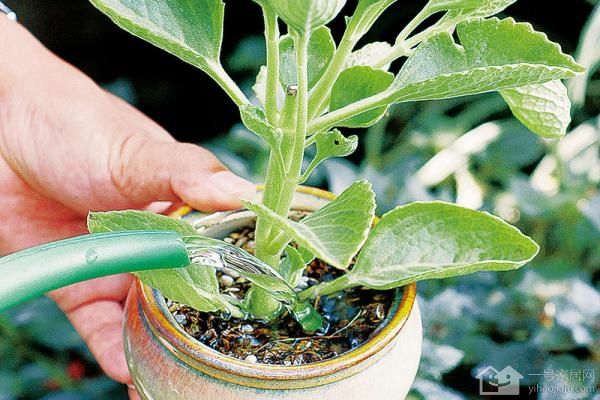
1. For watering, soft water is best, and natural rainwater is a plant's favorite. Next is river water and pond water.
2. Tap water must be left to sit for a day before use, because tap water contains more chemical components, such as chlorine. Plants are picky eaters too.
3. Do not use dishwashing water or laundry water to water flowers, otherwise the flowers will grow poorly. Rice-rinsing water can be used to water flowers.
4. Pay attention to water temperature; do not go from sudden cold to sudden heat, otherwise the flowers will get sick. It is best to use water at room temperature; my temperature should be the same as yours, that is what is best.
5. Water amount: more in spring, suitable for watering at noon. In summer, a sufficient amount, suitable for watering in the evening. In autumn, water less. In winter, even less.
6. Some plants should be watered in the morning, such as apple trees, legumes, begonias, blackberries, cherry trees, cucumbers, dahlias, geraniums, grapevines, melons, peach trees, pear trees, peonies, plum trees, raspberries, roses, strawberries, and tomatoes.
7. Some plants like moisture, so they should be placed in a moist spot and watered more, such as Astilbe, Sanguisorba canadensis, ferns, foamflower, horsetail, Hosta, Impatiens, Louisiana iris, Siberian iris and Japanese iris, marsh marigold, mint, Polygonatum, swamp hibiscus, Acorus calamus, and sedges.
8. Generally, thick, fleshy plants should be watered less, with a thorough watering each time, such as the cactus family. Thin-leaved plants should be watered more, but plants with small, waxy leaves should be watered less.
9. Vigorously growing plants should be watered more, while dormant plants should be watered less. Some plants go dormant in winter, so they should be watered less.
10. Watering methods include surface watering, the sit-in-water method, the towel moisture-absorption method, and drip irrigation. For plants that cannot be looked after for a short time, use the towel moisture-absorption method or place the small flowerpot in a large box filled with wet sand. This can extend the time before watering is needed again.
11. Most problems with potted flowers are caused by improper watering. No matter which kind of potted plant, in any season, watering must follow two principles: "good quality, timely, and appropriate amount" and "do not water when dry; when watering, water thoroughly," that is, each time water until it seeps out from the saucer under the pot.
The above is the related introduction in this article. I believe that after reading it, you now have a simple understanding of this. If needed, you can continue to follow No. 1 Home Network to learn more information.