Causes of Dry, Withered Leaves on the Peace Lily Tree and How to Fix Them
The peace lily tree (Cinnamomum kotoense) has an auspicious meaning, is a green plant quite suitable for growing at home, and can also purify the air. Below, let's learn how to cultivate the peace lily tree and some small tips for its daily care.
Branch Blight
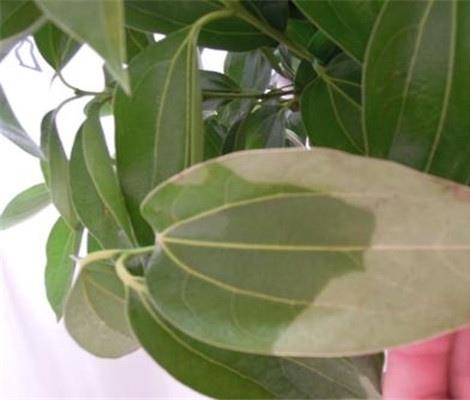
One cause is branch blight, which is the most serious disease harming the peace lily tree, bar none. It is mainly caused by a stuffy, hot environment, improper ventilation, and fungal infection. It mainly shows as large areas of dry, withered branches and leaves on the inner side of the peace lily tree, and weak, thin branches are also easily infected.
As soon as possible, cut the branches back to 5 cm below the affected area, and remove all dried leaves (those with even a little dry spotting should also be removed). Spray the branches and leaves with a carbendazim solution and drench the roots, for 2~3 consecutive treatments.
Soil on the Alkaline Side
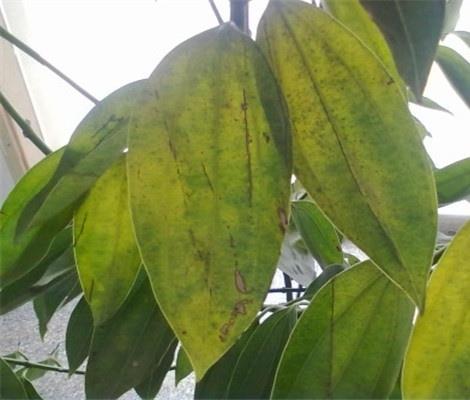
The peace lily tree is suited to growing in slightly acidic soil. The soil we commonly come into contact with, as well as most of our water, is alkaline. Over time this reduces the soil's acidity, affecting the growth of the peace lily tree and leading to soft, drooping, and drying leaves.
When watering the peace lily tree, you can add a little ferrous sulfate solution to increase the soil's acidity, but the concentration must not be too high. Also, when repotting, replace the soil with new soil while keeping 1/3 of the old soil.
Cold Damage
The money tree is not cold-resistant; when temperatures are too low or late frosts are severe, its leaves will dry up. This mainly shows as drooping, lusterless leaves that gradually dry from the leaf tip until they fall off.
With mild cold damage, the leaves of the peace lily tree will turn yellow; with severe cold damage, they will dry up. There is no way to remedy leaves that have already suffered cold damage, so remove them promptly. Move the plant to a relatively warm place and do your best to keep it insulated. In spring, after temperatures rise, the branches will sprout new leaves again.
Newly Repotted Transplants
If the leaves of your peace lily tree all droop just a few days after you buy it, and the leaves show scorched-yellow spots, this is not a problem with your care; you were cheated by the shop when you bought it. The shop had just repotted or just planted it, and it needs a certain adaptation period. During adaptation it went through two sudden environmental changes, which produced this reaction. As long as it is not especially severely dried out, it will slowly recover.
For a newly planted tree, the settling-in period takes one month, and adapting to the environment takes one month; after 2 months it will basically resume growing. Just wait patiently.
Root Rot
Root rot is caused by many factors: improper watering, improper fertilizing, poorly aerated soil... Actually, root rot itself is not frightening; what is frightening is root rot that is not discovered in time. In the early stage of root rot, the leaves lose their luster, turn yellow, gradually develop dry spots, and droop. Finally the plant dies because of insufficient nutrient supply.
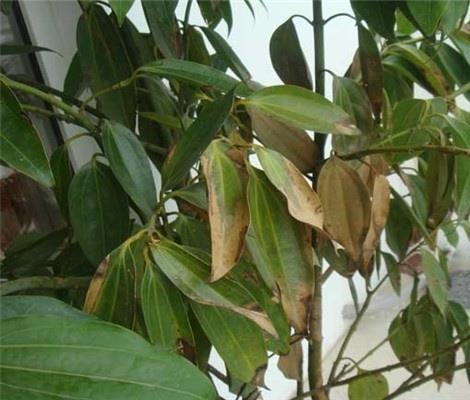
Yellowing and dying leaves on plants all have different hidden causes. First you must determine whether it can still be solved. If the symptoms are caused by rotted roots, then there may already be no way to save it, but if it is due to other reasons, it can still be solved in time. For example, if it is because the light is too strong, you can move it to a shady place; if it is because of lack of water, you can increase the amount of watering in time; if it is because of too much fertilizer, you can change the soil. Understanding the knowledge above will let you prevent and treat the death of the peace lily tree.
The above is the relevant introduction in this article. I believe that after reading it you now have a simple understanding of this. If you need more, you can continue to follow No.1 Home Network to learn more information.>