Vegetables can also be grown like flowers, and the gardening ingenuity is truly admirable
Setting aside a vegetable garden in a park or scenic area, so that city children can see how the vegetables and fruits on their dining tables actually grow, is now a standard feature of many parks and farms.
But a vegetable garden that lacks aesthetic appeal always looks out of place in a park or scenic area. So how should it be handled?
Why not just grow the vegetables the way you would grow flowers?
How do you grow them?
Vegetables are plants too,so you can completely break with conventionand treat them as individual plants, arranging them according to plant design principles. They can look absolutely beautiful!
In countries with well-developed home gardening, people are already growing vegetables just like flowers.
Let's secretly learn a few tricks from the China Flower Sea Alliance.
Mixing flowers and vegetables
Beauty and flavor soaring together
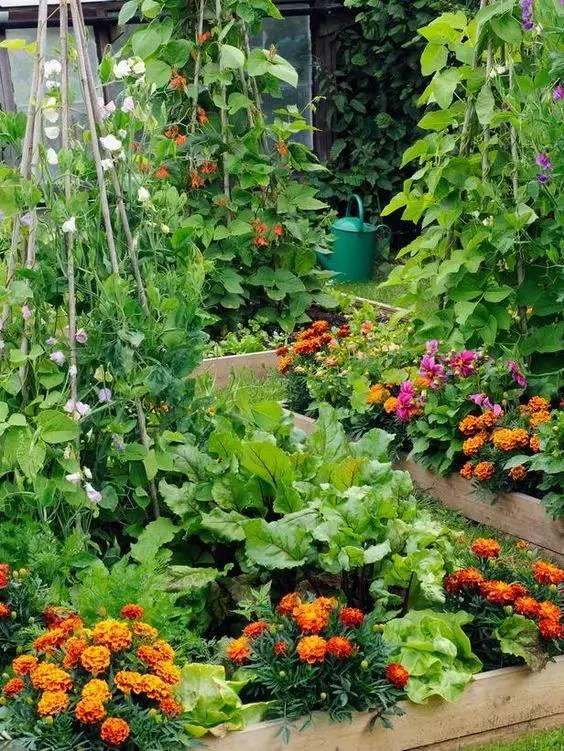
You can absolutely plant vegetables and flowers together. Climbing peas, rising and falling at different heights, with their elegant, lovely purple blossoms.
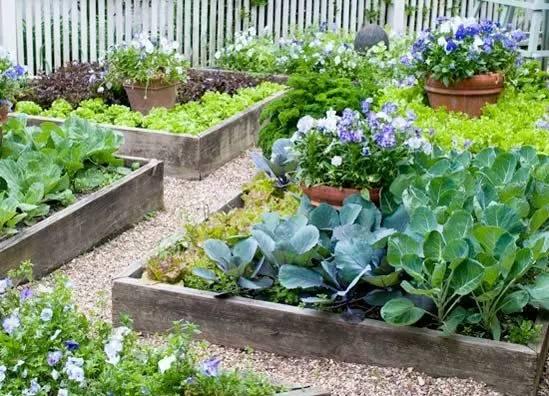
Some ornamental plants are also edible, such as herbs like rosemary, roses, pansies and so on. Paired with verdant vegetables, they look completely harmonious.
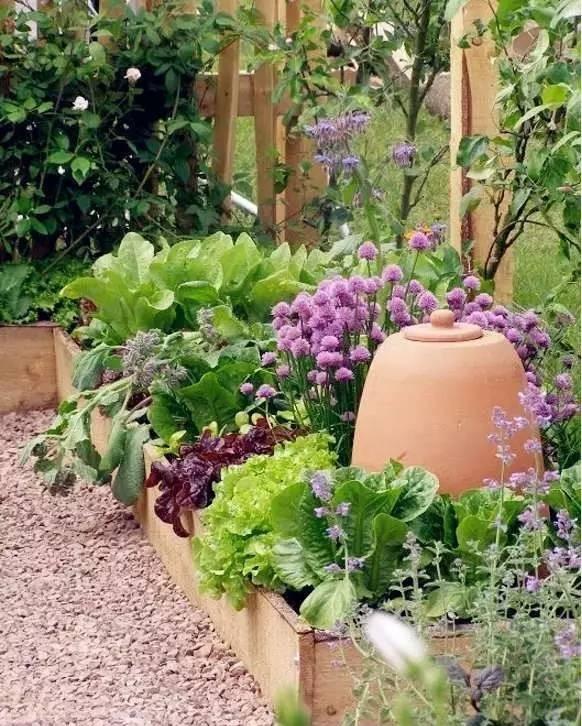
Some vegetables are not the least bit lacking in looks. Purple chive flowers, for instance, are in no way inferior to any ornamental plant.
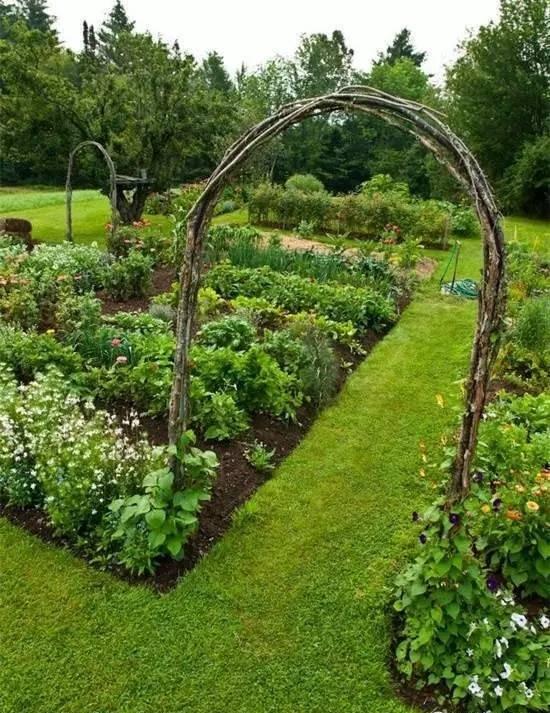
Add an arch covered in climbing flowers, and people will surely be unable to tell whether they are entering a garden or a vegetable plot.
Let form create beauty
01There are so many choices for planters
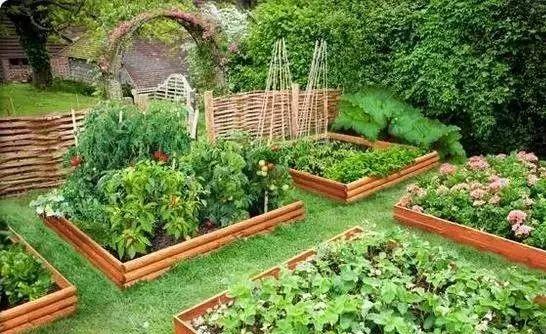
Using raised planting beds makes it easy for people to walk among them and observe up close, while also adding a touch of the formal beauty of a shaped flower bed.
Add a bit of color to the planting beds, and you get a whole different flavor.
Vertical planting uses a different form to solve the problem of limited space. Even without bending down, you can observe all kinds of vegetables and herbs up close.
Low planting boxes can be adapted to a child's height, letting them experience the joy of gardening too.
Use PVC pipes to display different growing methods, such as soilless cultivation.
With upright PVC pipes, the vegetables bloom like a green flower. It is quite fascinating.
Vertical planting with storage bags.
A cut-open sink planted horizontally can show visitors the many varieties of growing methods today, and how even a small space can be fully used to grow vegetables and flowers.
Long, narrow planting troughs are also very suitable for growing on home balconies and rooftops.
Upcycling old objects: a planting wall made from beverage bottles can also spread a bit of environmental knowledge, combining education with fun.
Like strawberries grown in a chicken coop.
Planting beds at varying heights add a sense of rhythm.
You can also let visitors pick the produce themselves. Raised planting boxes mean less muddy soil.
A special mention for this one! It looks like a trash can, but open it up and it will surely astonish your friends: potatoes buried deep in the soil appear before your eyes just like that. "Potatoes are picked out of the trash can" is not a lie at all!
02There are so many choices for planting patterns
Striped rainbow.
A terraced style, layer upon layer.
You can also go with geometric regularity, which carries quite a bit of the grandeur of a French estate.
Let creative forms and patterns make growing vegetables no longer so dull. A simple arrangement can produce beauty.
Use different leaf colors and leaf shapes to carefully create all kinds of flower bed patterns.
Naturalistic planting can also bring out a wild charm.
03Add some accessories
Adding some accessories can also give it a distinctive flavor.
Pair it with visually decorative fruits and vegetables like pumpkins, and the yard immediately takes on a European farmhouse style.
Set out a small wooden chair and turn it into adining area. That is great too.
Finally, let us introduce
the "one-meter garden"
In cities today, many people do not have a big yard. So what can they do?
Why not try this:
First, find a planting box 1.2 m long and 1.2 m wide and 10 cm high, install wire mesh on the bottom, and choose a flat spot with good sunlight.
Mix one part compost, one part peat moss and one part vermiculite into planting soil, and put it into the wooden box. You can also use sand instead of vermiculite, and sterilized ordinary soil instead of peat moss.
Divide the small vegetable plot into several small squares with string, spacing the plants apart, with each square about 30 in diameter.
Finally, you can plant one kind of vegetable in each square!
This is the concept of the "one-meter garden" proposed by the American Mel Bartholomew. It is said that the vegetables it produces are even more than those from a traditional 2.4*3 sq m vegetable plot.
If you run a scenic area or a farm, you can use the "one-meter garden" as ademonstration areato teach visitors little tips for urban home gardening!
Alright, that is all for today. Isn't it full of inspiration?
Actually, it is very simple: just do not grow vegetables as vegetables!
You too can grow vegetables just like flowers.
I look forward to seeing beautiful vegetable gardens in your park and in your home.