Master cultivation analysis of the yew bonsai, fully displaying the visual art of gardening
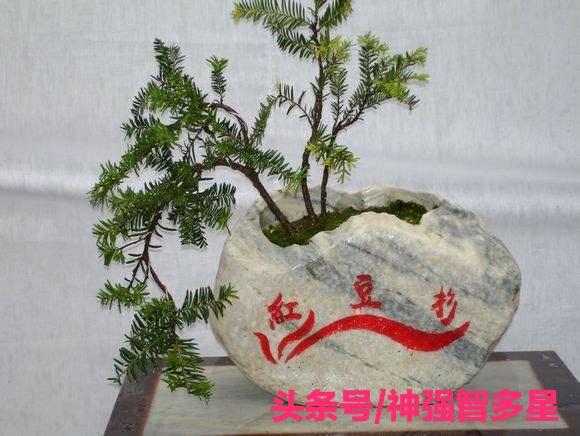 The yew, also known as the purple yew, is a plant of the genusTaxus. The yew is a shallow-rooted plant, with an inconspicuous main root and well-developed lateral roots, and is a naturally rare anti-cancer plant recognized worldwide as endangered. Having survived the Quaternary glaciation, it is an ancient relict tree species with a history of 2.5 million years on Earth. The yew is an evergreen tree, with alternate branchlets that turn yellow-green or light reddish-brown in autumn; winter bud scales rounded on the back or with blunt ridges; sickle-shaped leaves, arranged in two rows, 1.5-3 cm long, broader than other species of the genus Taxus, with sharp and slender tips and two yellow bands on the underside. Because the yew grows slowly under natural conditions and has poor regeneration capacity, for a long time no large-scale yew raw material forest base has been established worldwide. In 1994, the yew was designated by China as a first-class rare and endangered protected plant, and it is also called a "national treasure" by all 42 countries worldwide that have yews. The United Nations has also explicitly banned its felling, making it a veritable "plant panda."
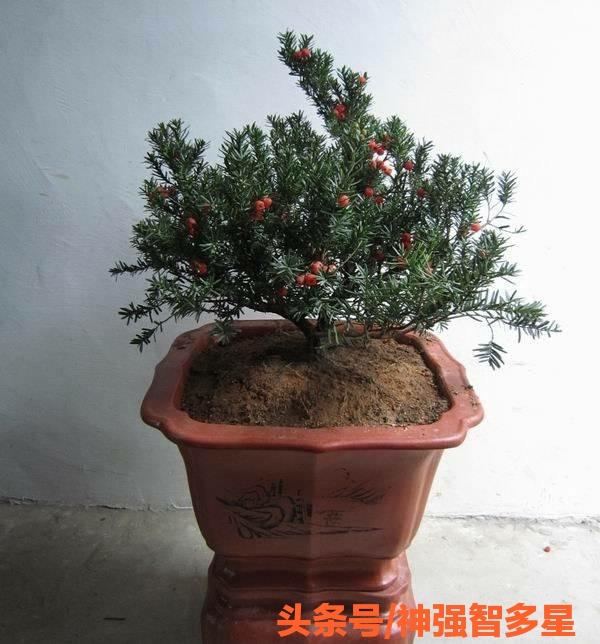 Chinese name
Yew
Latin scientific nameTaxuschinensis(Pilger) Rehd.
Distribution areaMainly produced in Shaanxi, Sichuan, Yunnan, Guizhou, Hubei, Gansu, Hunan, Guangxi and other places
KingdomPlantae
DivisionPinophyta
ClassPinopsida
OrderTaxales
FamilyTaxaceae
GenusTaxus
SpeciesYew
Alternative namesChinese arborvitae, red bean tree, purple yew
Binomial nameTaxuschinensis
SubdivisionGymnospermae
Environmental distributionCold alpine limestone mountainous areas
Ecological habitsShallow-rooted plant
Life formEvergreen tree
SunlightShade-loving
MoistureDrought-tolerant
TemperatureOptimum temperature 20-25°C
SoilSandy loam
AltitudeUp to 1000-1200 m above sea level
Edible valueLeaves and fruit peel can be processed into tea
Medicinal valueDiuretic and swelling-reducing
Industrial valuePurification of paclitaxel, wood carving
Special usesLandscaping and ornamental
ToxicityToxic
Symbolic meaningLongevity
General plant heightAbout 30 m tall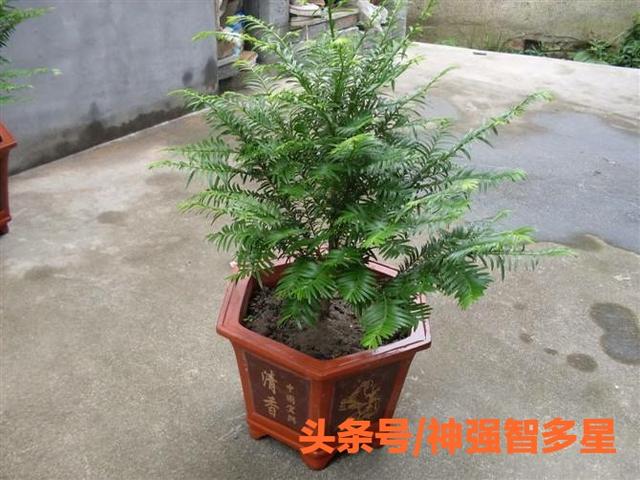 Morphological characteristics:The yew can reach 30 m in height, with a diameter at breast height of 65-100 cm; the bark is grayish-brown, reddish-brown or dark brown, splitting into strips and peeling off; the large branches spread out, and one-year-old branches are green or light yellow-green, turning green-yellow or light reddish-brown in autumn, while two- and three-year-old branches are yellowish-brown, light reddish-brown or grayish-brown; winter buds are yellowish-brown, light brown or reddish-brown, glossy; winter bud scales are rounded on the back or have blunt ridges; leaves are linear, dioecious, and seeds are flat and round. The seeds are used for oil extraction and can also be used medicinally. It is a shallow-rooted plant, with an inconspicuous main root and well-developed lateral roots.Leaves are spirally alternate, twisted at the base into two rows, linear and slightly curved, 1-2.5 cm long and 2-2.5 mm wide, with slightly recurved leaf margins and tapering leaf tips; the underside of the leaf has 2 broad yellow-green or gray-green stomatal bands, the midrib is densely covered with small raised dots, and the green band along the leaf margin is extremely narrow; dioecious,seeds are flat and round. The seeds are used for oil extraction and can also be used medicinally. It is a shallow-rooted plant, with an inconspicuous main root and well-developed lateral roots.
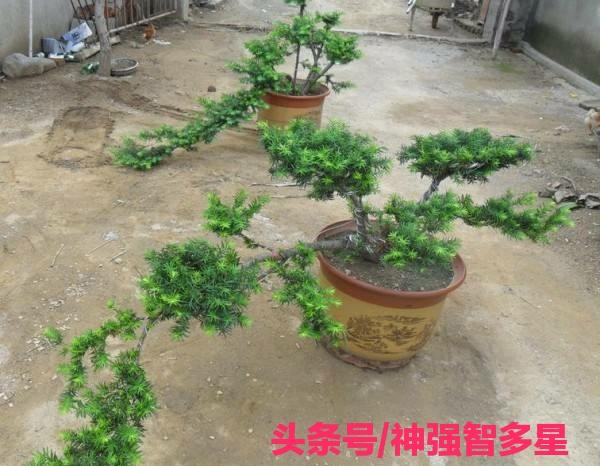 Growth habits:The yew is suitable for planting in both northern and southern parts of China. It is shade-loving, drought-tolerant and cold-resistant, and requires soil with a pH value of 5.5-7.0.
In its habitat it is shade-tolerant and can also grow under dense forest, is perennial, and does not form forests. It is mostly seen in mixed coniferous and broad-leaved forests dominated by Korean pine. It grows on rocky or barren soil on mountaintops, mostly in shrub form. In its place of origin, the average annual temperature is 2°C to 7°C, and the average annual precipitation is 750-1000 mm. It is mostly scattered under moist, fertile mixed coniferous and broad-leaved forests on shady or semi-shady slopes. It likes a cool and humid climate, can withstand low temperatures below minus 30°C, has strong cold resistance, and its optimum temperature is 20-25°C. It is a shade-loving tree species. It likes moisture but fears waterlogging, and is suitable for planting in loose, moist, well-drained sandy loam.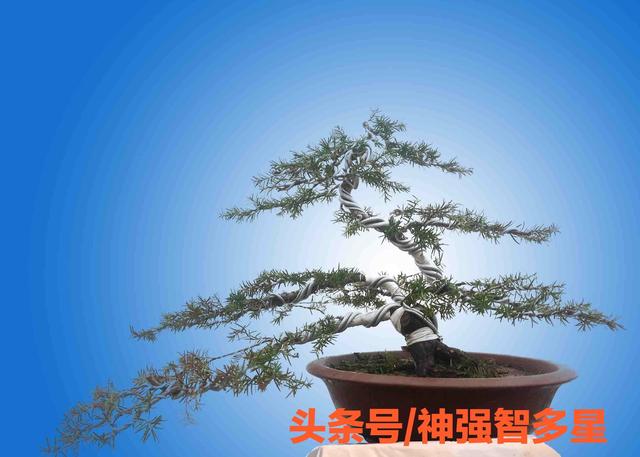
Distribution range
Widely distributed in Lechang, Guangdong, Shaanxi, Hubei, western Anhui, and as far as Tongren City, Guizhou, in the Fanjing Mountain and Foding Mountain areas of Sichuan and Guizhou, most of southwestern Chongqing, the Dabanping primeval forest in Youyang, and southern Gansu and other places.
Except for Austrotaxus Spicata in Australia, which is produced in the Southern Hemisphere, all other yews are produced in the Northern Hemisphere. There are 4 species and 1 variety of yew in China, distributed across most areas of China. The Japanese yew is mainly distributed in the Changbai Mountains of Jilin Province and the Heilongjiang area, with a small distribution also in the mountainous areas of eastern Liaoning. Taxus wallichiana is mainly distributed in western Yunnan and 16 counties of prefectures, with a total area of about 90,000 sq km. It is characterized by wide distribution, scattered growth, and no pure forests, mostly as scattered trees in forests. Taxus wallichiana var. mairei is mainly distributed in eastern Yunnan, southwestern Yunnan, and eastern Yunnan pure forests, mostly as scattered trees in forests.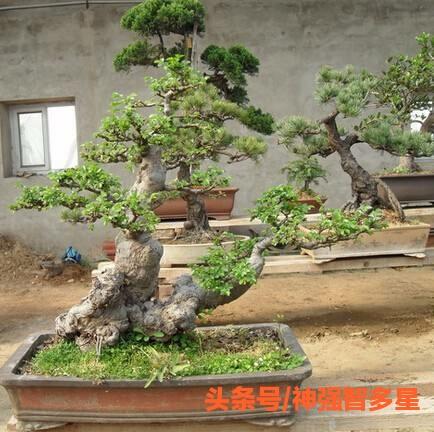 Yew cultivation methods
The yew is a shade-loving plant,
and should not be exposed to sunlight by the window. Water should be sprayed on the leaf surface every day to maintain humidity.
It is a shade-loving plant at all times,
but that does not mean no sunlight at all. You can let it get some sun here,
but in moderation. Ventilate twice in the morning and evening, 15 minutes each time is appropriate. The best ventilation time is 9-10 in the morning.
When the weather is hot, spray water twice a day, until water drips from the leaf surface. When watering and irrigating, be sure to
water thoroughly at one time, and by no means water every few days.
Notes on yew cultivation:
1. The yew likes shade and should not be exposed to direct sunlight. It can be placed in the living room, bedroom, or the corner of a balcony. In the evening,
it can be placed on the windowsill to let it breathe.
2. The choice of watering time can be judged from the following aspects:
The leaves of the yew are upright and glossy. If the leaf surface appears withered, it is time to water. If the leaf surface droops, it indicates severe water shortage.
Tap the pot lightly a few times with your hand, and you can judge from the sound. If the sound is very hollow, it means the soil is already dry and it is time to water. To judge from the potting soil, insert a finger 2-3 cm into the soil. If you feel the soil is dry, it is time to water.
At different stages, the plant needs different amounts of water. During the growing period from March to November, it needs more water, while during the dormant period from December to February, it needs relatively little. As for the watering cycle, it cannot be generalized. In spring and autumn, water once every 5-7 days; in summer, water once every 3-5 days; in winter, water thoroughly once every 7-10 days.
3. Surrounding environment. The yew does not have great requirements for the environment. In addition to doing the first point of avoiding direct sunlight, you should also
pay attention not to let it be directly blown by the air conditioner indoors, not to place it close to heating in winter, and not to casually throw cigarette butts, tea leaves and other debris into the pot.
4. If the leaf surface appears withered and yellow or there are pests and diseases, thiophanate-methyl and potassium dihydrogen phosphate can be used for watering or spraying. The general dosage
is: one small bag combined.
Wishing everyone abundant wealth in 2018. Follow the editor Positive Energy for continued writing and sharing of more experience.