Poor indoor air? These three ordinary plants can improve it
How to produce fresh air
A doctor of indoor research tells his own story:
♥ About 17 years ago, I began to be allergic to the air in Delhi. My doctor told me that my lung capacity had already dropped to 70% of what it was, and that if things continued this way my life would be in danger. With the help of the Indian Institute of Technology and the Tata Energy Research Institute of India, and using research results from NASA, with the help of the Indian Institute of Technology and the Tata Energy Research Institute of India, and using research results from NASA, we found that there are three basic green plants, ordinary green plants, with which we can produce the fresh air we need indoors to keep our bodies healthy. We also found that this can reduce a building's need for outdoor fresh air to flow in while maintaining indoor air quality standards.
♥ These three plants are: areca palm, snake plant and pothos. The areca palm is a plant that absorbs carbon dioxide and converts it into oxygen. On average, each of us needs four shoulder-high plants. In terms of plant care, we need to wipe the leaves clean; in Delhi, that means every day. In cities with cleaner air, once a week may be enough. We have to fertilize them with vermicompost, which is a sterile method; or grow them in water, and move the plants outdoors every three to four months to get some sun. The second plant is the snake plant, also a common plant, which we call the bedroom plant, because it converts carbon dioxide into oxygen at night. Each of us needs six to eight waist-high plants of this kind. The third plant is pothos, also a very common plant. It is suitable for growing in water. This plant can absorb formaldehyde and other volatile chemicals.
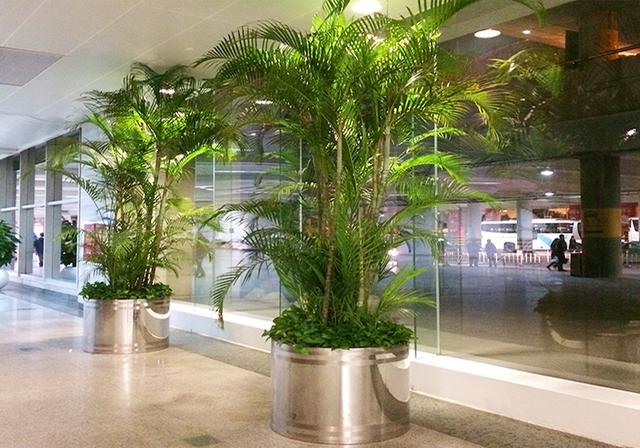
Areca palm
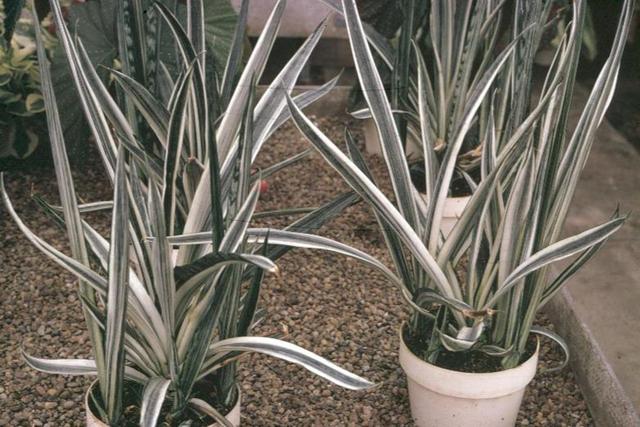
Snake plant

Pothos
♥ With these three plants, you can produce all the fresh air you need. In fact, you could even live in a bottle, put the cap on, and you would not die. And you would not need any fresh air from outside. We tested these plants in our office building in Delhi, which is a 50,000 sq ft, 20-year-old building. The building has 300 occupants, and nearly 1,200 such plants were placed there. Our study found that if a person stays in this building for 10 hours, the probability that their blood oxygen level rises by one percentage point is 42%. If a person stays in this building for 10 hours, the probability that their blood oxygen level rises by one percentage point is 42%. If a person stays in this building for 10 hours, the probability that their blood oxygen level rises by one percentage point is 42%. The Indian government has found and published a study showing that this is the healthiest building in all of New Delhi, and the study shows that compared with other buildings, the residents in the building had 52% fewer cases of eye allergies. The residents in the building had 52% fewer cases of eye allergies. Respiratory problems fell by 34%, headache symptoms fell by 24%, lung dysfunction fell by 12%, and asthma fell by 9%. This study was published on September 8, 2008, and can be downloaded from the Indian government's website.
♥ Based on our experience, using these plants produced a surprising 20% increase in work efficiency. Using these plants produced a surprising 20% increase in work efficiency. The building's energy demand also fell sharply by 15%, because there was no longer a need to inject so much fresh air from outside. We are now replicating this model in a 1.75 million sq ft building, where 60,000 indoor plants will be placed.
♥ Why is this research worth paying attention to? It also means a great deal for the natural environment, because it is projected that in the next ten years, the world's energy demand will grow at a rate of 30%. At present, 40% of the world's energy is consumed by buildings, at present, 40% of the world's energy is consumed by buildings, and in the next fifteen years, 60% of the world's population will live in large cities with populations of over one million. In the next fifteen years, 60% of the world's population will live in large cities with populations of over one million. In the next fifteen years, 60% of the world's population will live in large cities with populations of over one million. And more and more people like to live and work in air-conditioned spaces. Be the change you want to see in the world. That is what Mahatma Gandhi said.