These are the must-have plants for gardening beginners. How many have you kept?
Back when I used to go to the flower market, I heard this saying: "Anyone who hasn't killed a fiddle-leaf fig isn't qualified to talk about gardening." At the time I thought, isn't that a bit exaggerated! But later, when I managed to kill even a few succulents, I started to reflect (I suppose I'm now qualified to talk about gardening)~
The fiddle-leaf fig is beautiful, but it isn't easy to keep in China. Once someone posts a picture of their fiddle-leaf fig at home, the comments flood in like New Year greetings queuing up: "Wishing your fiddle-leaf fig eternal health and long life!" No matter how you read that blessing, it just sounds sad.
Because far too many people buy one and take it home, only to have every single one die on them (and it's all money down the drain).
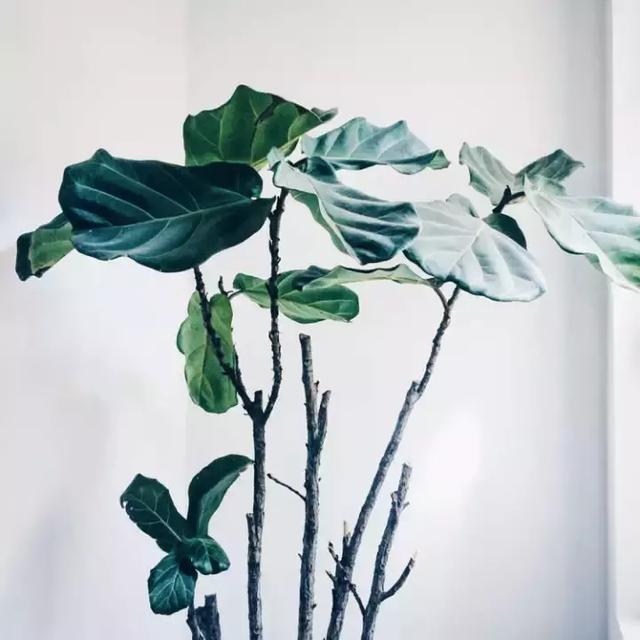
I once saw someone asking an expert how on earth to keep a fiddle-leaf fig alive, and someone derailed the thread: "You have to open your heart to it every day, hug it while you sleep, give it warmth." (Hahahahaha) Well, if you put it that way, it's not wrong, because fiddle-leaf figs only thrive in a warm, humid environment with plenty of light.
Every time I look at those poor souls who kill their fiddle-leaf figs the moment they stop paying attention, I think: instead of frantically keeping such a high-maintenance little diva, why not check out these varieties that are better suited to growing in Chinese homes!
CHAPTER ONE
These are just as easy to keep and no less beautiful than the fiddle-leaf fig
Here I've gathered and selected eight plants that are both good-looking and easy to care for, all of which you can buy at the flower and bird market. As long as you pair them well, atmosphere is no problem at all.
Monstera
Monstera generally grows in the tropics. When it was first introduced in the early 1990s, it was considered a premium plant, but now it's planted everywhere in roadside green belts in the south.
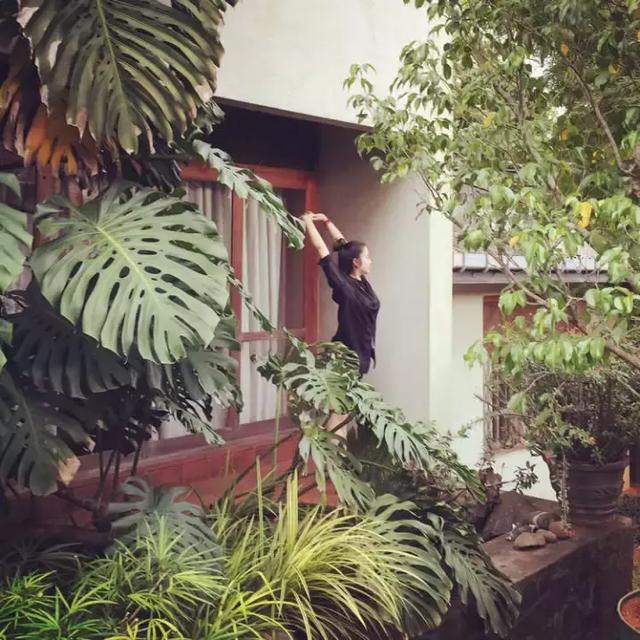
Its name is very closely related to the shape of its leaves, which look like a turtle's shell, hence the name monstera (turtle-back bamboo).
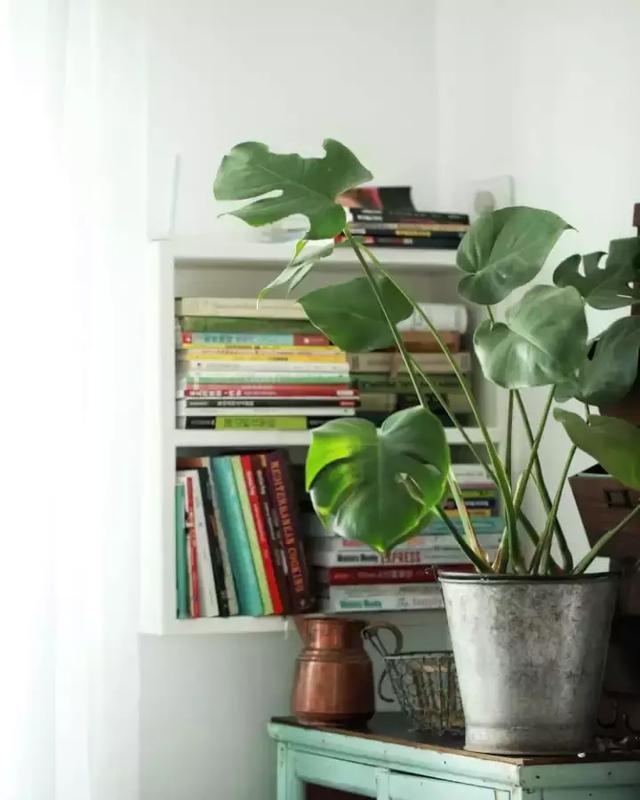
It likes a warm, humid climate and does not like high temperatures.
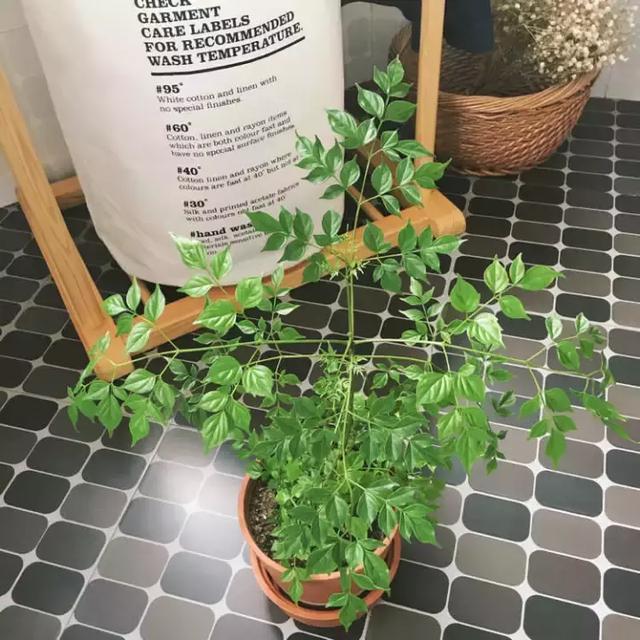
Radermachera sinica (China doll)
Radermachera sinica: scientific name Radermachera sinica. It is a perennial plant. As long as it's well cared for, misted daily with a spray bottle, and given as much sun as possible, it may bloom every year once it reaches a certain age.
Dracaena marginata (dragon tree)
Don't you think it looks like exploding fireworks? It has a desert feel to it.
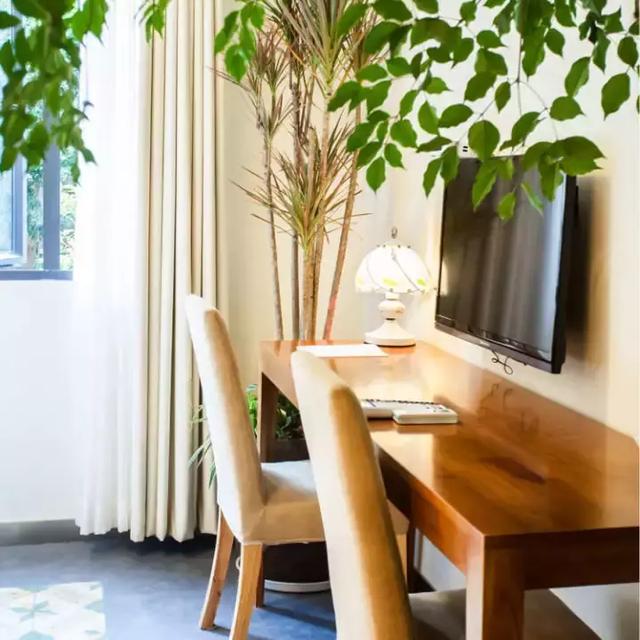
Dracaena marginata must be placed in a bright spot indoors, otherwise the color of the leaves will fade and the leaves will go soft and lose their upright form, seriously hurting its ornamental value.
Hylocereus undatus (dragon fruit cactus)
If you're worried about not being able to handle plants with too many leaves, just one large Hylocereus undatus is enough to make your home instantly vibrant.
Cement pots have a rough texture and a strong grainy feel, and their shapes are usually very simple. It's exactly this character that makes them a perfect match for cacti.
Fatsia japonica (Japanese aralia)
The "eight" in the name refers to its leaves, which are palm-like with about eight lobes, hence the name. It's commonly planted in many residential communities.
Alocasia macrorrhizos (giant taro)
Under warm, humid conditions with plenty of soil moisture, Alocasia macrorrhizos drips water from the tips or edges of its leaves, and its flowers resemble Guanyin, hence the name "dripping-water Guanyin."
One thing to noteis that the water dripping from Alocasia macrorrhizos and the sap in its stems and roots are both toxic.Plant experts say about thisthat as long as you don't go out of your way to lick it, you won't be poisoned.
Because the moment of dripping is truly beautiful, this editor says, "It's toxic, but I still want to keep one."
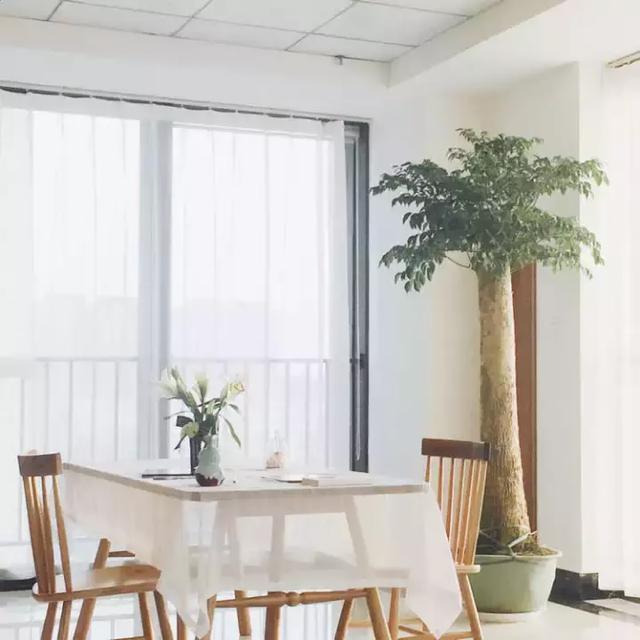
Pachira aquatica (money tree)
Just from the name, it's clearly a wonderful tree that every household should have.
Fig tree 8 Our usual impression of fig trees is like this:
But actually it's not bad to keep at home either, though I know you're definitely more interested in the fruit.
CHAPTER TWO
If after reading all this you still want to keep a fiddle-leaf fig
Even though it's hard to care for, we have to admit that the fiddle-leaf fig is genuinely popular. Flip open any home magazine and you're likely to see it.
If you really want to keep a fiddle-leaf fig, then learn from the experience of those expert growers:
Make sure it stays warm
The growing period is from around 20-something to 30-something degrees; at 15°C it enters dormancy, and below 5°C it will drop its leaves. In the north, indoor heating in winter means it can survive the winter safely, but in places like the Jiangsu-Zhejiang area, where there's no indoor heating in winter, it's hard for it to make it through.
Water thoroughly
If excess water drains out of the bottom of the pot, remember to pour it off.
Taking Beijing as an example, you generally water once every two or three days. In winter when the heating is on, it gets drier, so you can usually mist the leaves with a spray bottle. The weather in the south is relatively humid, which suits fiddle-leaf fig growth better. But also note: feel the potting soil before watering, and don't let it get too wet, as the roots rot easily.
Place it in a sunny spot
Fiddle-leaf figs grow well in bright, indirect light, but in summer avoid direct strong sunlight.
Make sure there's ventilation
CHAPTER THREE
If you "kill everything you grow," then I suggest you
There's an online forum called "Kill Everything You Grow," where a bunch of plant lovers have gathered. But you can guess from the name that everything the people there grow ends up not surviving (I really can't help laughing)...
Buy a batch, kill a batch
For example, this person:This balcony is too tragic to look at; everything that could die has died. But it's worth mentioning that she graduated with a degree in landscape design.
In response to this scene of devastation, her reply was: "I studied landscape design, not tree planting." Absolutely spot on!
If you also belong to the "kill everything you grow" category, then I solemnly give you one piece of advice:
Then just don't keep plants anymore!
Just don't keep them!
Don't keep them!