5 Reasons for Yellowing Leaves on Clivia and How to Treat Them
Gardeners growing Clivia may encounter yellowing leaves, but many people do not know how to handle it. Below, let's look at the 5 reasons for yellowing leaves on Clivia and how to treat yellowing Clivia leaves.
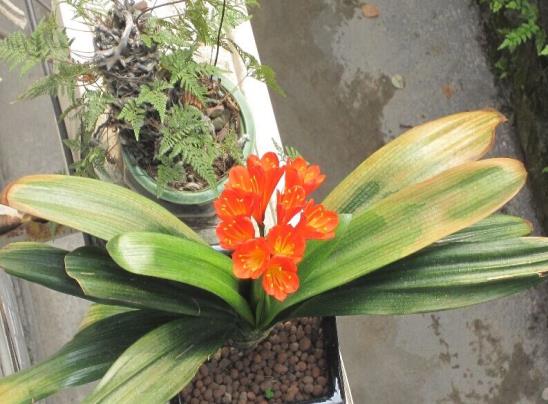
Analysis of the reasons for yellowing leaves on Clivia:
1. Temperature: The suitable temperature for Clivia growth is 15-25°C. A day-night temperature difference of 8-12°C is most suitable for Clivia growth. If the temperature is too high, the leaves will become pale, turn yellow, and even wilt.
2. Humidity: Clivia is a moisture-loving plant and has relatively high requirements for the humidity of its growing environment. If the potting soil is too dry for a long time and the temperature is also high, the leaves are prone to turning yellow.
3. Soil: Clivia prefers loose, fertile sandy soil. If the soil becomes compacted and the fertilizer supply is insufficient, the leaves will turn yellow and flowering will be affected.
4. Light: Clivia is a semi-sun-loving flower and prefers relatively weak, diffused light. It is not tolerant of strong light. Excessive light can easily cause sunscald; in mild cases the leaves turn from green to yellow, and in severe cases the leaves dehydrate, dry up, and die.
5. Ventilation: Placing Clivia too densely and having a closed-in surrounding environment both hinder air circulation, making the plant weak and yellow. Therefore, indoor ventilation should be strengthened, and overly dense placement should be avoided.
How to treat yellowing leaves on Clivia:
Symptom 1: Clivia leaves turn yellow, and the small leaves in the middle turn black and rot.
Solution: Use toilet paper or facial tissue to absorb the rotting sap, and use an appropriate method to remove the filth that can be cleaned. Keep the environment relatively dry at ordinary times. It is recommended to use the bottom-watering method.
Symptom 2: All Clivia leaves turn yellow.
Solution: When all leaves turn yellow, it is often a symptom of sunscald. In this case, shade it immediately and cut off the yellow leaves.
Symptom 3: Clivia leaves wither, turn yellow, and droop.
Solution: Withered, yellow, or drooping leaves are a symptom of water deficiency. In future watering, follow the principle of not watering until dry and not letting water accumulate in the pot.
Symptom 4: Part of the Clivia leaf turns yellow.
Solution: Localized yellowing is very likely caused by heat from fire, cold wind, hot water, or acid or alkaline damage. Simply eliminate the external cause in time. Sometimes, insufficient nitrogen fertilizer may cause the plant to suffer from chlorosis, reducing chlorophyll and causing the leaves to turn yellow. In this case, increase the application of fermented cake fertilizer water.
Symptom 5: Clivia leaves wrinkle and develop yellow spots.
Solution: Excessive fertilization causes root burn. Immediately change the soil, soak the roots in a 0.1% potassium permanganate aqueous solution for 20-30 minutes, rinse with clean water, and after drying, cut off the rotten roots, apply plant ash to the wounds, and replant.
Symptom 6: The two outer leaves of Clivia turn yellow.
Solution: This is normal metabolism of old and new layers. Simply trim off the 2 outer leaves.
Symptom 7: Clivia leaves appear grayish-yellow.
Solution: The main cause of grayish-yellow Clivia leaves is overly strong direct sunlight, so Clivia needs to be shaded.
Symptom 8: Clivia leaves show chlorosis symptoms.
Solution: Due to insufficient light, if the room is very dark, Clivia will become chlorotic. Use fluorescent lamps to supplement light.
Symptom 9: Clivia leaves are yellow and weak.
Solution: Yellow and weak leaves indicate a lack of fertilizer, so apply thin fertilizer frequently. Yellowing leaves are caused by soil that is raw and not breathable, so replace it with leaf mold soil or pine needle soil.
The above is the related introduction in this article. I believe that after reading it, you also have a simple understanding of this. If needed, you can continue to follow No. 1 Home Network to learn more information.