Clematis Planting Methods and Pest and Disease Control Measures
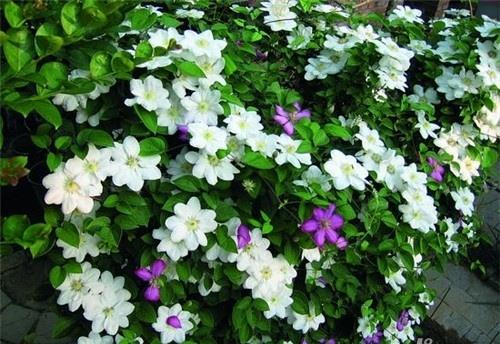
Clematis is a very beautiful flowering plant, and many homeowners grow clematis. However, very few people truly know how to cultivate it properly. Below, let's learn how to plant clematis and about clematis pest and disease control measures.
Transplanting Clematis
1. Transplanting time:
Potted clematis can be transplanted at any time of the year, because when transplanting you only need to take the clematis plant out of the pot and plant it, which will not cause any damage to the clematis root system. Of course, the ideal transplanting time for clematis is in spring or early autumn. During this period the soil temperature is relatively warm and the soil moisture content is suitable, which can provide the best living environment for a plant that has just changed environments. But as long as we can dig a hole, we can plant clematis even in winter; even if freezing comes soon after, there is not much of a problem.
2. Transplanting steps:
There is no standard size for digging the hole. The size of the round hole depends on the quality of the soil. If the soil is loose, fertile and well-drained, 30 cm is enough, or a depth of one and a half spadefuls. If on the contrary the soil is heavy and highly clayey, it is best to dig to 50-60cm deep so that a good drainage layer can be made, while the width needs to be 30-40cm so that the roots can be placed in freely.
Clematis Planting Methods
1. Soil: It prefers fertile, well-drained alkaline loam, and dislikes waterlogged soil or soil that cannot retain water during summer drought.
2. Watering: It is drought-tolerant and afraid of waterlogging. During the plum rain season, due to high temperature and high humidity, it is prone to disease and death, so during the growing season it is enough to keep the potting soil moist; never water too much, otherwise the root system is prone to rot.
3. Sunlight: Potted clematis should be placed under full-light conditions from autumn to early spring of the following year, with no need for shading. After entering summer, strong sunlight will cause the clematis leaves to age and turn yellow and to grow poorly, so appropriate shading is needed.
4. Temperature: It has strong adaptability and is relatively cold-hardy, able to withstand low temperatures of -20.
5. Fertilizing: It does not have high fertilizer requirements; during the peak growing period, applying liquid fertilizer about once every half month is enough.
Clematis Pest and Disease Control Measures
1. Leaf miners:
The larvae of leaf miners bore through the middle of the leaves, forming an irregular grayish-white curved line, and at the end of the curve there is usually a large blotch. They usually do not affect the plant's growth, but they affect the ornamental value of the leaves. Usually, in the early stage, you can pinch off the blotch at the end of the leaf curve, which can remove the leaf miner larvae, or cut off the damaged leaves and burn them. If the area of the plant affected is relatively large, then some insecticide should be sprayed appropriately.
2. Wilt disease:
Large-flowered clematis varieties are more susceptible to wilt disease. This disease infects and develops within several hours, causing the entire branch or even the whole plant to appear dehydrated and wilted. This disease usually appears right when the flowering period is about to begin, attacking the roots located at the soil surface. But it should be understood that this disease never infects the roots of clematis. After pruning the clematis root branches in the following way, the clematis usually regains its vigor without the need for chemical agents. The onset of wilt disease is very rapid; from the appearance of signs of the disease, it immediately turns into one branch or multiple branches being infected. Except for a plant that has only one branch, the possibility of all the branches of the whole plant being infected at the same time is very small.
Push aside the soil at the base to determine the location of the necrotic branch. Usually this location is 5-8cm below the soil surface. Cut the branch below the necrotic location. If you cannot confirm exactly where the necrosis is, prune at a position close to the root, remove the soil that was pushed aside, and replace it with new soil so that the clematis can recover more robustly. During this period, there is no need to water; watering will affect the re-sprouting.
The above is the related introduction in this article. I believe that after reading it you also have a simple understanding of this. If needed, you can continue to follow No.1 Home Network to learn more information.