6 Major Reasons for Yellowing Leaves on Anthurium and How to Care for Them
Anthurium is a high-end potted plant that many people like to grow, not only because it looks beautiful but also because it can improve the home environment. However, when growing Anthurium, yellowing leaves can also occur. Below, let's look at the 6 major reasons for yellowing leaves on Anthurium and how to care for Anthurium with yellowing leaves.
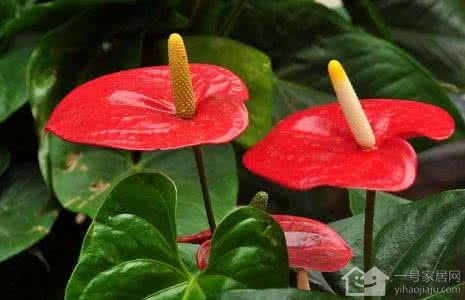
What to Do When Anthurium Leaves Turn Yellow
1. Anthurium is a tropical flower that loves high temperatures and fears cold, prefers shade and avoids direct sun, and prefers moisture and avoids drought. Usually, be careful not to expose it to harsh sun and do not place it in an environment with strong direct sunlight. What to do when Anthurium leaves turn yellow? But it also should not be kept for a long time in a dark indoor space; it should be placed in a bright spot with scattered light.
2. Anthurium's watering requirement is: water only after the soil has dried out, and water thoroughly when watering. I don't know how long you have had your Anthurium; the yellowing leaves may be caused by watering too frequently, watering again before the soil has dried out.
In addition, Anthurium needs fertilizing about every two months, and a lack of fertilizer can also cause leaves to turn yellow. When fertilizing, it is best to use fertilizer specially made for Anthurium; when you buy Anthurium, reputable manufacturers will include fertilizer. Anthurium requires a growing temperature of no lower than 15°C, otherwise the leaves and flower stems easily turn black.
3. Environmental prevention: strengthen the control of greenhouse temperature (the ideal breeding condition for bacteria is around 30 degrees), the sanitary environment, and the movement of personnel and tools in the production area.
4. Fertilizer prevention: during plant growth, try not to use nitrogen fertilizer in a high NH4 form. Remove or isolate diseased plants.
Leaf blight nematode disease is caused by infection by nematodes of the genus Aphelenchoides, mainly infecting the roots and leaves. Symptoms are necrotic spots or brown spots forming along the leaf veins, root swelling, and finally the entire leaf drying up.
Prevention and control methods mainly include strengthening seedling quarantine, selecting robust seedlings, and properly disinfecting the growing medium.
5. Soil pH control. Anthurium is a flower variety relatively sensitive to salt, so the pH of the growing medium should be kept between 5.2 and 6.1, which is optimal for Anthurium growth when its leaves turn yellow. If the pH is too low, the flower stems become shorter, reducing ornamental value.
Tap water is suitable for growing Anthurium, but it is expensive; natural rainwater is the best water source for Anthurium cultivation. Potted Anthurium has different water requirements at different growth and development stages.
6. Care details; the yellowing leaf phenomenon in Anthurium is mainly root rot caused by too-low temperatures; excessive fertilizer and water, because applying too much fertilizer disrupts the metabolism of Anthurium; overwatering can also make Anthurium leaves turn yellow and affect its ornamental value; too much light can make Anthurium leaves turn yellow and lose their luster, and can also cause slow growth, short petioles, small leaves, and curled leaves that do not spread out; vigorous growth but no flowering is generally caused by placing it in too dark a location or applying too much nitrogen fertilizer.
Reason 1 for yellowing Anthurium leaves: overwatering:
Watering too much and too frequently keeps the potting medium wet for a long time, or even waterlogged, causing some fibrous roots to rot, hindering normal respiration and nutrient absorption, and causing leaves to gradually turn yellow and drop. Preventive measure: water normally.
Reason 2 for yellowing Anthurium leaves: uneven fertilizing:
Applying too little fertilizer, or not repotting or changing the soil for a long time, leads to a lack of nutrients such as nitrogen in the soil, causing weak branches and leaves, with thin and yellow leaves. In addition, excessive fertilizing can also cause new leaves to be thick and uneven, while old leaves dry at the tips, turn scorched yellow, and drop. At this point, fertilizing should be stopped immediately, watering increased, and some old soil removed and replaced with new growing soil, followed by normal management.
Reason 3 for yellowing Anthurium leaves: unsuitable temperature:
If the indoor temperature is too low in winter, the leaves will turn yellow; if the room temperature is too high, the plant transpires excessively, and the roots cannot supply enough water and nutrients, which can also make the leaves turn yellow. Preventive measure: keep the greenhouse temperature relatively stable.
Reason 4 for yellowing Anthurium leaves: unsuitable soil:
In most northern regions, the growing medium and water contain relatively more salt and alkali. Because the medium lacks the soluble iron that the plant needs to absorb, the leaves gradually lose their green color and turn yellow. Preventive measure: use oxalic acid, etc., to treat the growing medium and the water used for watering.
Reason 5 for yellowing Anthurium leaves: dry air:
In winter, when the indoor air for growing flowers is too dry, symptoms often appear such as dry and yellow leaf tips, scorched leaf edges, or scorched spots and curled edges on the leaves. Preventive measure: according to the growth characteristics of Anthurium, appropriately increase air humidity.
Reason 6 for yellowing Anthurium leaves: excessive shading:
If Anthurium is kept for a long time in a shaded place or a place with insufficient light, its growth will weaken, the leaves will be thin and yellow, and it will not bloom or will bloom very little. Preventive measure: according to the growth characteristics of Anthurium, appropriately increase light intensity.
The above is the relevant introduction in this article. I believe that after reading it, you will have a simple understanding of this as well. If needed, you can continue to follow No. 1 Home Network to learn more information.