Golden Pothos Care Methods and Precautions
Many friends are not particularly familiar with how to care for golden pothos, so today we will give a brief introduction to golden pothos care methods. Let's take a look together.
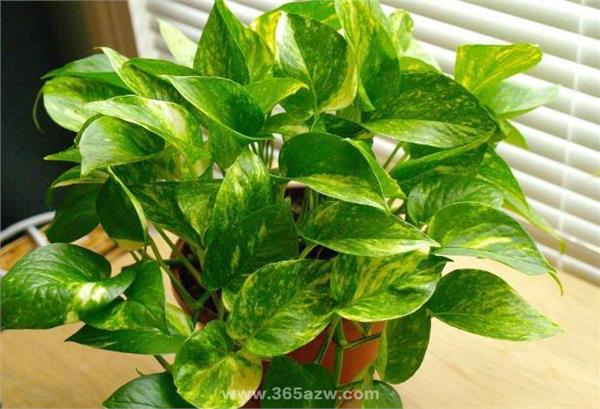
Golden Pothos Care Methods
1. Light: Golden pothos is a shade-loving plant that prefers a hot and humid environment, avoids direct sunlight, and likes shade. So when caring for it, avoid direct sunlight, because overly strong sunlight will scorch the leaves of the pothos, while too much shade will cause the beautiful markings on the leaf surface to disappear. Generally, receiving four hours of diffused light is best for the growth and development of pothos.
2. Watering: For golden pothos in autumn and winter, the amount of watering should be controlled according to the indoor temperature. Before heating is turned on, the temperature is lower, the soil of the plant evaporates more slowly, and watering should be reduced, with the amount controlled at between 1/4 and 1/2 of the original. Even after heating is turned on, watering should not be too frequent. When watering, pour less into the pot and allow water to seep through the coir. For winter watering, water that has been left to sit for a day after being drawn is better, as water that is too cold can easily damage the roots. When growing in water, the water level must not be too high; just enough to submerge the roots is fine, as too much water can easily cause the stems and leaves to rot.
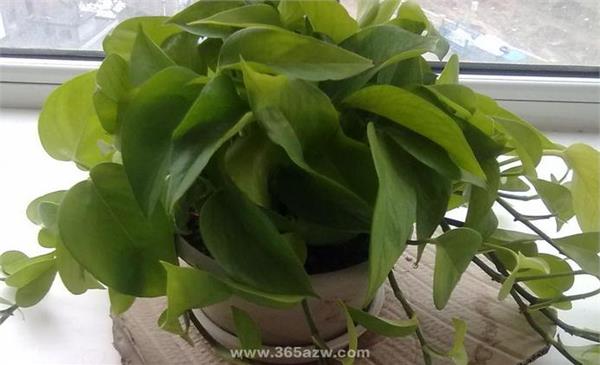
3. Temperature: For golden pothos in northern regions, it can safely overwinter as long as the temperature is above 10°C. If the temperature is above 20°C, it can grow normally. Generally, reaching this temperature in a home is not a big problem. What needs attention is avoiding excessive temperature differences, and also making sure the leaves are not close to heating equipment.
4. Fertilizing: For golden pothos in the autumn and winter seasons in the north, its growth will become slow or stop. At this time, fertilizing should be reduced. Generally, at the beginning of winter, liquid inorganic fertilizer is mainly applied by watering or spraying, once every 15 days. After golden pothos enters winter, fertilizing is mainly done by foliar spraying, mainly through the stomata on the leaf surface. Fertilizer is absorbed through the stomata on the leaf surface, and the fertilizer effect can act directly on the leaf surface.
5. Propagation: Golden pothos is commonly propagated by asexual cutting propagation, and cutting is divided into stem cutting, stem burial, and water cutting methods. Generally, when propagating golden pothos by cutting, take healthy golden pothos in late spring and early summer for cutting. First cut 15-30 cm older branches, remove the leaves from 1 to 2 nodes at the base, and be careful not to damage its aerial roots when removing the leaves. Then insert them into prepared plain sand or coal cinder, with a depth of 1/3 of the cutting. Water thoroughly and place in a shaded area. Spray water on the leaf surface every day or cover with plastic film to retain moisture. When propagating golden pothos, as long as the environment is kept no lower than 20°C, its survival rate is above 90%.
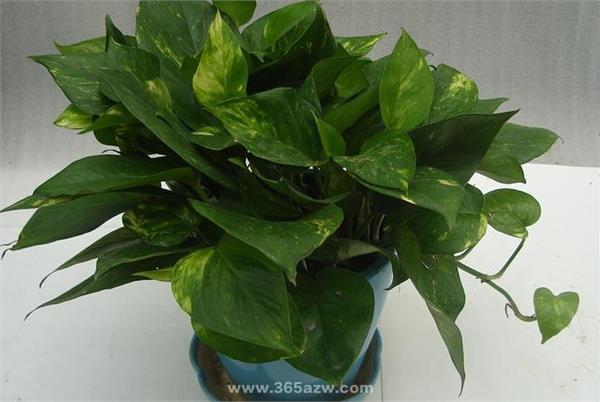
Precautions for Golden Pothos Care
Golden pothos does not have very high soil requirements. For cultivation, loose, fertile, slightly acidic to neutral sandy loam rich in organic matter is best, and slightly acidic leaf mold is preferable. For golden pothos cultivation, it is best to repot once every three years, and an appropriate amount of fertilizer water should be applied when repotting.
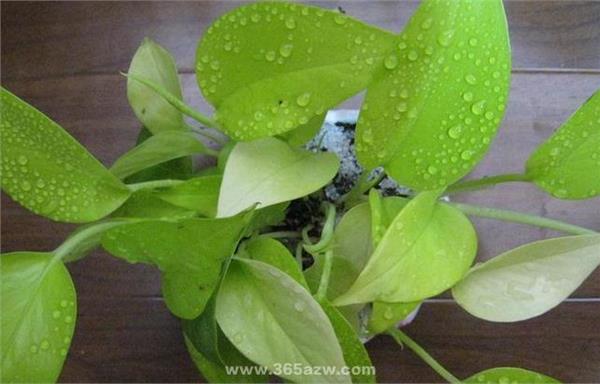
Golden pothos likes moisture and can survive upon contact with water. During the growing period, the potting soil should be kept moist. The principle for watering is to water thoroughly when watering, but not to let water accumulate. In midsummer, in addition to watering the golden pothos pot, the leaf surface should also be sprayed with water frequently, which can both clean the leaves and maintain relatively high air humidity. In winter, watering should be reduced, and the amount of watering should be controlled according to room temperature.