Is Cyclamen poisonous, and what should I do if the leaves turn yellow
Cyclamen is a beautiful plant, and many people like to grow it, but some say this plant is poisonous? Is that true? If yellowing leaves appear while growing Cyclamen, how should it be solved?
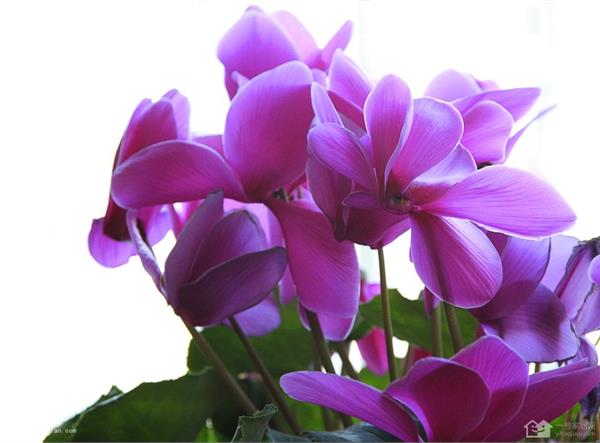
Is Cyclamen poisonous?
The claim that Cyclamen is poisonous is correct, but its poison is in the root tuber. The root tuber contains toxic plant alkaloids, and if eaten by mistake it can cause symptoms such as dizziness, vomiting and diarrhea. And if it comes into contact with the skin, it may cause skin allergies. In any case, as long as you do not eat its root tuber there is no problem. Generally our flowers and plants are only kept for ornamental purposes, so the chance of accidental ingestion is relatively small. As long as you keep an eye on the children in the home and do not let them eat it by mistake, there is no problem.
What should I do if Cyclamen leaves turn yellow?
1. Long-term nutrient deficiency: If nitrogen fertilizer has not been applied for a long time, or the pot and water have not been changed, and the water lacks nutrient elements such as nitrogen, the branches and leaves become weak and the leaves are thin and yellow. It is necessary to promptly replace with new culture water and gradually apply more dilute decomposed liquid fertilizer or compound flower fertilizer.
2. Excessive fertilization: Too much fertilizer will cause new leaves to be thick and fleshy, and mostly uneven, while old leaves dry at the tips, turn scorched yellow and fall off. Fertilization should be stopped immediately, the amount of water changed should be increased so that the fertilizer is washed away, or the pot should be turned out immediately, the bulb rinsed with water and then replanted in the pot.
3. Hot high temperatures: If narcissus is placed in a high-temperature place and exposed to direct strong sunlight, it is very easy to cause the leaf tips and leaf margins of young leaves to scorch, or the leaves to turn yellow and fall off. It needs to be moved promptly to a well-ventilated, cool place.
4. Excessive shade: If narcissus is kept in a shaded place or a place with insufficient light for a long time, it will cause the branches and leaves to turn yellow.
5. Soil and water on the alkaline side: When the growing environment lacks elements such as soluble iron that it can absorb, the leaves will gradually turn yellow. When planting, choose acidic soil and water, and during the growing period often water with alum fertilizer water.
6. Dense and unventilated: If too much nitrogen fertilizer is applied, the branches and leaves grow too luxuriantly, and coupled with long-term lack of pruning, the inner branches and leaves do not get enough light, which easily causes leaves to turn yellow and fall off. Fertilization should be reasonable and pruning strengthened, so as to let in ventilation and light.
7. Dry air: When indoor air is too dry, narcissus often shows phenomena such as dry leaf tips or scorched leaf margins. Attention should be paid to methods such as spraying water and putting on a plastic film cover to increase air humidity.
The above is the relevant introduction of this article. I believe that after reading it you also have a simple understanding of this. If needed, you can continue to follow No.1 Home Network to learn more information.